Liquid soap is one of those household staples that nearly everyone relies on daily. Found in bathrooms, kitchens, and sometimes even in utility rooms, it’s convenient, hygienic, and easy to use. Yet, purchasing liquid soap regularly can add up, especially for large families who go through bottles quickly. Beyond the financial cost, there’s also the environmental impact of all those plastic bottles being used and discarded.
Fortunately, there’s a practical and eco-friendly solution: making your own liquid soap at home. Not only does this help reduce waste, but it also gives you control over what goes into your soap. With just three primary ingredients, you can create a fragrant, moisturizing product that keeps hands clean while cutting down on unnecessary spending. Plus, making it can be a fun do-it-yourself project to enjoy on your own or with family.
Why Make Your Own Liquid Soap?
Before diving into the recipe, it’s worth highlighting the benefits of homemade soap:
-
Cost-effective: A single bar of soap can be turned into a large batch of liquid soap, stretching your budget further.
-
Eco-friendly: You’ll reuse dispensers rather than buying new ones, helping to reduce plastic waste.
-
Customizable: You get to choose the fragrance, texture, and even the color.
-
Gentle on skin: When you make it yourself, you can avoid unnecessary additives or harsh chemicals.
This method is particularly appealing to families who go through soap quickly or anyone looking for small, sustainable lifestyle changes that add up over time.
The Three Essential Ingredients
Making liquid soap at home doesn’t require complicated or expensive materials. In fact, you’ll likely already have most of the essentials in your home. Here’s what you’ll need:
-
Marseille Soap – Traditionally made from vegetable oils such as olive oil, Marseille soap is known for its purity, gentleness, and natural properties. For this recipe, you’ll need a solid bar that can be grated into flakes.
-
Hot Water – Hot water helps dissolve the soap flakes and is the base that transforms solid soap into liquid form.
-
Optional Additions – While not essential, you can enhance your soap with:
-
A few drops of your favorite essential oil (like lavender, lemon, or eucalyptus) for fragrance.
-
A touch of food-grade colorant if you want a visually appealing soap.
-
These optional elements allow you to personalize your soap to your tastes and create a product that feels special.
Step-by-Step Instructions
Now that you have the ingredients, here’s how to put them together:
Step 1: Prepare the Soap Base
-
Take a large mixing bowl or basin and grate your bar of Marseille soap into small flakes using a cheese grater. The finer the flakes, the faster they’ll dissolve.
Step 2: Dissolve the Soap
-
Boil about one liter of water.
-
Pour the hot water over the grated soap and stir gently but thoroughly until the soap completely dissolves. This may take a few minutes, but be patient—it’s worth it.
-
Once dissolved, you’ll have a thick liquid. Leave the mixture to sit and cool at room temperature. Over time, it will solidify slightly into a gel-like consistency.
This step alone already creates a form of liquid soap, but to refine it further and achieve a smoother result, you’ll need the next step.
Step 3: Blend for Consistency
-
Once the mixture has cooled and thickened, cut or scoop it into chunks and place them in a blender.
-
Add a little hot water to loosen the mixture, then blend until you achieve a smooth, creamy liquid consistency.
-
Adjust the thickness by adding more water if necessary.
At this stage, you’ll have a usable, gentle soap that can be dispensed directly.
Step 4: Personalize Your Soap
-
If desired, add a few drops of essential oil. For example:
-
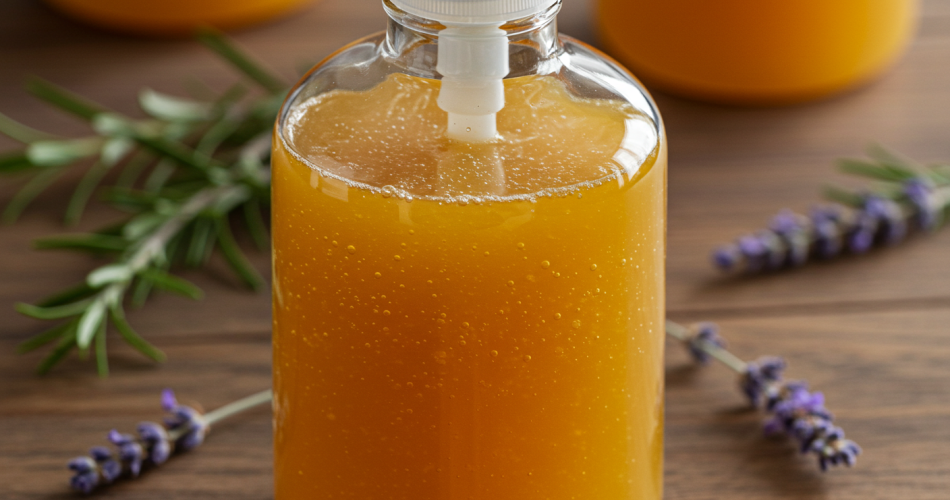
Lavender oil for a calming scent.
-
Tea tree oil for antibacterial properties.
-
Citrus oils like orange or lemon for a fresh, uplifting fragrance.
-
-
Add a drop or two of food-safe colorant if you’d like a pop of color. Be careful not to overdo it—a little goes a long way.
Stir or blend again briefly to incorporate these additions.
Step 5: Bottle and Store
-
Transfer your finished liquid soap into clean pump dispensers or refillable bottles.
-
Label them if you’ve made different scents or colors.
Store the soap at room temperature and shake the bottle gently before each use if it settles.
Tips for Success
-
Experiment with ratios: The amount of water you add can determine whether your soap is thick and creamy or thinner and more fluid. Don’t be afraid to adjust to your preference.
-
Keep it natural: If you want the mildest, most eco-friendly product, skip the artificial colorants and stick with essential oils for fragrance.
-
Reuse old containers: Clean and repurpose bottles from store-bought soap to cut down on waste.
The Big Picture: Savings and Sustainability
By turning a single bar of Marseille soap into several bottles of liquid soap, you stretch your household budget while cutting back on packaging waste. This small, simple change not only benefits your wallet but also contributes to a more sustainable lifestyle.
Homemade liquid soap is proof that eco-friendly living doesn’t need to be complicated. With just three simple ingredients, a little patience, and a dash of creativity, you can make a product that’s practical, personalized, and planet-friendly.
So next time your liquid soap runs out, don’t rush to the store. Instead, grab a bar of Marseille soap, boil some water, and enjoy the satisfaction of creating your very own homemade liquid soap.