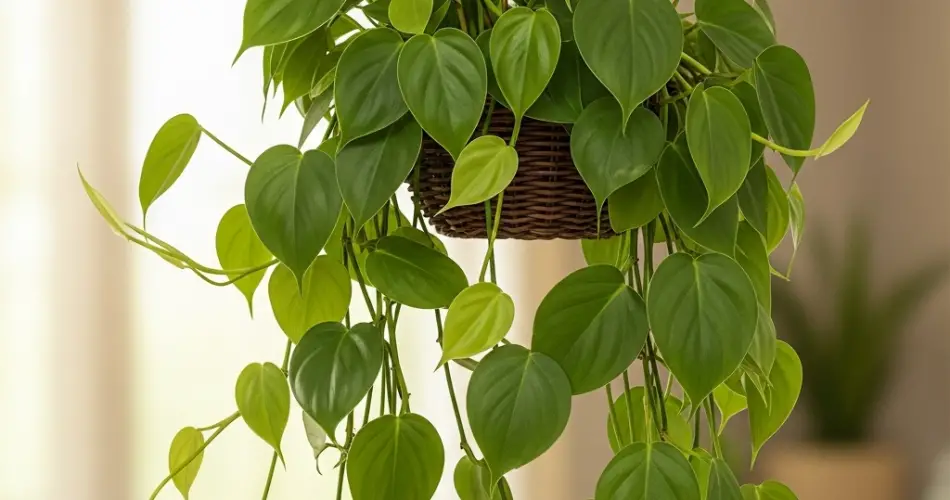
The heart leaf philodendron (Philodendron hederaceum) is one of the most beloved houseplants, known for its trailing vines and glossy, heart-shaped leaves. Its forgiving nature and adaptability make it an ideal choice for both new plant owners and experienced indoor gardeners. While this plant is low-maintenance, one factor that plays a major role in its long-term health is lighting. Choosing the right amount and type of sunlight ensures strong growth, vibrant leaves, and an overall healthy plant.
This guide explores the natural light preferences of heart leaf philodendrons, the best indoor spots for them, and how to recognize and fix common lighting issues.
Natural Habitat and Light Adaptability
In the wild, heart leaf philodendrons are native to tropical rainforests of Central and South America. There, they grow beneath tree canopies, climbing trunks and spreading across shaded forest floors. This natural environment exposes them to dappled or filtered sunlight, rather than harsh, direct rays.
Because of this adaptation, the heart leaf philodendron thrives in medium to bright indirect light when grown indoors. It is also well-known for its ability to tolerate low light, which is why it is often recommended for offices, apartments, and shaded corners.
How Much Light Does a Heart Leaf Philodendron Need?
The ideal lighting for a heart leaf philodendron is bright, indirect light for 6–8 hours a day. This can be achieved by placing the plant near a window where sunlight is softened by curtains or where it doesn’t fall directly onto the leaves.
While the plant can grow in low light conditions, the growth will be slower, and the vines may become leggy. On the other hand, direct sunlight—especially strong afternoon rays—can scorch the delicate leaves, leaving them with yellow or brown patches.
Best Indoor Spots for Heart Leaf Philodendrons
Choosing the right location indoors will help your philodendron thrive. Here are some great options:
-
Near north-facing windows: These provide consistent but gentle light, perfect for steady growth.
-
Close to east-facing windows: The soft morning sun is safe and ideal for this plant.
-
A few feet from south- or west-facing windows: These areas can be too bright, but sheer curtains or moving the plant back from the window will filter harsh light.
-
Low-light rooms: Although not optimal, the philodendron can adapt to darker spots, making it one of the most versatile houseplants.
Hanging baskets, plant shelves, or tall stands near windows often make beautiful displays for their cascading vines.
Can Heart Leaf Philodendrons Live in Low Light?
Yes, one of the biggest advantages of this plant is its ability to survive in low-light environments. This is why heart leaf philodendrons are often found in offices and spaces without much direct sunlight. However, in prolonged low-light conditions, expect slower growth and fewer new leaves. The plant may also stretch toward the nearest light source, creating long, sparse vines.
If your philodendron is not thriving in a dim corner, consider moving it occasionally to a brighter location or supplementing with artificial light.
Using Artificial Light
Grow lights are an excellent way to keep a heart leaf philodendron healthy in darker spaces. Fluorescent or LED grow lights that mimic natural sunlight work well. Position them about 12–18 inches above the plant and keep them on for 10–12 hours a day. This will provide the necessary light for photosynthesis and prevent weak or leggy growth.
Signs of Incorrect Lighting
Heart leaf philodendrons give clear signals if their lighting is not right:
-
Too much light: Leaves develop brown patches, yellowing edges, or appear scorched.
-
Too little light: Vines become long and leggy with fewer, smaller leaves.
-
Ideal light: Glossy, heart-shaped leaves remain vibrant green, and new growth appears regularly.
Paying attention to these signs helps you quickly adjust placement and prevent lasting damage.
Seasonal Lighting Adjustments
Light intensity changes with the seasons. During summer, sunlight is stronger, so plants near bright windows may need to be moved back or protected with sheer curtains. In winter, when daylight is weaker and shorter, moving the philodendron closer to a window or using a grow light can help maintain steady growth.
Extra Care Tips for Success
Pairing the right lighting with other care habits will keep your heart leaf philodendron at its best:
-
Rotate the plant: Turn the pot every week or two to encourage even growth and prevent leaning toward one side.
-
Clean the leaves: Dust can block light absorption, so gently wipe the foliage with a damp cloth.
-
Adjust watering to light levels: Plants in brighter spots dry out faster and may need more frequent watering than those in low light. Always allow the top inch of soil to dry out before watering again.
-
Support trailing growth: Use hanging baskets or let vines cascade from shelves for both aesthetics and healthy airflow.
Conclusion
The heart leaf philodendron is a resilient and versatile houseplant that adapts beautifully to a variety of indoor lighting conditions. While it can survive in low light, it truly thrives in medium to bright, indirect sunlight that mimics the dappled light of its tropical forest home. Avoid direct sun exposure to prevent leaf damage, and make seasonal adjustments to ensure consistent conditions year-round.
With the right balance of light, along with simple care practices like rotation, cleaning, and proper watering, your heart leaf philodendron will reward you with lush, cascading vines and vibrant green foliage—adding timeless beauty and life to your indoor space.


