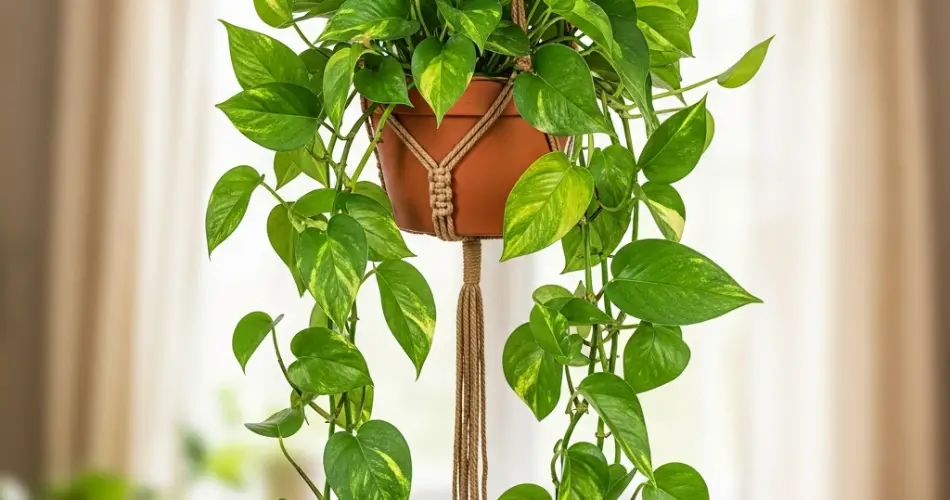
Pothos (Epipremnum aureum) is one of the most versatile houseplants, known for its heart-shaped leaves, trailing vines, and easy care. Depending on how you display it, pothos can either cascade gracefully from a hanging basket or climb a trellis or moss pole, creating a lush vertical display. Understanding the differences between hanging and climbing growth, as well as how to provide the right support, ensures your pothos thrives and looks its best.
This guide explores the best methods for supporting pothos, whether you prefer a trailing or climbing habit.
Understanding Pothos Growth Habits
Pothos is a natural climber in its native tropical environment, where it attaches to trees using aerial roots. Indoors, it can grow either as a trailing plant or a climber, depending on the support and training you provide.
-
Hanging Pothos: When left to trail over the edges of a pot or basket, the vines grow downward, creating a cascading effect. This style emphasizes the plant’s graceful, flowing foliage.
-
Climbing Pothos: By training vines to grow vertically on a trellis, moss pole, or other support, pothos develops thicker stems and larger leaves over time. Climbing encourages the plant to fill a vertical space, ideal for shelves, walls, or corners.
Both growth habits are attractive, but each requires specific care and support techniques to achieve optimal results.
Choosing the Right Support
For Hanging Pothos
Hanging baskets or wall-mounted containers work best for trailing growth. Choose a pot with sufficient depth for root development and secure hanging hardware to support the plant’s weight.
Tips for hanging pothos:
-
Rotate the basket periodically to ensure even light exposure on all vines.
-
Trim leggy stems as needed to maintain a balanced appearance.
-
Allow vines to drape naturally; avoid forcing them upward.
Hanging pothos are ideal for adding greenery to shelves, high windowsills, or corners where space is limited.
For Climbing Pothos
Vertical growth requires a structure for vines to attach. Common options include:
-
Moss poles: These provide a natural surface for aerial roots to cling to and retain moisture, encouraging robust growth.
-
Trellises: Lightweight trellises can guide vines along a wall or in a container.
-
Wall hooks or strings: For a creative approach, use strings or hooks to train vines along a wall or around a frame.
Tips for climbing pothos:
-
Secure vines loosely to the support using plant ties, soft twine, or clips.
-
Encourage aerial roots to attach by gently pressing them against the support.
-
Mist moss poles occasionally to maintain humidity and support root attachment.
Climbing pothos tends to produce larger, thicker leaves over time, giving a dramatic, tropical appearance.
Watering and Light Considerations
Whether hanging or climbing, pothos care is consistent across both growth habits.
-
Watering: Water only when the top 1–2 inches of soil are dry. Hanging baskets may dry out faster than larger pots, so check soil moisture regularly.
-
Light: Pothos thrives in bright, indirect light but tolerates low light. Climbing plants may need more consistent light to promote vertical growth and larger leaves. Rotate the plant occasionally to prevent uneven growth.
Pruning for Shape and Health
Pruning encourages bushier vines for hanging pothos and promotes branching for climbing varieties. Remove yellow, brown, or damaged leaves at the base of the stem, and trim overly long vines to maintain balance. For climbing pothos, trimming encourages lateral growth along the support, filling the vertical space more effectively.
Propagation from Cuttings
Both hanging and climbing pothos benefit from propagation. Pruned cuttings can be rooted in water or soil to create new plants:
-
Remove leaves from the bottom 1–2 inches of each cutting.
-
Place cuttings in water until roots form, then transplant into soil, or plant directly into moist potting mix.
-
Regular propagation helps maintain bushy growth and allows you to expand your plant collection.
Tips for Optimal Growth
-
Rotate plants regularly for even light exposure.
-
Combine pruning with propagation to keep plants healthy and full.
-
Support climbing vines early to prevent tangling or damage.
-
Use high-quality, well-draining soil and a container with drainage holes.
-
Fertilize occasionally during the growing season to encourage robust growth.
Conclusion
Whether you choose to hang your pothos for cascading beauty or train it to climb a pole for a dramatic vertical display, providing the right support and care ensures healthy, vibrant growth. Hanging plants offer elegance and flow, while climbing plants produce fuller, larger leaves and a tropical feel. Understanding these differences and following proper watering, light, pruning, and propagation practices allows your pothos to thrive in any indoor environment.
With thoughtful support and minimal maintenance, your pothos can transform your space, whether trailing gracefully from a basket or climbing proudly along a wall.


