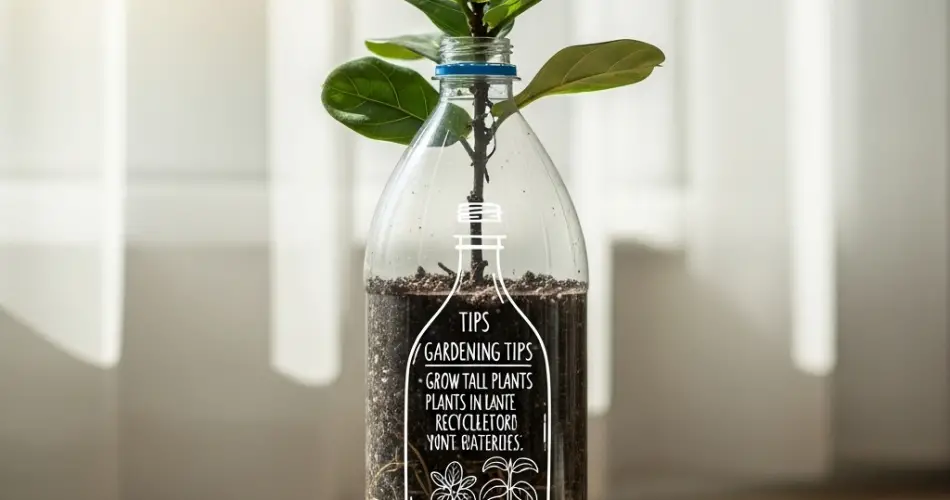
Tall houseplants like the fiddle leaf fig (Ficus lyrata) add bold structure and natural elegance to any indoor space. Known for their large, violin-shaped leaves and upright growth habit, fiddle leaf figs have become a favorite in homes and apartments. While these plants are typically grown in large pots or planters, they can also thrive in creative, low-cost alternatives—like recycled plastic bottles.
Bottle gardening isn’t just for herbs or small succulents. With the right setup and care, even tall plants like fiddle leaf figs can be started, propagated, and grown in bottle-based containers. This guide explores how to grow tall plants like fiddle figs using bottle setups, ideal for urban gardeners and sustainability-minded plant lovers.
Why Try Bottle Setups for Tall Plants?
Using plastic bottles to grow tall plants offers several unique advantages:
-
Eco-friendly: Reduces plastic waste by repurposing bottles as planters.
-
Space-saving: Perfect for small homes, apartments, or balconies.
-
Budget-friendly: No need to purchase traditional planters.
-
Lightweight and movable: Easy to reposition your plants for optimal light.
For young plants and propagations, bottle setups offer a practical, functional, and visually appealing way to nurture growth before transplanting to a larger container.
What You’ll Need
To start a tall plant like a fiddle leaf fig in a plastic bottle, gather the following:
-
A large plastic bottle (1.5–2 liters or larger)
-
A fiddle fig cutting or young plant
-
Potting soil (well-draining)
-
Scissors or a utility knife
-
Pebbles or perlite (for drainage)
-
Activated charcoal (optional)
-
Decorative materials (twine, fabric, paint) – optional
Step-by-Step Setup
1. Prepare the Bottle
Start by selecting a clean, sturdy plastic bottle. Rinse it thoroughly and remove any labels. Use a sharp knife or scissors to cut the bottle:
-
Cut about one-third from the top, creating an open container for planting.
-
If you’re using a bottle with a narrow neck, cut lower to allow space for plant roots and soil.
Make drainage holes at the bottom. This is essential to prevent water from pooling and causing root rot.
2. Add a Drainage Layer
Place a 1–2 inch layer of small stones, broken clay pieces, or perlite at the bottom of the bottle. This helps with water flow and air circulation around the roots.
To further reduce the chance of bacterial growth or odors, add a thin layer of activated charcoal on top of the stones.
3. Fill with Potting Mix
Use a high-quality potting mix formulated for indoor plants. Fiddle leaf figs prefer soil that drains well but retains some moisture. A recommended blend includes:
-
2 parts general-purpose potting soil
-
1 part perlite or coarse sand
-
1 part compost or coconut coir
Leave enough room at the top of the bottle for watering.
Planting Your Fiddle Fig
If using a cutting, make sure it has at least one node and a few leaves. If starting with a small plant from a nursery, gently remove it from its original pot and shake off excess soil.
-
Dig a small hole in the center of the bottle planter.
-
Place the cutting or young plant into the hole and surround it with soil, pressing down lightly.
-
Water sparingly just enough to settle the soil.
Allow the plant to acclimate for a few days in a bright, shaded location before exposing it to direct sunlight.
Ideal Growing Conditions
Tall plants like fiddle figs thrive in conditions that mimic their native tropical environment:
-
Light: Bright, indirect light is best. Place your bottle setup near a sunny window but avoid harsh direct rays that can scorch the leaves.
-
Temperature: Aim for a stable range between 60–75°F (16–24°C). Avoid cold drafts or sudden temperature changes.
-
Humidity: Moderate humidity is ideal. If your indoor air is dry, use a humidity tray or mist the plant occasionally.
Watering and Maintenance
Plastic bottles retain moisture more than ceramic or terracotta pots. Overwatering is a common mistake with fiddle figs.
-
Water only when the top 2 inches of soil are dry.
-
Pour water slowly and allow excess to drain fully.
-
Dump out any standing water at the base if your bottle doesn’t self-drain.
During the growing season (spring to early autumn), feed the plant once a month with a diluted, balanced houseplant fertilizer.
Training and Support for Tall Growth
As your plant grows taller, you may need to support it to prevent tipping:
-
Use wooden stakes or bamboo sticks inserted gently into the soil.
-
Tie the main stem loosely with soft twine for support.
-
Rotate the bottle every couple of weeks to ensure even growth toward the light.
Decorating Your Bottle Planter
Plastic doesn’t have to look plain. Get creative with your container:
-
Wrap with jute rope or fabric for a rustic look.
-
Paint the outside with non-toxic acrylic paint to match your interior.
-
Group bottles together for a mini indoor garden setup.
When to Repot
As your fiddle fig grows, it will eventually outgrow its bottle setup. Signs it’s time to repot:
-
Roots circling the base or growing out of drainage holes.
-
Soil drying out too quickly.
-
The plant becomes too top-heavy.
When this happens, move the plant to a larger pot with fresh soil to support its continued growth.
Final Thoughts
Growing tall plants like fiddle leaf figs in bottle setups proves that you don’t need fancy planters to create a beautiful, thriving indoor garden. With a bit of resourcefulness and care, a simple plastic bottle can become the first home for a striking plant that adds height, texture, and elegance to your living space.
This method is especially useful for propagation, young plants, or small-space living. It’s a practical way to nurture greenery while reducing waste—one bottle at a time.


