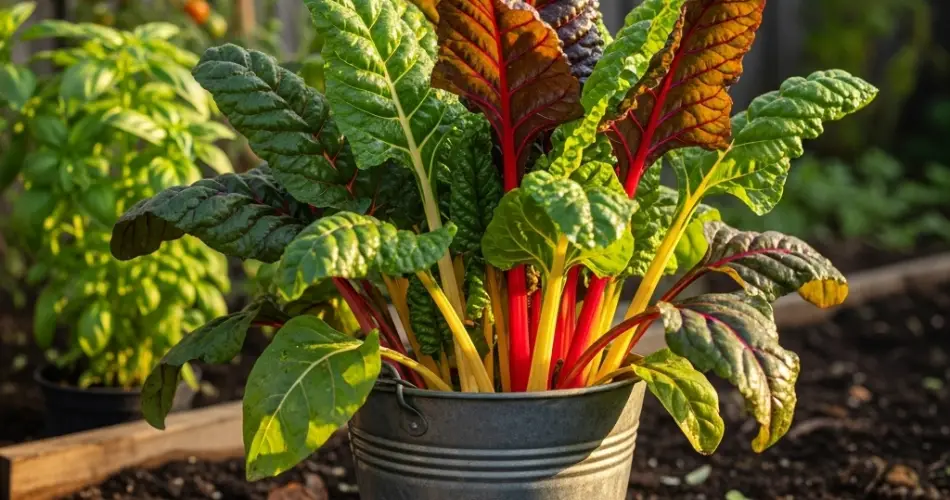
Swiss chard is one of the most versatile leafy greens you can grow at home. Known for its vibrant stems and nutritious leaves, it adds both beauty and health benefits to your meals. Best of all, you don’t need a large garden to enjoy fresh chard. With just a few buckets, you can successfully cultivate this hardy vegetable in compact spaces such as balconies, patios, or small backyards. Growing Swiss chard in containers is easy and rewarding, providing you with a steady supply of greens throughout the season.
Why Buckets Work for Swiss Chard
Swiss chard is particularly well-suited for container gardening. Its roots are not very deep, making it easy to grow in buckets. A standard 5-gallon bucket provides enough room for several plants, and the portability of containers allows you to move them around to take advantage of sunlight or protect them from extreme weather.
Drainage is the key to success. Drill 5–6 holes in the bottom of each bucket to prevent water from accumulating. Elevating buckets slightly with bricks or pot stands can also improve air circulation and drainage, keeping the plants healthier.
Preparing the Soil
Chard thrives in fertile, well-draining soil. The best mix combines high-quality potting soil with compost to provide nutrients and improve texture. You can also add perlite or coarse sand to enhance drainage. Avoid heavy garden soil on its own, as it may compact in containers and suffocate roots.
Before planting, work in a generous amount of organic matter such as composted manure or worm castings. Swiss chard prefers a soil pH between 6.0 and 7.0, slightly acidic to neutral. A nutrient-rich start ensures steady growth and plentiful harvests.
Planting Swiss Chard in Buckets
Swiss chard can be grown either from seeds or transplants. If starting from seed, sow them directly in the bucket about half an inch deep. Space seeds 2–3 inches apart, then thin seedlings once they reach 3–4 inches tall, leaving about 6–8 inches between each plant. This spacing ensures enough airflow and room for the leaves to expand.
If you are using transplants, plant them at the same depth they were growing in their nursery containers. Water thoroughly after planting to help them settle in.
For continuous harvests, sow seeds every 2–3 weeks in additional buckets. This staggered planting keeps a steady flow of young, tender leaves available throughout the growing season.
Sunlight and Temperature Needs
Swiss chard is a cool-season crop but is more heat-tolerant than many leafy greens, making it a flexible choice for year-round growing in many climates. The ideal growing temperature ranges from 50–75°F (10–24°C). In very hot regions, provide partial shade in the afternoon to prevent stress and keep the leaves tender.
Place your buckets in a location that receives at least 5–6 hours of sunlight daily. During cooler months, full sun helps boost growth, while in summer, shifting the buckets to a slightly shaded spot may be beneficial.
Watering and Fertilizing
Consistent moisture is essential for chard. Because buckets dry out more quickly than garden beds, monitor soil moisture regularly. Water when the top inch of soil feels dry, aiming to keep the soil evenly moist but never waterlogged.
Mulching with straw, shredded leaves, or coconut husk helps retain moisture, regulate soil temperature, and suppress weeds.
Swiss chard benefits from regular feeding, as it is harvested continuously for its leaves. Apply a balanced liquid fertilizer every two weeks, or use organic options like compost tea or seaweed extract. Since leafy growth is the priority, fertilizers with a slightly higher nitrogen content are especially helpful.
Pest and Disease Management
Swiss chard is relatively resistant to pests, but common issues include aphids, leaf miners, and slugs. Inspect plants frequently and remove pests by hand if possible. Natural sprays, such as neem oil or insecticidal soap, can help manage infestations without harming the plants.
To prevent fungal diseases, provide good airflow between plants and avoid overhead watering. Removing yellowing or damaged leaves promptly also reduces the risk of spreading disease. Refreshing soil between growing cycles keeps plants healthy and reduces pest buildup.
Harvesting Swiss Chard
One of the best features of Swiss chard is its long harvest window. You can begin picking leaves when they are about 6–8 inches tall. Use the cut-and-come-again method by harvesting the outer leaves and leaving the central growth untouched. This allows the plant to keep producing new leaves for many weeks.
Younger leaves are tender and great for salads, while larger leaves are excellent for sautéing, soups, and stews. Harvesting regularly encourages continuous growth and prevents the plants from becoming too crowded.
Final Tips for Success
-
Choose compact or rainbow chard varieties for container growing.
-
Sow in succession every few weeks for a steady supply of greens.
-
Provide shade during extremely hot weather to prevent wilting.
-
Fertilize consistently for lush, nutrient-rich leaves.
-
Refresh or rotate soil between seasons to maintain plant health.
Growing Swiss chard in buckets is an easy and practical way to enjoy a constant supply of fresh greens. Whether you have a small apartment balcony or just want to maximize space in your backyard, bucket gardening offers a convenient solution. With minimal effort, you’ll have vibrant, nutrient-packed leaves ready to harvest whenever you need them.


