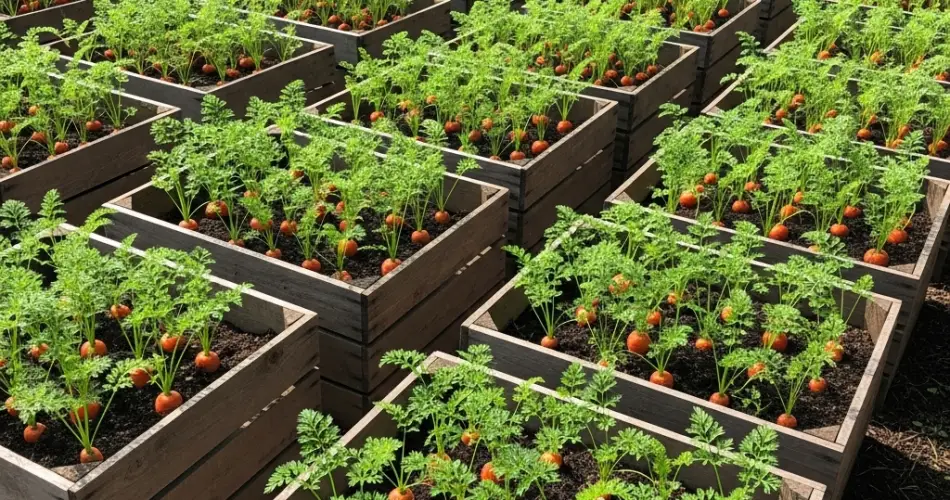
Carrots are a staple in many home gardens, but getting them to grow straight and smooth can be tricky in compacted or rocky soil. Fortunately, deep backyard crate gardening offers a reliable and space-efficient way to grow perfect, straight carrots even in limited areas. Crates give you total control over soil texture, depth, and drainage—three critical factors for successful carrot cultivation.
Whether you’re gardening in a backyard, on a patio, or in an urban courtyard, this method ensures a satisfying and productive harvest.
Why Crates Work Well for Carrots
Carrots are root vegetables that need loose, deep, and well-draining soil. Heavy, clay-rich, or rocky soil often causes them to grow twisted or forked. Deep crates eliminate this issue by providing a customized growing environment tailored to the specific needs of carrots.
Crate gardening also allows for easier access, better pest control, and fewer weeds. Plus, the portability of crates makes them ideal for gardeners who want to move their crops to follow the sun.
Selecting the Right Crate
Choose a crate that is at least 30–40 cm deep, as carrot roots grow long and need room to expand downward. A wooden crate, recycled wooden box, or a deep plastic container with drainage holes will all work well. Avoid crates made of treated wood to prevent chemicals from leaching into the soil.
Line the inside of the crate with landscape fabric, burlap, or a breathable sack to retain soil while still allowing water to drain freely. Elevate the crate slightly with bricks or blocks to promote good air circulation and avoid water pooling beneath.
Preparing the Ideal Soil
Carrots perform best in light, fluffy, and well-drained soil. To make your own carrot-friendly mix, combine:
-
1 part garden soil (sifted to remove rocks)
-
1 part fine compost
-
1 part sand, rice hulls, or coco peat
This mix allows roots to grow straight and deep without resistance. Avoid using fresh manure or nitrogen-rich fertilizers, which can cause carrots to develop hairy or forked roots.
A small handful of wood ash or bone meal can be added to increase phosphorus and potassium, which support strong root growth.
Choosing Carrot Varieties
Different carrot varieties require different soil depths. For crate gardening, these varieties work well:
-
Nantes: Cylindrical, sweet, and grows well in shallow to medium-deep containers.
-
Chantenay: Shorter and stubbier, ideal for slightly shallower crates.
-
Danvers: Medium-length carrots that thrive in deep containers.
-
Imperator: Long, tapered carrots that require very deep, loose soil for best results.
Select a variety that suits the depth of your crate and the growing time you prefer. Nantes, for example, matures in as little as 60–70 days.
Sowing Carrot Seeds
Carrot seeds should be sown directly into the crate, as they do not transplant well. Prepare shallow furrows 1 cm deep and sow the seeds thinly. Space rows about 10 cm apart. Cover lightly with soil and water gently using a fine mist or watering can.
Carrot seeds are slow to germinate, taking 10–20 days. During this period, keep the soil consistently moist and consider covering the crate with a thin cloth or cardboard to help retain moisture. Remove the cover as soon as seedlings appear.
Thinning and Watering
Once seedlings reach 5–7 cm tall, thin them to allow about 3–5 cm between each plant. This gives the roots room to develop properly. Overcrowding can lead to small, twisted carrots.
Water regularly to keep the soil evenly moist. Dry soil can cause the roots to split, while overwatering can lead to rot. Carrots need about 2–3 cm of water per week, depending on the weather.
Sunlight and Temperature
Carrots grow best in full sun but can tolerate light shade. Aim for at least 6 hours of direct sunlight daily. Crates can be moved throughout the day if your backyard has changing sun exposure.
Cool temperatures between 15–25°C (59–77°F) are ideal for growing sweet, crisp carrots. In warmer climates, plant carrots in early spring or late fall to avoid excessive heat.
Pest and Disease Management
Crate-grown carrots are less prone to pests than in-ground crops, but still watch for:
-
Carrot flies: Use fine mesh or row covers to protect seedlings.
-
Aphids: Spray with neem oil or insecticidal soap.
-
Fungal diseases: Avoid overhead watering and ensure good airflow between crates.
Crop rotation is helpful if you plan to use the same crate for successive plantings.
Harvesting Carrots
Carrots are typically ready for harvest in 60–80 days, depending on the variety. You’ll know they’re mature when the top of the root begins to show above the soil and reaches the expected diameter.
Loosen the soil gently before pulling out the carrots to avoid breakage. Twist the greens off to prevent them from drawing moisture from the roots during storage.
Freshly harvested carrots can be stored in the refrigerator for several weeks. If storing longer, layer them in damp sand in a cool place.
Growing straight, sweet carrots in backyard crates is a rewarding and practical way to make the most of your gardening space. With the right crate depth, loose soil, and consistent care, you’ll enjoy homegrown carrots that are as beautiful as they are tasty.


