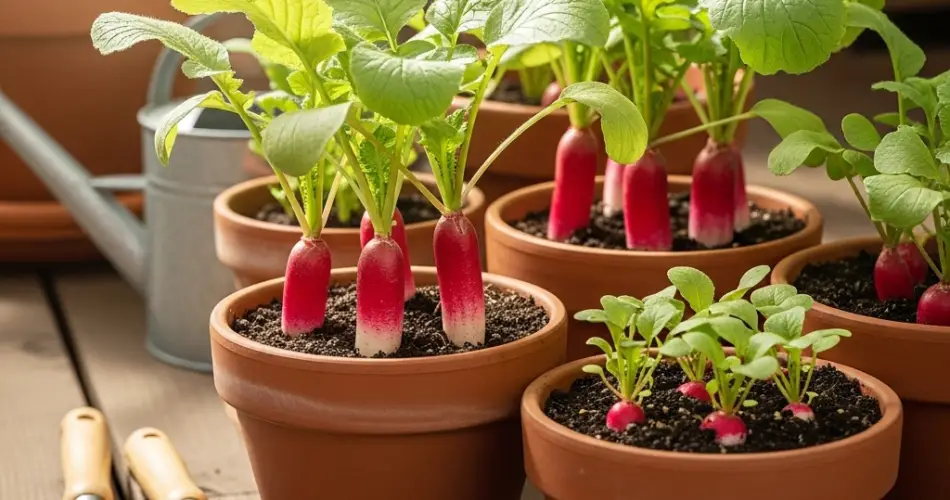
Radishes are one of the fastest and easiest vegetables to grow, making them perfect for container gardening. With their crisp texture, peppery flavor, and speedy growth, radishes are ideal for gardeners who want quick results and minimal fuss. Whether you have a balcony, patio, rooftop, or small outdoor area, growing radishes in pots provides a convenient and rewarding way to harvest fresh produce in just a few weeks.
Because they don’t require deep soil or constant attention, radishes are an excellent crop for beginners. Their compact size makes them a great option for urban gardeners or anyone working with limited space. With the right setup, you can enjoy a steady supply of crunchy, homegrown radishes throughout the growing season.
Why Grow Radishes in Pots?
There are several advantages to growing radishes in containers:
-
Space-saving: Radishes have shallow roots and small foliage, making them suitable for small pots and tight spaces.
-
Quick harvest: Most radish varieties are ready to harvest in just 3–4 weeks.
-
Less weeding: Containers reduce weed competition.
-
Fewer pests: Growing off the ground limits exposure to common soil pests and diseases.
-
Better soil control: You can provide the ideal growing medium without depending on native soil conditions.
Container gardening also allows you to control watering and placement, moving pots to catch optimal sunlight as needed.
Best Radish Varieties for Pots
While most radishes grow well in containers, some are particularly suited to small spaces and quick harvests:
-
Cherry Belle: A classic, fast-growing variety with round, red roots and mild flavor.
-
French Breakfast: An heirloom variety with an elongated shape and crisp, mildly spicy taste.
-
Easter Egg: A colorful mix of pink, white, red, and purple radishes, great for variety in a single pot.
-
White Icicle: Long and slender with a zesty bite—ideal for deeper containers.
-
Sparkler: Red with a white tip and quick to mature.
Choose varieties based on your taste preferences and the size of your containers.
Choosing the Right Container
Since radishes have shallow roots, you don’t need an especially deep pot. Aim for:
-
Depth: At least 6–8 inches (15–20 cm) deep.
-
Width: Wide enough to allow 2–3 inches (5–7 cm) of space between each seedling.
You can grow radishes in plastic pots, terracotta containers, window boxes, fabric grow bags, or even repurposed containers like plastic tubs—just make sure there are adequate drainage holes.
Soil and Preparation
Radishes prefer loose, well-draining soil that’s rich in organic matter. The soil should be light enough to allow roots to expand without obstruction. Use a blend like:
-
2 parts potting mix
-
1 part compost or well-rotted manure
-
Optional: Add a bit of perlite or sand to improve drainage
Avoid compacted or clay-heavy soil, which can cause radishes to grow misshapen or fail to form proper roots.
Planting Radish Seeds
-
Direct Sowing: Radishes grow best when sown directly into their final container. Sow seeds about ½ inch (1.25 cm) deep and 2 inches (5 cm) apart.
-
Thinning: Once the seedlings emerge (within 4–7 days), thin them to maintain proper spacing. Crowded radishes won’t develop round roots.
-
Sunlight: Place the container in a location that receives at least 6 hours of sunlight per day. Radishes love full sun but can tolerate partial shade, especially in hot climates.
Watering and Feeding
-
Watering: Keep the soil consistently moist but not waterlogged. Uneven watering can result in split or bitter-tasting roots. During hot or dry weather, check soil moisture daily.
-
Feeding: Radishes generally don’t require much fertilization. If your soil mix includes compost, that may be enough. However, if needed, use a balanced liquid fertilizer once or twice during the growing period. Avoid high-nitrogen fertilizers, which promote leafy growth over root development.
Pests and Problems
Radishes grown in containers are less prone to pests than those in the ground, but still keep an eye out for:
-
Aphids: Spray with water or apply neem oil if infestations occur.
-
Flea beetles: Use row covers or companion plants like nasturtiums to deter them.
-
Bolting: Radishes can bolt (go to seed) in hot temperatures. To avoid this, plant in cooler weather and ensure the soil stays evenly moist.
Harvesting Radishes
Radishes are usually ready to harvest within 20 to 30 days after sowing, depending on the variety and growing conditions. To check readiness, gently brush away a bit of soil to inspect the size of the root.
Harvest when the radish is about 1 inch (2.5 cm) in diameter. Leaving them too long can make them woody and bitter. Pull the radishes gently from the soil, and wash them thoroughly before eating or storing.
Growing Successive Crops
Because radishes mature quickly, they’re ideal for succession planting. After harvesting, amend the soil lightly with compost and re-sow new seeds. This allows for a continuous harvest throughout the season.
You can also interplant radishes with slower-growing crops like carrots or lettuce, harvesting the radishes early to free up space for the others.
Final Thoughts
Radishes are one of the easiest crops to grow in containers, making them a perfect choice for beginner gardeners and busy growers alike. Their speed, minimal space requirements, and satisfying crunch make them a staple in any compact garden. Whether on a sunny balcony, doorstep, or windowsill, a pot of radishes can turn a small space into a productive and tasty garden patch. With just a few weeks of care, you’ll be rewarded with fresh, flavorful roots ready to enjoy straight from the soil.


