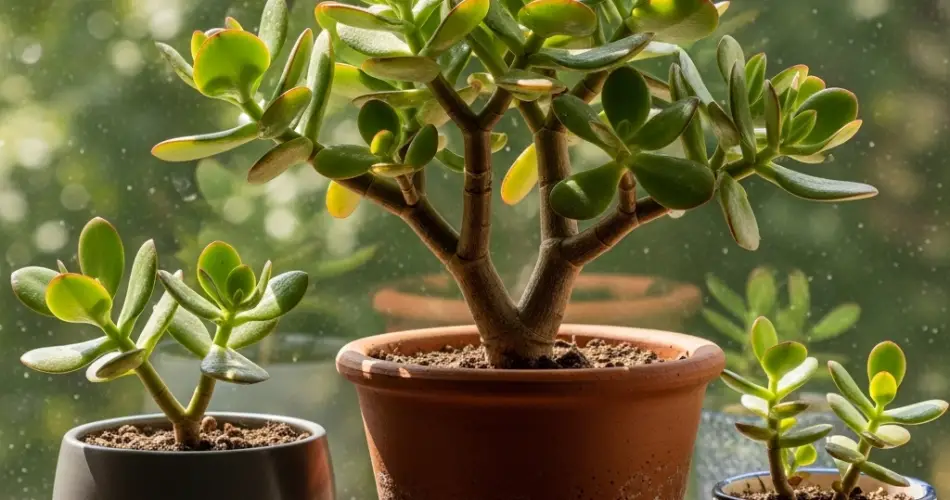
The jade plant (Crassula ovata), often called the “money plant” or “lucky plant,” is one of the most enduring and beloved houseplants. With its thick, glossy leaves and tree-like structure, this succulent is easy to grow and rewarding to care for. One of its most impressive traits is its ability to grow from a single leaf into a robust, bonsai-style potted tree over time.
Whether you’re propagating from a leaf or nurturing a mature specimen, this guide will walk you through the entire process of growing a jade plant in pots—from its early beginnings to its full potential.
Why Grow Jade Plants in Pots?
Jade plants thrive in containers, making them ideal for indoor gardeners. Their compact root system, slow growth, and drought tolerance make them well-suited for pot culture. Container growing also gives you more control over soil quality, watering, and light exposure.
A potted jade plant can live for decades and even be passed down through generations. With proper care, it can develop thick, woody stems and a branching habit that mimics a miniature tree.
Starting from a Leaf or Cutting
One of the most fascinating aspects of jade plants is their ability to regenerate from a single healthy leaf or a short stem cutting.
Propagating from a Leaf:
-
Choose a firm, plump leaf from a mature jade plant.
-
Gently twist it off the stem, making sure to take the entire base.
-
Let the leaf air-dry for 2–3 days so the cut end can callous over—this helps prevent rot.
-
Place the calloused end on top of a well-draining soil mix without burying it.
-
Mist the soil lightly every few days until roots begin to form.
After a few weeks, small roots and eventually tiny leaves will emerge from the base. At this point, treat the plant as a seedling and water sparingly.
Propagating from a Stem Cutting:
-
Use a 3–5 inch cutting with several leaves.
-
Allow it to callous for a few days.
-
Insert it into well-draining soil and water lightly.
Stem cuttings root more quickly than single leaves and are ideal if you want a head start on a bushier plant.
The Right Container
Choosing the right pot sets the foundation for healthy jade plant growth.
-
Drainage holes are essential to prevent water from accumulating and causing root rot.
-
Material matters: Terracotta pots are excellent for jade plants because they’re breathable and allow excess moisture to evaporate.
-
Size wisely: Start with a small pot when propagating and gradually size up. Jade plants like to be a bit root-bound and don’t need frequent repotting.
As the plant matures and becomes top-heavy, a heavier container will help stabilize it.
Soil and Light Requirements
Jade plants are succulents, so they need well-draining soil and plenty of light.
-
Soil: Use a cactus or succulent mix, or make your own with 2 parts potting soil, 1 part perlite, and 1 part coarse sand.
-
Light: Jade plants prefer at least 4–6 hours of bright, indirect sunlight daily. A sunny windowsill or bright room is ideal. Too little light will result in leggy, weak growth.
In very bright locations, the edges of the leaves may develop a red tint—a sign of healthy sun exposure.
Watering and Feeding
Overwatering is the most common cause of failure with jade plants. Their thick leaves store water, allowing them to go weeks without a drink.
Watering Tips:
-
Let the soil dry out completely between waterings.
-
Water thoroughly and then empty the saucer.
-
Reduce watering frequency in fall and winter.
Fertilizing:
-
Feed once a month during the growing season (spring and summer) with a balanced, diluted liquid fertilizer.
-
Avoid fertilizing during dormancy in cooler months.
Pruning and Shaping Your Jade Tree
To encourage a strong, tree-like form:
-
Begin pruning when the plant is about 6 inches tall.
-
Cut just above a leaf node to encourage branching.
-
Remove leggy or downward-growing stems to improve shape.
Over time, your jade plant will develop woody stems and a more structured, bonsai-style silhouette. Regular pruning keeps the plant compact and attractive.
Repotting and Long-Term Care
Jade plants grow slowly and only need repotting every 2–3 years. Signs it’s time to repot include roots growing out of the drainage holes or the plant becoming top-heavy.
When repotting:
-
Use fresh succulent soil mix.
-
Choose a pot that’s just one size larger.
-
Let the plant rest for a few days before watering to help it adjust.
Keep leaves dust-free by gently wiping with a damp cloth, and inspect regularly for pests like mealybugs or spider mites.
Final Thoughts
With just a single leaf or cutting, you can grow a striking, long-lasting jade plant that evolves into a tree-like form over the years. Compact enough for any pot yet bold in appearance, jade plants offer low-maintenance beauty and a rewarding growing experience. Whether on a windowsill or in a bright corner of your home, this resilient succulent brings structure, charm, and longevity to any indoor space.


