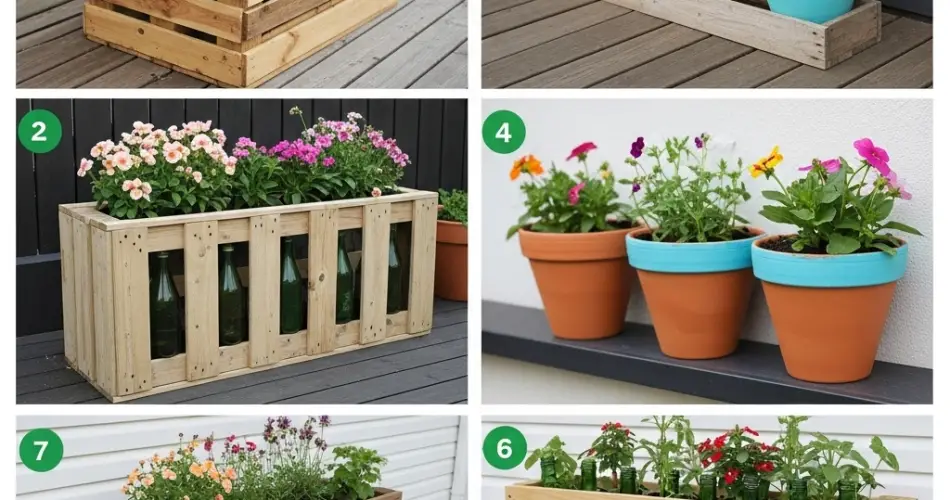
Creating a terrace garden doesn’t have to be expensive or complicated. With a bit of creativity and a few simple tools, you can make your own planters using materials you already have at home. DIY planters not only reduce costs but also let you personalize your space with unique, functional designs that reflect your style. Whether you’re growing herbs, vegetables, or flowers, these easy planter ideas will help you make the most of your terrace space.
Here are several fun and budget-friendly DIY planter ideas you can try for your terrace garden.
1. Repurposed Plastic Bottles
Plastic bottles are one of the easiest and most accessible materials to use for DIY planters. Instead of throwing them away, give them a second life in your garden.
How to make it:
-
Cut large plastic bottles (like soda or water bottles) horizontally or vertically, depending on the plant size.
-
Make drainage holes at the bottom.
-
Paint or decorate the outside if desired.
-
Fill with potting soil and plant your favorite herbs or small flowering plants.
Best for: Herbs, lettuce, small flowers, or succulents.
You can hang them on a wall, railing, or create a vertical arrangement by stacking or stringing them.
2. Tin Can Planters
Used tin cans, such as those from canned vegetables or soups, make great rustic-style planters. They’re compact and ideal for small plants.
Steps:
-
Wash and dry the cans thoroughly.
-
Drill or punch a few holes at the bottom for drainage.
-
Paint or wrap them in jute, fabric, or paper for a decorative touch.
-
Fill with soil and add your plant.
Great for: Basil, mint, parsley, or ornamental flowers.
Attach them to a wooden frame or mount them on a balcony railing for a vertical effect.
3. Old Buckets or Paint Cans
Don’t toss out old paint cans or metal buckets—they can become stylish industrial-look planters with minimal effort.
Instructions:
-
Clean the container thoroughly and remove any paint residue.
-
Drill drainage holes.
-
Paint with weather-resistant spray paint or leave them as-is for a rustic look.
-
Add a layer of gravel at the bottom before filling with potting mix.
Ideal for: Tomatoes, peppers, or larger herbs.
Place these on the terrace floor or a plant stand for added height.
4. Wooden Crate Planters
Wooden fruit or wine crates are perfect for creating box-style planters. They offer a farmhouse aesthetic and provide enough depth for vegetables and larger root systems.
To build:
-
Line the inside with landscape fabric or plastic with drainage holes.
-
Add a layer of small rocks or broken pots for drainage.
-
Fill with a quality potting mix and start planting.
Perfect for: Lettuce, spinach, radishes, or marigolds.
You can stack crates vertically, create a tiered structure, or leave them side by side depending on your space.
5. Old Drawers or Dresser Pieces
Give old furniture parts a new purpose. A discarded drawer can become a charming, vintage-style planter.
How-to:
-
Remove hardware and reinforce the base if needed.
-
Drill holes at the bottom.
-
Paint or seal the wood to protect against moisture.
-
Fill with soil and start planting.
Best for: Flowering plants, herbs, or mixed salad greens.
For added flair, stack drawers at angles or set them on bricks to create a tiered effect.
6. Upcycled Shoes or Boots
Old shoes and boots can be quirky, fun planters that add personality to your garden. They’re especially good for shallow-rooted plants.
Instructions:
-
Clean them thoroughly.
-
Drill a couple of drainage holes if the material allows.
-
Add gravel at the base and fill with soil.
Great for: Small flowering plants or succulents.
Place them near the edge of your terrace or among other planters for visual interest.
7. Hanging Planters with Fabric or Macrame
You don’t always need fancy materials to make hanging planters. Fabric scraps, old t-shirts, or macrame cords can be turned into plant holders with just a few knots.
Steps:
-
Use strong fabric or cords to create a cradle for a small pot.
-
Knot securely and attach to a hook, rod, or balcony railing.
-
Make sure the pot has drainage and doesn’t leak excess water.
Best for: Trailing plants, herbs, or ferns.
These add a vertical layer to your garden and bring plants to eye level.
8. Cement or Concrete Planters (for DIY Enthusiasts)
If you’re willing to get a bit messy, making your own cement planters can be a fun weekend project.
How to do it:
-
Mix cement and pour into molds (like plastic containers or boxes).
-
Insert a smaller container inside to shape the hollow center.
-
Let dry for 24–48 hours, then remove the mold and drill a drainage hole.
Best for: Succulents, cacti, or ornamental plants.
These are durable and offer a modern, minimalist look.
Final Tips for DIY Planters
-
Drainage is key: Always ensure there are holes at the bottom to prevent root rot.
-
Use lightweight soil: Especially important for rooftop or terrace gardens where weight matters.
-
Group by care needs: Keep plants with similar sunlight and watering requirements together.
-
Label your plants: Especially useful when growing multiple herbs or varieties.
Final Thoughts
DIY planters are a great way to save money, reduce waste, and personalize your terrace garden. With a little creativity and resourcefulness, almost anything can become a plant container—from plastic bottles to old drawers. By turning everyday objects into functional and beautiful planters, you can build a lush, eco-friendly garden that’s truly your own. Whether you’re a beginner or an experienced gardener, these simple ideas will help you grow more with less.


