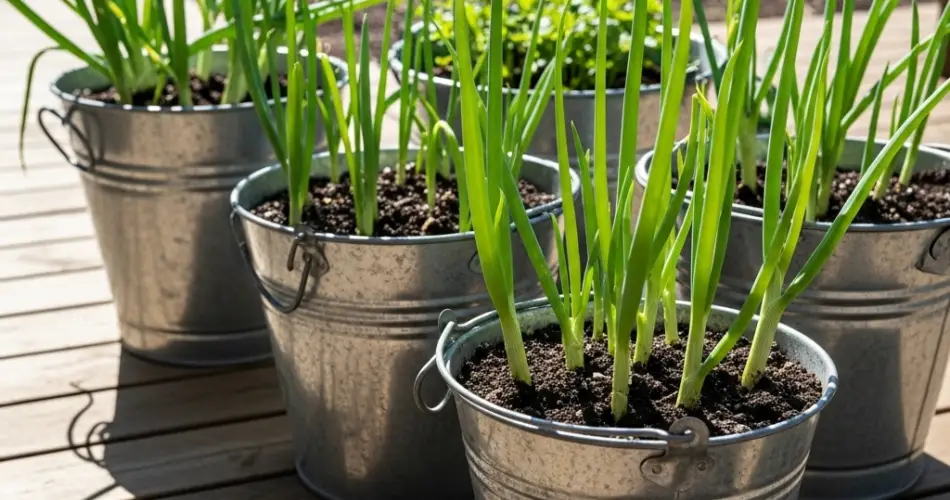
Scallions, also known as green onions, are a versatile and flavorful addition to any kitchen. They can be grown successfully in small spaces using buckets, making them perfect for urban gardens, balconies, and windowsills. Bucket gardening allows for control over soil, water, and sunlight, resulting in healthy plants and a continuous supply of fresh scallions. By following proper planting, watering, and care techniques, it is possible to enjoy a steady harvest all season long.
Choosing the Right Bucket
Selecting an appropriate bucket is essential for successful scallion cultivation. Since scallions have relatively shallow roots, a bucket with a depth of 6–8 inches is sufficient. Wide buckets allow multiple scallions to grow together while maintaining adequate spacing for airflow and healthy growth.
Ensure the bucket has drainage holes to prevent water accumulation, which can lead to root rot and stunted growth. Lightweight containers, such as plastic or fiberglass buckets, are easy to move to maximize sunlight exposure. Terracotta or ceramic buckets retain moisture well but may require more frequent watering during hot weather.
Preparing the Soil
Scallions thrive in fertile, well-draining soil. A high-quality potting mix enriched with compost or organic matter supplies essential nutrients and retains moisture. Adding perlite or coarse sand improves aeration, prevents compaction, and supports healthy root development.
The ideal soil pH for scallions is slightly acidic to neutral, between 6.0 and 7.0. Fill the bucket to about an inch below the rim to leave room for watering and mulching. Mulching with straw, shredded leaves, or grass clippings helps conserve moisture, regulate soil temperature, and suppress weeds, creating optimal conditions for growth.
Selecting Scallion Varieties
Several scallion varieties are well-suited to bucket gardening. ‘White Lisbon,’ ‘Evergreen Long White,’ and ‘Tokyo Long White’ are popular options that thrive in small containers and provide a continuous harvest. Scallions can be grown from seeds, sets, or small seedlings, depending on preference and availability.
Planting Scallions in Buckets
Scallions are usually grown from seeds sown directly in the container. Plant seeds about ¼ inch deep, spacing them 1–2 inches apart. If using sets or seedlings, plant them at the same depth they were previously growing, keeping adequate spacing for airflow and bulb development.
After planting, water the soil lightly to settle it around the seeds and encourage germination. Maintain consistent moisture during the early stages of growth until seedlings establish strong roots.
Watering and Moisture Management
Consistent moisture is key for bucket-grown scallions. The soil should remain evenly moist but not soggy. Overwatering can lead to root rot, while under-watering may stress the plants and reduce growth. Monitor soil regularly, as buckets dry out faster than garden beds, especially in hot weather.
Water in the morning so foliage has time to dry during the day, reducing the risk of fungal diseases. Mulching helps maintain soil moisture, protects roots from temperature fluctuations, and reduces the frequency of watering.
Sunlight Requirements
Scallions require full sunlight for optimal growth, ideally 6–8 hours per day. Place buckets in a bright location to promote strong stems and healthy leaves. In hot climates, provide partial afternoon shade to prevent leaf scorching and ensure consistent growth.
Fertilization and Care
Scallions benefit from regular feeding to maintain vigorous growth. Apply a balanced, water-soluble fertilizer every 2–3 weeks or incorporate compost for a natural nutrient boost. Avoid excessive nitrogen, which can encourage leafy growth at the expense of bulb formation.
Prune yellowing or damaged leaves to maintain airflow and reduce disease risk. Proper care ensures bucket-grown scallions remain healthy and productive throughout the season.
Harvesting Scallions
Scallions can be harvested once they reach 6–8 inches in height. For a continuous supply, snip the outer stalks at soil level, allowing inner shoots to continue growing. This “cut-and-come-again” method provides a steady harvest without removing the entire plant. Full bulbs can be harvested when the white portion reaches a usable size.
Benefits of Bucket Gardening for Scallions
Growing scallions in buckets offers several advantages for small-space gardeners. Containers provide control over soil, water, and sunlight, reduce exposure to pests and soil-borne diseases, and make gardening feasible in urban environments or areas with limited outdoor space. With proper care, bucket-grown scallions offer a continuous supply of fresh, flavorful greens for home cooking.
By selecting the right bucket, preparing nutrient-rich soil, watering consistently, providing adequate sunlight, and following proper fertilization and harvesting practices, gardeners can enjoy a productive scallion harvest all season long. Bucket gardening transforms small spaces into productive vegetable gardens, delivering fresh, homegrown scallions year-round.


