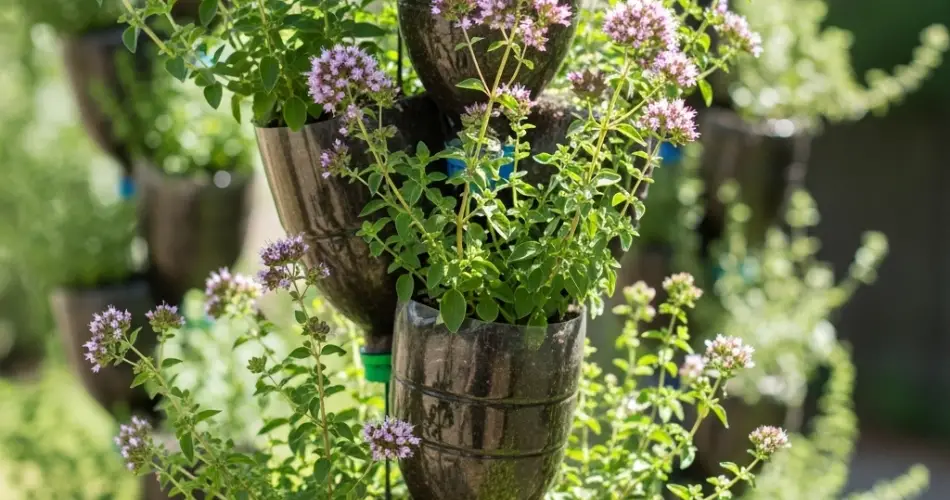
Oregano is a flavorful, aromatic herb that adds depth to Mediterranean dishes, pizzas, sauces, and soups. Its hardy nature and compact growth make it an ideal candidate for container gardening. But what if you’re short on space? A DIY vertical oregano garden made from reused plastic bottles offers a space-saving, eco-friendly solution that lets you grow this essential herb even in the tightest areas.
This method combines sustainability with smart gardening. It transforms plastic waste into productive planters and allows you to cultivate fresh oregano right on your balcony, patio, or kitchen wall. Here’s how to build your own vertical oregano garden using recycled bottles.
Why Choose a Vertical Bottle Garden?
A vertical garden is perfect for anyone with limited space or a desire to garden creatively. Oregano doesn’t require deep soil or a large area to grow well. By using bottles in a vertical arrangement, you maximize vertical space, reduce clutter, and provide each plant with the airflow and sunlight it needs.
Reusing plastic bottles helps reduce landfill waste and gives these materials a second life. Plus, vertical gardens are easy to maintain, water-efficient, and ideal for urban gardening.
What You’ll Need
To start your DIY project, gather the following:
-
Several clean 1.5- or 2-liter plastic bottles
-
Scissors or a utility knife
-
A nail or drill for making holes
-
String, wire, or zip ties
-
Good-quality potting mix
-
Oregano seeds or small oregano plants
-
Small pebbles or charcoal for drainage (optional)
You’ll also need a wall, fence, balcony railing, or a vertical frame to hang the planters.
Preparing the Bottle Planters
-
Cut an opening: Lay each bottle on its side and cut a rectangular window on one side. This window should be large enough for planting and watering but small enough to retain soil.
-
Drainage holes: Poke several small holes in the bottom of each bottle to prevent water buildup.
-
Hanging holes: Make holes near the top and bottom on both sides of the bottle. These will be used to secure the bottles vertically with string or wire.
-
Add drainage layer: Place a layer of small pebbles or charcoal at the bottom of each bottle to assist with drainage and prevent root rot.
-
Fill with soil: Use a light, well-draining potting mix enriched with compost or organic matter. Leave an inch of space at the top for watering.
Choosing the Right Soil for Oregano
Oregano thrives in poor to moderately fertile soil, so avoid overly rich mixes that promote lush but less flavorful growth.
Recommended mix:
-
2 parts standard potting soil
-
1 part perlite or coarse sand
-
Optional: a handful of compost for slow-release nutrients
Ensure the mix drains well, as oregano dislikes soggy roots. The ideal soil pH for oregano is between 6.0 and 8.0.
Planting Oregano in Bottles
You can start oregano from seed or use small starter plants from a nursery.
-
From seed: Sow a few seeds in each bottle, lightly cover with soil, and mist with water. Germination takes about 7–14 days.
-
From cuttings or transplants: Place the rooted cutting or young plant into the bottle, gently firm the soil, and water lightly.
Position the vertical garden in a sunny location. Oregano needs at least 6 hours of direct sunlight daily to develop robust flavor and healthy growth.
Assembling the Vertical Garden
Once your bottle planters are ready:
-
Thread string or wire through the hanging holes of each bottle.
-
Knot securely below each bottle to support the weight.
-
Stack the bottles vertically, leaving enough space between each for light and airflow.
-
Hang the assembled structure on a fence, balcony railing, or mounted frame.
You can also attach the bottles horizontally to a wall or pallet for a grid-style arrangement.
Watering and Fertilizing
Oregano is drought-tolerant once established, so take care not to overwater.
-
Water only when the top inch of soil is dry.
-
Ensure that excess water can drain freely from the bottle.
-
Reduce watering frequency in cooler months.
Oregano doesn’t require heavy feeding. Apply a diluted liquid fertilizer every 4–6 weeks, or mix in a small amount of compost when planting. Too much fertilizer can weaken the flavor of the leaves.
Pruning and Harvesting Tips
Pruning helps oregano stay bushy and productive. Once the plant reaches 4–6 inches tall:
-
Harvest by cutting stems just above a pair of leaves.
-
Pinch back flower buds to encourage continued leaf production.
-
Trim the plant regularly to prevent it from becoming woody.
Harvest in the morning when essential oils are strongest. You can use the leaves fresh or dry them for long-term storage.
Common Problems and Solutions
-
Leggy growth: Usually caused by insufficient sunlight. Move the garden to a sunnier location.
-
Root rot: Result of overwatering or poor drainage. Make sure all bottles have proper holes.
-
Pests (aphids or spider mites): Spray plants with a mixture of water and mild soap or neem oil.
Overall, oregano is low-maintenance and resistant to most pests and diseases.
Final Thoughts
A DIY vertical oregano garden made from reused bottles is a sustainable and space-efficient way to grow one of the most popular herbs. With just a few materials and a little care, you can enjoy fresh, flavorful oregano for cooking and garnishing all year long. Whether on a balcony, patio, or sunny kitchen wall, this vertical setup brings greenery and utility to even the smallest spaces—while making the most of recycled resources.


