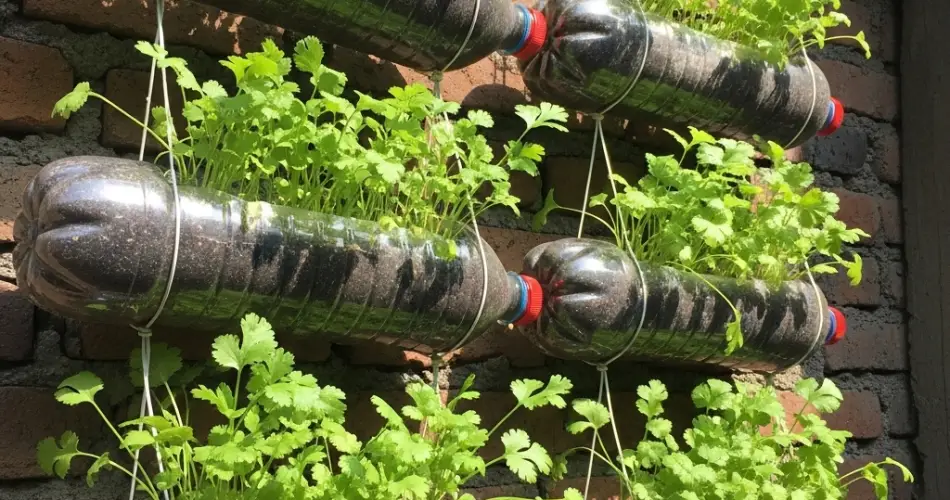
Cilantro is a fragrant and flavorful herb used in cuisines around the world, from zesty salsas to aromatic curries. Growing it at home ensures you have fresh leaves at their peak flavor, but not everyone has the space for a traditional garden. That’s where a vertical garden made from old bottles comes in—a creative, sustainable, and space-efficient way to grow cilantro right on your wall, balcony, or fence.
Why Cilantro Thrives in a Bottle Wall Garden
Cilantro has shallow roots and grows quickly, making it an excellent candidate for bottle gardening. When planted in a vertical setup, it benefits from improved sunlight exposure, good drainage, and better airflow, which can help reduce pest problems. Plus, growing in repurposed bottles is an eco-friendly way to reduce plastic waste while creating a unique and productive garden display.
Choosing and Preparing the Bottles
Select sturdy 1.5 or 2-liter plastic bottles, which provide enough room for root growth while remaining light enough for wall mounting. Wash them thoroughly to remove any residue.
To make your planter:
-
Cut an opening on the side of each bottle—about 10–12 cm long and 5–6 cm wide. This will be your planting area.
-
Keep the bottle cap on, but drill two or three small holes in it for drainage.
-
If desired, make a few more holes at the bottom to prevent water from pooling.
-
For extra moisture control, you can insert a cotton wick through the cap into a small water reservoir below, turning your bottle planter into a low-maintenance self-watering system.
Setting Up the Vertical Frame
A strong frame is needed to support your bottle garden. Options include wooden pallets, wire mesh, or a sturdy metal grid. Arrange bottles horizontally with the opening facing up, and secure them using cable ties, rope, or wire. Stagger the bottles in rows so that each plant has enough light and airflow.
Place the frame in a location that gets at least 4–6 hours of sunlight per day. Cilantro prefers cooler conditions compared to heat-loving herbs, so if you live in a hot climate, choose a spot that gets morning sun and afternoon shade.
The Best Soil for Cilantro
Cilantro grows best in loose, well-draining soil enriched with organic matter. A good mix is:
-
2 parts garden soil
-
1 part compost
-
1 part coarse sand or perlite
This blend ensures the soil stays airy and drains well, preventing root rot while supplying nutrients. Before adding the soil, place a thin layer of gravel at the bottom of the bottle to improve drainage.
Planting Cilantro
Cilantro is most commonly grown from seeds, as it doesn’t transplant well once mature. Direct sowing into your bottle garden is the simplest method.
-
Fill each bottle with the soil mix, leaving 2–3 cm of space at the top.
-
Sow 4–6 seeds in each bottle, spacing them evenly.
-
Cover lightly with about 1 cm of soil and gently water to settle them in.
Germination usually takes 7–10 days. Thin seedlings to leave the strongest plants, spacing them about 5–8 cm apart.
Watering and Sunlight Care
Cilantro prefers consistently moist soil, especially during germination and early growth. Water when the top 2–3 cm of soil feels dry, but avoid overwatering. The drainage holes will help prevent soggy conditions.
In hotter climates, keep the vertical garden slightly shaded during the afternoon to prevent the plants from bolting (flowering too early), which can make the leaves taste bitter.
Harvesting Cilantro
Cilantro is ready for harvest once the leaves are about 10–15 cm tall. For ongoing harvests, use the “cut-and-come-again” method: snip the outer leaves first, allowing the inner leaves to continue growing.
If you let some plants flower, they will produce coriander seeds, which can be harvested for cooking or replanting.
Pests and Problems
Cilantro is relatively pest-resistant, but aphids and whiteflies may occasionally appear. Remove them by spraying with water or applying an organic insecticidal soap. Good airflow in your vertical setup will also help deter fungal diseases.
Bolting is a common challenge in warm weather. To slow it down, harvest leaves frequently, keep the soil evenly moist, and provide partial shade during the hottest part of the day.
Benefits of a Cilantro Bottle Wall Garden
-
Space-saving – Ideal for balconies, patios, or narrow side yards.
-
Eco-friendly – Reuses old bottles, reducing plastic waste.
-
Convenient harvest – Fresh herbs are within arm’s reach.
-
Aesthetic appeal – Adds greenery and a natural touch to your wall space.
Final Thoughts
A DIY cilantro vertical garden made from old bottles is a creative, sustainable way to grow fresh herbs even in tight spaces. With just a few recycled materials, a sunny wall, and a little care, you can enjoy a steady supply of fragrant, flavorful cilantro year-round. This method not only provides fresh ingredients for your kitchen but also helps the environment by giving new life to discarded plastic bottles.


