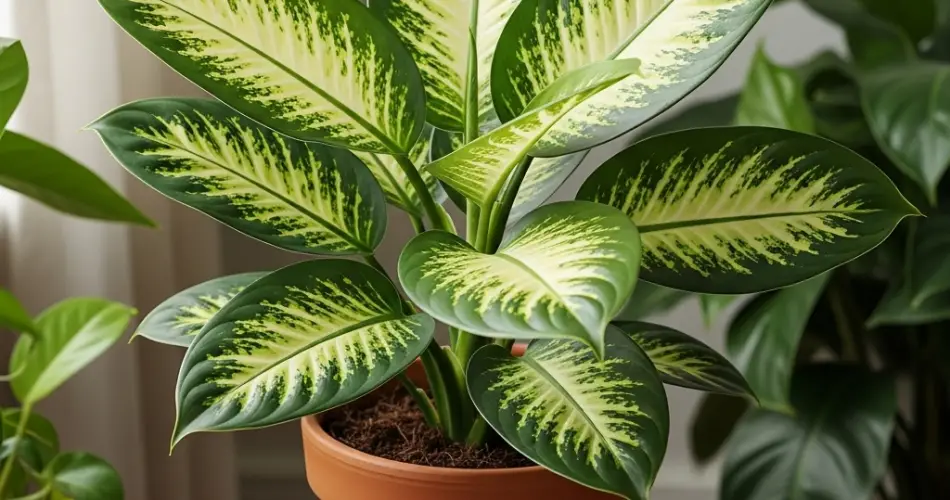
Dieffenbachia, also known as dumb cane, is a popular indoor plant admired for its large, patterned leaves and low-maintenance nature. While generally resilient, it can sometimes show signs of stress, such as drooping foliage or yellowing leaves. These changes are often the plant’s way of signaling that something in its environment or care routine needs adjustment.
By understanding the common causes and solutions, you can keep your Dieffenbachia looking vibrant year-round.
Understanding the Causes of Drooping Leaves
When a Dieffenbachia’s leaves droop, it usually means the plant is experiencing one of a few common problems:
-
Underwatering: If the soil becomes too dry, the plant loses turgor pressure, causing leaves to sag.
-
Overwatering: Excess water can suffocate roots, leading to root rot, which in turn makes the leaves droop.
-
Sudden Temperature Changes: Cold drafts, heating vents, or quick temperature drops can cause stress.
-
Low Humidity: Dry indoor air can reduce leaf firmness and overall plant vitality.
How to Fix Drooping Leaves
-
Check the Soil Moisture: Insert your finger 1–2 inches into the soil. If it feels dry, water the plant thoroughly until excess drains from the bottom. If it feels wet, hold off watering and allow the soil to dry partially.
-
Improve Drainage: Make sure the pot has drainage holes and the soil mix is well-aerated.
-
Maintain Consistent Temperature: Keep the plant in a room between 65–75°F (18–24°C), away from sudden drafts or heat sources.
-
Boost Humidity: Mist the leaves, use a humidifier, or place the pot on a pebble tray with water to maintain adequate moisture in the air.
Understanding the Causes of Yellow Leaves
Yellow leaves on Dieffenbachia can result from several factors, often related to watering, light, or nutrition:
-
Overwatering: The most common cause, leading to root rot and nutrient uptake issues.
-
Underwatering: Prolonged dryness can also lead to leaf discoloration.
-
Poor Lighting: Too little light can cause leaves to fade and yellow over time.
-
Nutrient Deficiency: Lack of nitrogen or other essential nutrients can cause chlorosis (leaf yellowing).
-
Aging Leaves: Older leaves naturally turn yellow and drop as part of the plant’s life cycle.
How to Fix Yellow Leaves
-
Adjust Watering Habits: Keep the soil slightly moist but never soggy. Water when the top inch is dry, and reduce watering in winter when growth slows.
-
Provide Adequate Light: Place the plant in bright, indirect light. Avoid direct sunlight, which can scorch the leaves, and too much shade, which can cause fading.
-
Fertilize Regularly: Feed with a balanced liquid houseplant fertilizer every 4–6 weeks during spring and summer. Reduce feeding in fall and winter.
-
Remove Damaged Leaves: Prune yellow or dead leaves at the base to improve appearance and direct the plant’s energy toward new growth.
Best Watering Practices for Dieffenbachia
Getting the watering right is the key to preventing both drooping and yellow leaves:
-
Use room-temperature water to avoid shocking the roots.
-
Water deeply, ensuring excess drains out, then empty the saucer to prevent stagnant water.
-
In warm months, the plant may need watering once a week, while in cooler months, it may need less frequent attention.
Ideal Light Conditions
Dieffenbachia thrives in bright, indirect light but can adapt to moderate shade. For best results:
-
Place near a north- or east-facing window, or several feet away from a south- or west-facing window with filtered light.
-
Rotate the plant every few weeks to ensure even growth and prevent leaning toward the light source.
Humidity and Temperature Tips
Dieffenbachia enjoys a humid environment:
-
Keep humidity levels around 50% or higher.
-
Group plants together to create a naturally more humid microclimate.
-
Avoid placing the plant near air conditioners, heaters, or drafty windows.
Preventing Future Problems
-
Inspect Regularly: Check for pests like spider mites, aphids, or mealybugs, which can weaken the plant and cause leaf damage.
-
Repot When Needed: Refresh the soil every 2–3 years to prevent compaction and restore nutrients.
-
Follow Seasonal Care: Reduce watering and feeding during winter dormancy.
Final Thoughts
Drooping or yellow leaves on a Dieffenbachia are not necessarily a sign of doom—they’re simply signals that your plant’s needs aren’t being met. By adjusting watering habits, improving light and humidity conditions, and providing proper nutrition, you can restore your Dieffenbachia to its lush, healthy state.
With attentive care, your plant will reward you with vibrant foliage that enhances your living space for years to come.


