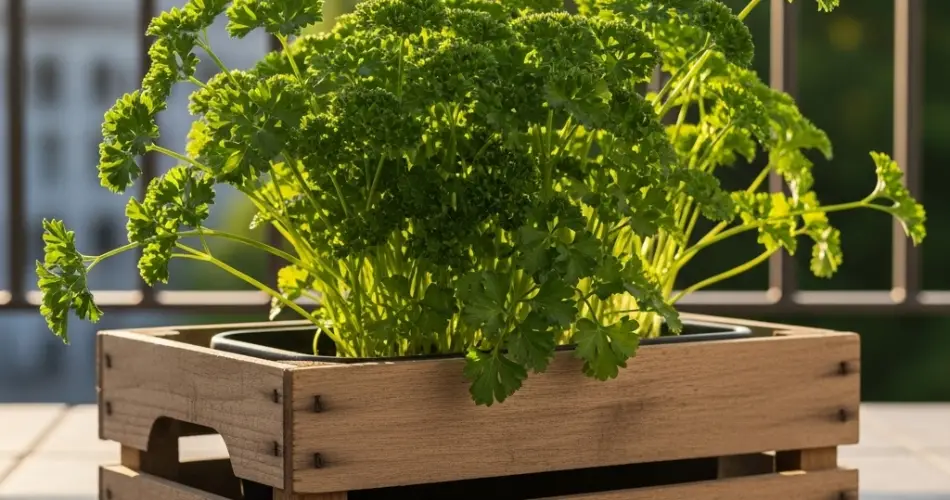
Parsley is one of the most widely used herbs in kitchens around the world. Known for its fresh, slightly peppery flavor, it enhances everything from soups and stews to salads and sauces. Beyond taste, parsley is rich in vitamins A, C, and K, making it both a culinary and nutritional powerhouse. While many think of herbs as belonging in sprawling gardens, parsley adapts beautifully to container life. With just a simple wooden crate and a sunny balcony, you can enjoy a steady supply of this versatile herb right outside your door.
Why Choose Crates for Balcony Parsley?
Wooden crates are practical, affordable, and stylish containers for growing herbs like parsley. They are often easy to source, either from markets or through repurposing, and they bring rustic charm to compact outdoor spaces. More importantly, wood acts as a natural insulator, protecting parsley roots from rapid temperature swings that can occur on open balconies.
Unlike rigid plastic pots, wooden crates allow for better breathability and air circulation. This keeps the soil environment healthy, reducing the risks of root diseases. Crates also come in various sizes, giving you flexibility to grow just a small cluster of parsley plants or a larger, more productive patch.
Preparing the Wooden Crate
Start with a sturdy crate that is at least 8–10 inches deep. Parsley does not require deep soil, but roots need enough space to spread and anchor. If your crate lacks drainage holes, drill several at the bottom to prevent water buildup, which parsley roots cannot tolerate.
To prolong the life of your crate, consider lining it with landscape fabric or breathable plastic sheeting. This prevents direct soil-to-wood contact while still allowing drainage. Elevating the crate slightly on pot feet or small wooden blocks helps water flow freely and keeps the crate from sitting in puddles.
The Best Soil Mix for Crate-Grown Parsley
Parsley prefers soil that is light, fertile, and consistently moist. A good soil mix for crate gardening should hold water without becoming compacted. An ideal blend includes:
-
50% quality potting soil or garden loam for structure and root support
-
30% compost or well-rotted manure to enrich the soil with organic nutrients
-
20% coco coir or peat moss to improve moisture retention and aeration
This mix ensures that parsley roots have access to both nutrients and oxygen. Aim for a slightly acidic to neutral pH between 6.0 and 7.0. A balanced pH allows parsley to absorb essential nutrients effectively.
Planting Parsley in Crates
Parsley can be grown from seeds or young seedlings. Seeds can take up to three weeks to germinate, but soaking them overnight speeds up sprouting. Sow seeds about ¼ inch deep, spacing them 6–8 inches apart for optimal airflow and growth.
If you choose seedlings, transplant them into your crate once they reach 3–4 inches tall. Gently remove them from their nursery pots, keeping the roots intact, and plant them at the same depth as before. Water immediately after planting to help the seedlings establish quickly.
Sunlight and Watering Requirements
Parsley thrives in locations that receive 4–6 hours of sunlight per day. Morning sun with afternoon shade works well, particularly for balconies exposed to intense midday heat. Too much direct sun may cause parsley to wilt, while too little light can result in leggy, weak growth.
Consistent watering is essential. Keep the soil evenly moist but never waterlogged. Allow the top inch of soil to dry slightly before watering again. A thin mulch layer, such as straw or shredded leaves, helps retain moisture and reduces evaporation on hot days.
Fertilization and Ongoing Care
Although parsley is not a heavy feeder, it benefits from light, regular feeding. Apply a diluted liquid fertilizer or compost tea every 3–4 weeks to encourage lush, green foliage. Organic fertilizers are especially beneficial because they enrich the soil over time while being gentle on delicate roots.
Harvesting parsley correctly is also part of good care. Always cut the outer stems at the base, leaving the central shoots to keep producing. Regular harvesting not only provides fresh leaves for cooking but also stimulates new growth.
Common Issues and Their Solutions
Even in crate planters, parsley may encounter a few challenges:
-
Yellowing leaves often indicate overwatering or poor drainage. Ensure excess water can escape freely.
-
Aphids or spider mites may occasionally appear. Control them with neem oil spray or a mild soap-water solution.
-
Bolting (early flowering) can occur in hot weather. Provide partial shade and consistent watering to slow this process.
With regular care and close attention, most issues can be resolved quickly.
Harvesting Crate-Grown Parsley
Parsley is ready to harvest when plants are about 8–10 inches tall. Snip the outer stems close to the soil while leaving the central growth intact. This encourages the plant to keep producing leaves for months.
Freshly harvested parsley can be used immediately or stored in the refrigerator for up to a week. For longer preservation, parsley can be dried or frozen to maintain flavor.
Final Thoughts
Growing parsley in a crate is a simple yet rewarding way to enjoy fresh herbs in even the smallest balcony space. With the right soil mix, proper watering, and consistent harvesting, parsley thrives in wooden crates while adding a touch of greenery to your outdoor area.
This DIY approach not only saves space but also allows you to enjoy sustainable, homegrown herbs without the need for a full garden. Compact, practical, and visually charming, crate-grown parsley is the perfect solution for anyone seeking fresh flavor at their fingertips.


