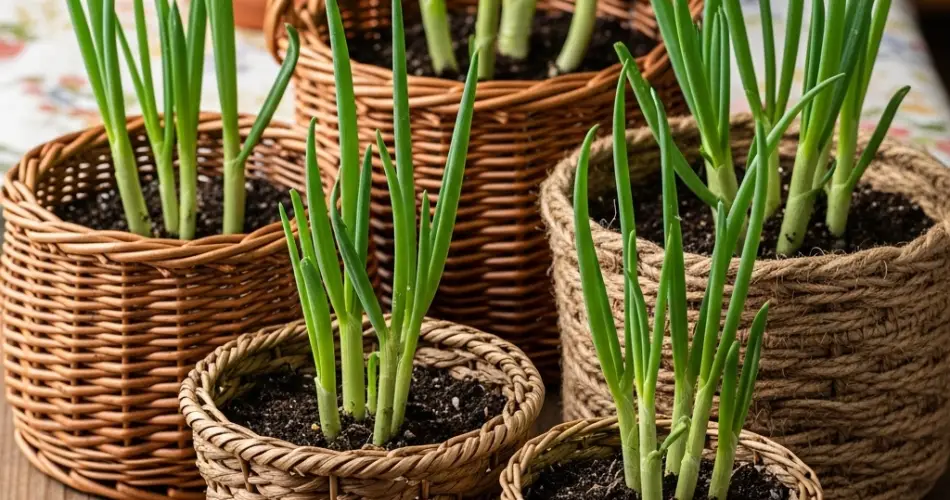
Scallions, also known as green onions or spring onions, are one of the most rewarding crops for small-space gardening. They are fast-growing, versatile in the kitchen, and remarkably easy to cultivate in containers. For those living in apartments or urban settings, basket planting offers a simple yet efficient way to enjoy continuous scallion harvests without needing large garden beds. With the right techniques, you can keep your baskets producing fresh, crisp scallions week after week.
Why Choose Basket Planting for Scallions?
Scallions are perfectly suited for container gardening because of their shallow root systems and upright growth. Baskets provide excellent drainage and can be placed almost anywhere — on balconies, windowsills, patios, or even hung from railings to save floor space. Their portability also allows you to shift them for better sunlight or protection during harsh weather.
Another advantage of basket gardening is the ability to control soil quality more effectively than in-ground planting. With proper soil preparation and routine care, scallions can thrive in baskets and give you reliable harvests throughout the year.
Setting Up Your Scallion Basket
To maximize your scallion yield, choosing the right basket and soil mix is crucial.
-
Basket size: Opt for containers that are at least 8–10 inches deep, with enough width to accommodate several rows of scallions. Fabric grow bags, coir-lined hanging baskets, or wide plastic planters all work well.
-
Drainage: Ensure the basket has good drainage holes to prevent waterlogging, which can cause root rot.
-
Soil mix: A blend of lightweight potting soil enriched with compost and mixed with perlite or coarse sand works best. The soil should be loose, well-draining, and fertile to support healthy growth.
A good recipe is 50% potting soil, 30% compost, 10% coco coir or peat moss, and 10% perlite. This combination balances structure, moisture retention, and aeration.
Planting for Continuous Harvests
One of the keys to harvesting scallions continuously is succession planting. Instead of planting all seeds at once, sow small batches every two to three weeks. This staggered approach ensures that while one set is maturing, another is just starting to sprout, giving you a steady supply over months.
-
From seeds: Sow them ½ inch deep and about 1 inch apart in rows. Keep the soil consistently moist until seedlings emerge in about a week.
-
From sets or scraps: You can also plant onion sets or the rooted ends of store-bought scallions. Simply press them into the soil so that the white portion and roots are covered while the green shoots remain above the surface.
Mixing these methods in one basket provides both fast harvests (from scraps or sets) and longer-term yields (from seeds).
Sunlight and Watering Requirements
Scallions thrive in bright light and need at least 6 hours of sunlight daily. Place your baskets on a south- or east-facing balcony, or supplement with grow lights if natural light is limited.
Baskets tend to dry out more quickly than garden beds, so regular watering is essential. Check soil moisture daily and water whenever the top inch feels dry. To prevent fungal problems, water at the base of the plants in the morning rather than soaking the foliage late in the day.
Fertilizing for Strong Growth
Scallions do not require heavy feeding, but consistent nutrients help maintain continuous production. Apply a diluted liquid fertilizer or compost tea every two weeks. A balanced fertilizer works well, though scallions especially benefit from nitrogen, which supports leafy green growth.
Avoid over-fertilizing, as too much nitrogen can lead to very lush leaves but weaker flavor. Moderation ensures that scallions remain crisp and flavorful.
Harvesting Methods for Ongoing Supply
There are two effective ways to harvest scallions while encouraging continuous regrowth:
-
Cut-and-come-again: Trim the green tops with scissors, leaving about 2 inches above the soil. The scallions will regrow, often allowing multiple harvests from the same plant.
-
Pull-and-replant: Uproot mature scallions completely, then replant with new seeds, sets, or scraps to keep the cycle going.
For best results, combine both methods. Use cuttings for quick kitchen needs while also replanting to maintain a fresh supply of younger scallions.
Tips for Prolonging Harvests
-
Stagger planting times: Plant new seeds every two to three weeks.
-
Use multiple baskets: Dedicate different baskets for seedlings, maturing scallions, and ready-to-harvest plants.
-
Rotate sunlight exposure: If space is limited, rotate baskets to ensure even growth.
-
Protect in extreme weather: In hot summers, provide partial shade, and in cooler months, bring baskets indoors or cover with frost cloth.
Conclusion
Growing scallions in baskets is one of the easiest ways to ensure a constant source of fresh, flavorful greens, even in small living spaces. With succession planting, proper soil preparation, and smart harvesting techniques, you can create a continuous cycle of growth and harvest. Baskets make scallion gardening flexible, space-efficient, and productive, allowing you to enjoy homegrown scallions year-round.
Whether you’re snipping fresh greens for a quick salad, adding flavor to soups, or garnishing your favorite dishes, basket-grown scallions guarantee that a fresh supply is always within reach. With just a little planning and care, your balcony can become a thriving scallion garden that delivers continuous harvests season after season.


