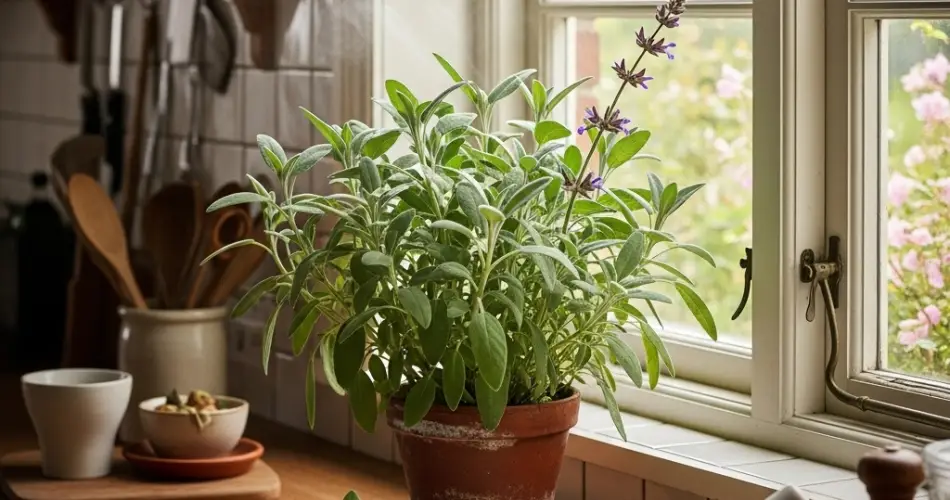
Sage is a resilient and aromatic herb treasured for its strong, earthy flavor and versatility in the kitchen. From seasoning roasted meats to enriching hearty soups, sage offers depth to many dishes. While it is often associated with outdoor gardens, sage adapts remarkably well to indoor life when grown in containers. With the right care, you can cultivate a thriving sage plant indoors and enjoy fresh harvests throughout the year.
This guide will walk you through everything you need to know about growing sage in containers inside your home—from choosing pots and soil to watering, pruning, and making the most of your harvest.
Why Grow Sage Indoors?
Growing sage indoors offers year-round access to fresh herbs without relying on the seasons. Instead of waiting for warmer months, you can keep sage thriving near a sunny window, where its leaves will be within arm’s reach whenever you need them.
Indoor sage also doubles as a decorative plant. Its silvery-green leaves provide a touch of beauty, and its aromatic scent naturally freshens the air. For cooks and herbal enthusiasts, this means convenience, aesthetics, and a steady supply of homegrown flavor all in one compact plant.
Choosing the Right Container
Container size plays a key role in how well sage grows indoors. A pot at least 8 to 10 inches wide and deep provides enough space for the plant’s roots to expand. Terracotta or clay containers are excellent choices since they allow excess moisture to evaporate, preventing the soil from staying too wet.
Drainage is essential. Make sure your container has holes at the bottom, and consider placing a saucer beneath it to catch any extra water. Sage prefers conditions where the soil can dry slightly between waterings, and proper drainage ensures a healthy root system.
Soil Requirements
Sage thrives in well-draining soil with a sandy or loamy texture, mimicking the conditions of its Mediterranean origins. A high-quality potting mix amended with perlite, coarse sand, or a little gravel works well. Avoid heavy soils that retain too much moisture, as these can lead to root rot.
The ideal soil pH for sage is between 6.5 and 7.5. If you’d like to give your plant a gentle nutrient boost, add a small amount of organic compost. Just be sure to maintain balance—sage grows best when its soil is light, airy, and not overly rich.
Light Needs for Indoor Sage
Light is the most important factor in keeping indoor sage healthy. Place your container in a bright location where the plant will receive at least 6 to 8 hours of direct sunlight per day. A south-facing window is usually the best option.
If natural light is limited, consider supplementing with a grow light. Position the light about 6 to 12 inches above the plant, and keep it on for 12 to 14 hours daily to mimic the sun’s intensity. This prevents leggy, weak growth and ensures lush, flavorful leaves.
Watering and Fertilizing
Sage is naturally drought-tolerant, meaning it thrives when allowed to dry out slightly between waterings. Before watering, check the soil by inserting your finger about an inch deep. If it feels dry, it’s time to water. Always water thoroughly, letting excess drain out, then wait until the soil dries again before the next round.
Overwatering is the most common issue with container sage. Yellowing leaves or a soft base often signal too much moisture. Adjust your watering schedule if you notice these signs.
Fertilization should be light but consistent. A balanced liquid fertilizer once a month during active growth is sufficient. For organic care, use diluted compost tea or seaweed extract. Avoid overfeeding, as this can reduce the intensity of sage’s flavor.
Pruning and Harvesting
Regular pruning keeps your sage bushy and productive. Once your plant is about 6 to 8 inches tall, you can begin harvesting. Snip individual leaves or cut small stems from the outside edges of the plant, leaving the center growth intact.
Avoid harvesting more than one-third of the plant at once to prevent stress. Frequent harvesting not only provides fresh herbs but also encourages vigorous new growth. If stems become woody or leaves sparse, trim the plant back to promote rejuvenation.
Common Indoor Growing Challenges
Although sage is hardy, growing it indoors presents a few challenges. Watch for:
-
Lack of light: Causes spindly, pale stems. Remedy with supplemental lighting.
-
Overwatering: Leads to root rot or drooping leaves. Improve drainage and adjust watering.
-
Pests: Aphids and spider mites may occasionally appear. Treat infestations with insecticidal soap or neem oil.
Monitoring your sage regularly helps you catch and correct these issues early.
Using Fresh Sage
The reward of growing sage indoors is the convenience of fresh leaves whenever you cook. Use sage to season poultry, pork, and roasted vegetables, or add it to butter and oils for infused flavors. Sage tea, made from a few fresh leaves steeped in hot water, is another simple way to enjoy its soothing qualities.
Excess harvests can be dried by tying small bundles and hanging them upside down in a cool, dry place. Once fully dried, store the leaves in airtight containers for long-term use. Freezing leaves is another option to preserve their flavor.
Final Thoughts
Growing sage indoors in containers is simple, rewarding, and practical for any kitchen. With the right pot, well-draining soil, ample light, and mindful watering, sage thrives year-round, providing beauty and fresh herbs whenever you need them. By pruning regularly and giving your plant consistent care, you’ll ensure a steady supply of aromatic leaves to enhance your cooking.
For those who love fresh flavors but have limited space, container-grown sage is the perfect solution—a compact herb garden you can enjoy every day of the year.


