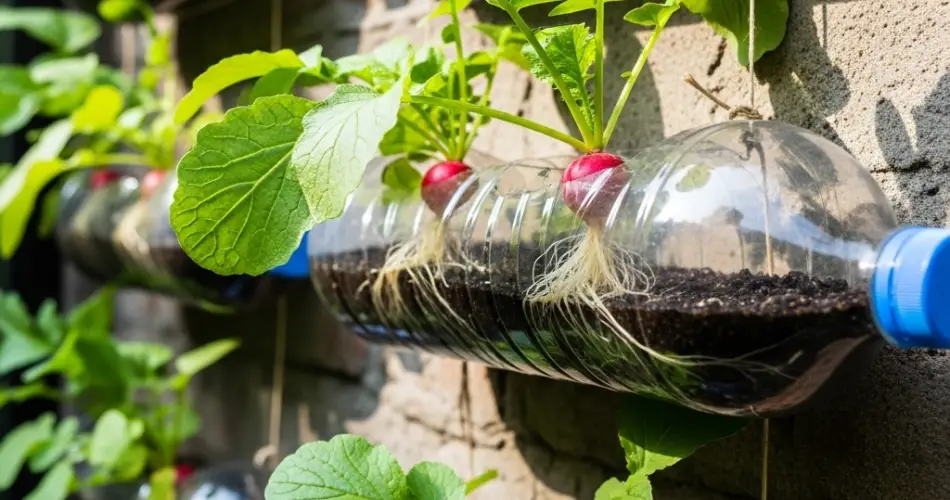
Urban gardening often requires creativity, especially when space is limited. One innovative approach is growing radishes using bottle wall gardens—a method that transforms vertical spaces into productive growing areas. This technique maximizes small spaces, recycles materials, and ensures a steady supply of fresh radishes right at home. By repurposing plastic bottles, gardeners can create a cost-effective, eco-friendly system that is perfect for balconies, patios, or any unused wall space.
Why Radishes Are Perfect for Wall Bottle Gardens
Radishes are among the fastest-growing root vegetables, often ready to harvest in just three to four weeks. They don’t require deep soil, making them ideal for shallow containers like plastic bottles. Their compact root system allows them to thrive in vertical setups, and their quick growth cycle means you can enjoy multiple harvests throughout the year.
This method is also water-efficient, as bottles help retain moisture and reduce evaporation. Additionally, growing radishes vertically minimizes the risk of pests and diseases, as plants are elevated off the ground.
Choosing and Preparing the Bottles
For this project, plastic soda or water bottles are the best choice. A 1.5-liter bottle provides enough room for radish roots to grow comfortably. Follow these steps to prepare the bottles:
-
Clean the Bottles: Rinse thoroughly to remove any residue.
-
Cut the Planting Window: Create an opening on the side large enough to add soil and plant seeds, leaving the neck and base intact for structural stability.
-
Add Drainage Holes: Poke several small holes at the bottom to prevent waterlogging.
-
Optional Hanging Holes: If mounting on a wall, punch two holes near the top to thread wire or rope for hanging.
Setting Up the Wall Garden
Bottle wall gardens can be arranged in rows or staggered patterns for efficient use of space. A wooden frame, mesh panel, or sturdy wall hooks can be used to secure the bottles. Position the bottles so that water from the top ones can drip down to those below, creating a natural irrigation system.
Preparing the Soil Mix
Radishes thrive in light, well-draining soil. A good mix can be made by combining:
-
60% garden soil or compost
-
30% coco peat or peat moss
-
10% perlite or coarse sand
This combination ensures aeration, retains moisture without becoming waterlogged, and provides the nutrients radishes need for rapid growth.
Planting the Radishes
Fill each bottle with the prepared soil mix, leaving about 2–3 cm from the top. Sow radish seeds about 1 cm deep and 5 cm apart. Depending on the bottle size, you may plant two to three seeds per container. Water lightly after planting to settle the soil.
Radishes prefer cooler temperatures, so try to position your bottle garden in a spot that receives morning sunlight and partial shade in the afternoon. This prevents the plants from bolting, which can make the roots woody.
Watering and Maintenance
Radishes need consistent moisture for proper root development. Check the soil daily and water when the top layer feels dry. Overwatering should be avoided, as soggy soil can cause root rot. A spray bottle or gentle watering can works best to avoid disturbing seeds or seedlings.
Fertilizing is usually minimal for radishes due to their short growth cycle. If desired, apply a diluted liquid organic fertilizer once during the early growth phase. Avoid high-nitrogen fertilizers, as they promote leafy growth at the expense of root development.
Harvesting
Radishes are typically ready to harvest within 20–30 days after planting, depending on the variety. You’ll know they are mature when the shoulders of the roots start to push above the soil. Gently pull them out and replant immediately for continuous production.
Since bottle wall gardens allow for multiple rows of plants, you can stagger sowing dates for a steady supply. For example, plant a new row every week so you’ll have fresh radishes to harvest regularly.
Benefits Beyond the Harvest
Aside from producing fresh vegetables, bottle wall gardens are a sustainable way to reduce plastic waste. They turn unused walls into productive green spaces and can be adapted to grow other crops like lettuce, spinach, or herbs. This method is particularly useful for urban dwellers who lack a traditional garden but still want to enjoy homegrown produce.
Final Thoughts
Compact radish farming with bottle wall gardens is an excellent project for gardeners of all skill levels. It’s inexpensive, easy to set up, and highly rewarding. By using vertical space creatively, you can grow nutritious food in even the smallest of homes while contributing to environmental sustainability.
With just a few bottles, a wall, and some seeds, you can start producing crisp, flavorful radishes right where you live—proving that you don’t need a big plot of land to enjoy the pleasures of fresh, homegrown vegetables.


