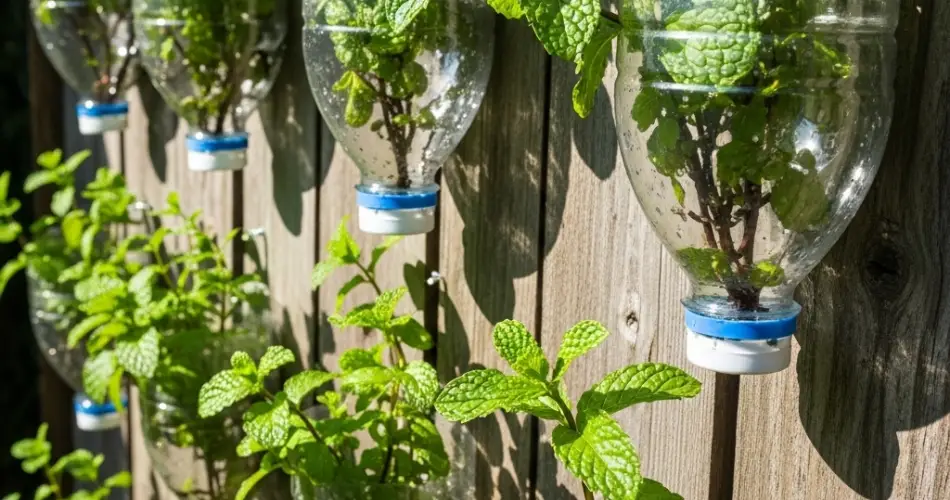
Mint is one of the most versatile and fragrant herbs, perfect for teas, cocktails, desserts, and cooking. Growing mint at home, however, can be challenging due to its aggressive spreading habit. A clever solution is to cultivate mint in a vertical wall garden using recycled plastic bottles. This compact, eco-friendly approach allows you to enjoy fresh mint leaves year-round without taking up much space, whether indoors or outdoors.
Why a Vertical Bottle Garden for Mint?
Mint thrives in moist, well-drained soil and enjoys consistent sunlight, making it well-suited for container gardening. Traditional garden beds can quickly become overrun with mint, but confining it to individual bottles prevents it from overtaking other plants.
A wall-mounted bottle garden maximizes vertical space, making it ideal for apartments, small balconies, or kitchens. Additionally, repurposing plastic bottles helps reduce waste and promotes sustainable gardening. Lightweight, durable, and easy to modify, plastic bottles are perfect for building a vertical herb garden that is both functional and visually appealing.
Materials You’ll Need
To create a mint wall garden using recycled bottles, gather the following:
-
Clean, empty plastic bottles (1–2 liters work best)
-
A utility knife or scissors
-
Screws, nails, or hooks for hanging
-
Potting mix rich in organic matter
-
Mint seeds or seedlings
-
Optional: gravel or small stones for drainage, and a spray bottle for watering
Preparing the Bottles
Wash the plastic bottles thoroughly before starting. Then, cut an opening along the side large enough to hold soil and seedlings. You can make a horizontal cut around the middle of the bottle or a vertical slit along one side. Smooth any sharp edges to prevent injury when handling the bottles.
Next, add small drainage holes at the bottom of each bottle. Proper drainage is essential for mint, as standing water can lead to root rot and poor plant growth. If you plan to hang multiple bottles, ensure each one drains properly to maintain plant health.
Filling and Planting
Add a layer of gravel or small stones at the bottom of each bottle to improve drainage. Fill the rest of the bottle with a high-quality potting mix that retains moisture but drains well. Mint thrives in soil that is rich in organic matter and slightly acidic to neutral in pH.
Plant mint seeds about ¼ inch deep, or carefully transplant seedlings into the soil. Avoid overcrowding by placing only one or two plants per bottle, giving each plant room to grow. Lightly water the soil after planting to settle it around the roots.
Mounting the Wall Garden
Attach the bottles to a wall, fence, or balcony railing using screws, nails, or hooks. Position them slightly tilted forward so water reaches the roots evenly without spilling. A vertical arrangement allows you to grow multiple mint plants in a small space, while staggering the bottles can create an attractive visual pattern.
Ensure the bottles are securely fastened, especially if the garden is outdoors, to prevent them from being knocked over by wind or other disturbances. Lightweight wooden panels or frames can also be used to organize the bottles neatly.
Caring for Your Mint
Mint grows best in bright, indirect sunlight. For indoor gardens, place the bottles near a south-facing window or under a grow light for at least six hours a day. Outdoors, avoid exposing the bottles to intense midday sun, which can dry out the soil too quickly.
Water regularly to keep the soil consistently moist but not soggy. A spray bottle works well for controlled watering, ensuring the soil remains damp without washing it away. Fertilize occasionally with a mild, organic liquid fertilizer to replenish nutrients in the small soil volume of the bottles.
Harvesting and Maintenance
Mint can be harvested once the plant reaches 6–8 inches in height. Pinch off leaves from the top to encourage bushier growth and prevent flowering, which can reduce flavor. Avoid removing more than one-third of the plant at a time to ensure continued growth. Frequent harvesting promotes a lush, productive plant and ensures a steady supply of aromatic leaves.
Benefits of a Bottle Wall Mint Garden
Creating a vertical mint garden offers several advantages:
-
Space-efficient: Ideal for apartments, kitchens, and small balconies.
-
Eco-friendly: Recycles plastic bottles, reducing environmental waste.
-
Continuous access: Fresh mint leaves are always within reach.
-
Aesthetic appeal: Adds greenery and visual interest to any wall or balcony.
-
Controlled growth: Keeps invasive mint contained in individual bottles.
With minimal effort and a few recycled materials, a compact bottle wall garden can provide fresh, fragrant mint throughout the year. This method not only saves space and promotes sustainability but also brings greenery and pleasant aromas into your living area. By following these simple steps, you can enjoy homegrown mint for cooking, beverages, and decoration, all while creating an eye-catching vertical herb garden.


