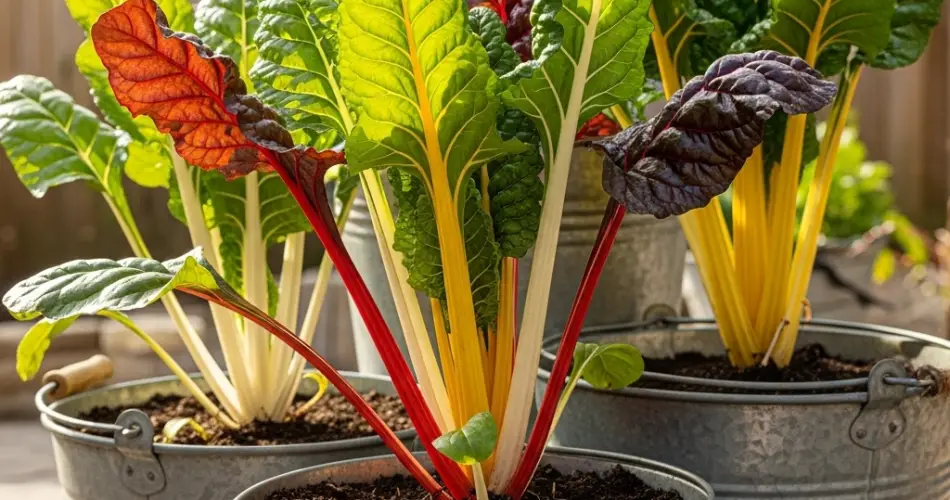
Swiss chard is a versatile, nutrient-packed leafy green that thrives in container gardens, making it an excellent choice for urban gardeners or those with limited outdoor space. Using buckets for growing chard provides flexibility, allows for precise control of soil, water, and sunlight, and makes continuous harvesting simple and productive. By understanding the essentials of bucket gardening, you can enjoy a steady supply of fresh, colorful chard leaves throughout the growing season.
Why Choose Buckets for Swiss Chard?
Buckets are ideal containers for urban gardening because they are affordable, portable, and provide sufficient space for root growth. A bucket with a minimum depth of 12 inches ensures that chard’s root system develops fully, supporting healthy, vigorous plants. Drainage holes are critical to prevent waterlogging, which can lead to root rot and reduce leaf quality.
Light-colored buckets reflect sunlight and help keep soil temperatures stable, while dark containers can absorb excessive heat, stressing the plant. The portability of buckets also allows you to reposition your chard to optimize sunlight exposure or protect it from harsh weather.
Preparing the Soil
Swiss chard thrives in fertile, well-draining soil. Start with a high-quality potting mix and incorporate compost or organic matter to provide essential nutrients. Adding perlite or coarse sand improves drainage and aeration, preventing soil compaction and supporting healthy root growth.
Chard prefers slightly acidic to neutral soil, with a pH between 6.0 and 7.0. Fill the bucket to about an inch below the rim to leave space for watering and mulching. Mulch not only helps retain soil moisture but also moderates soil temperature and suppresses weeds.
Choosing the Right Varieties
Several chard varieties perform well in containers. Rainbow chard is popular for its vibrant, multicolored stems, while green and white-stemmed varieties offer high productivity and easy maintenance. Loose-leaf types are ideal for continuous harvesting because they allow for frequent leaf removal without harming the plant, promoting new growth and extending the productive season.
Planting Swiss Chard in Buckets
Swiss chard can be grown from seeds or seedlings. For seeds, plant them about ½ inch deep, spacing them 4–6 inches apart. Once seedlings reach 3–4 inches tall, thin them to prevent overcrowding and improve airflow, which reduces disease risk.
If transplanting seedlings, carefully place them in the prepared soil, firming it gently around the roots, and water immediately. Proper planting depth and spacing ensure strong stems, healthy foliage, and optimal leaf production.
Watering and Moisture Management
Consistent moisture is essential for container-grown chard. The soil should remain evenly moist but not soggy. Shallow roots in buckets can dry out quickly, especially during warm weather, so monitor soil regularly. Water thoroughly when the top inch of soil feels dry, allowing excess water to drain from the bottom.
Morning watering is ideal, as it lets leaves dry during the day, reducing the likelihood of fungal issues. Mulching with straw or shredded leaves helps retain moisture, regulate soil temperature, and minimize evaporation.
Sunlight Requirements
Swiss chard grows best in full sun, requiring 6–8 hours of direct sunlight per day. Adequate sunlight ensures strong stems, vibrant leaves, and continuous growth. In hot climates, partial shade during the afternoon can prevent wilting and bolting, preserving tender, flavorful leaves.
The mobility of bucket gardening makes it easy to adjust sunlight exposure as needed. Move buckets to maintain optimal conditions, particularly during heatwaves or periods of low light.
Continuous Harvesting
One of the key benefits of growing chard in buckets is the “cut-and-come-again” harvesting method. Pick outer leaves first, leaving the center intact. This stimulates new growth and allows for repeated harvests over the season.
Use a sharp knife or scissors to cut leaves at the base, avoiding damage to the crown. Frequent harvesting encourages the plant to produce more leaves and prevents overcrowding, which can restrict airflow and increase disease risk.
Fertilization and Ongoing Care
Regular fertilization supports robust growth and leaf production. Apply a balanced, water-soluble fertilizer every 2–3 weeks or incorporate compost for a natural nutrient boost. Avoid over-fertilization, which can cause excessive leaf growth at the expense of flavor and texture.
Prune yellowing or damaged leaves to maintain plant health. Consistent care ensures your container-grown chard remains productive, attractive, and nutrient-rich.
Benefits of Bucket Gardening for Swiss Chard
Growing Swiss chard in buckets allows urban gardeners to produce fresh, nutritious greens even in small spaces. Containers provide control over soil, water, and sunlight, reduce exposure to pests and diseases, and allow for flexible positioning to optimize growing conditions. With proper care, chard yields abundant, tender leaves for salads, sautés, and smoothies.
By selecting the right bucket, preparing nutrient-rich soil, planting appropriately, and maintaining consistent water, sunlight, and harvesting routines, gardeners can achieve success with container-grown Swiss chard. Bucket gardening offers an accessible, rewarding way to grow fresh, colorful, and healthy greens year-round.


