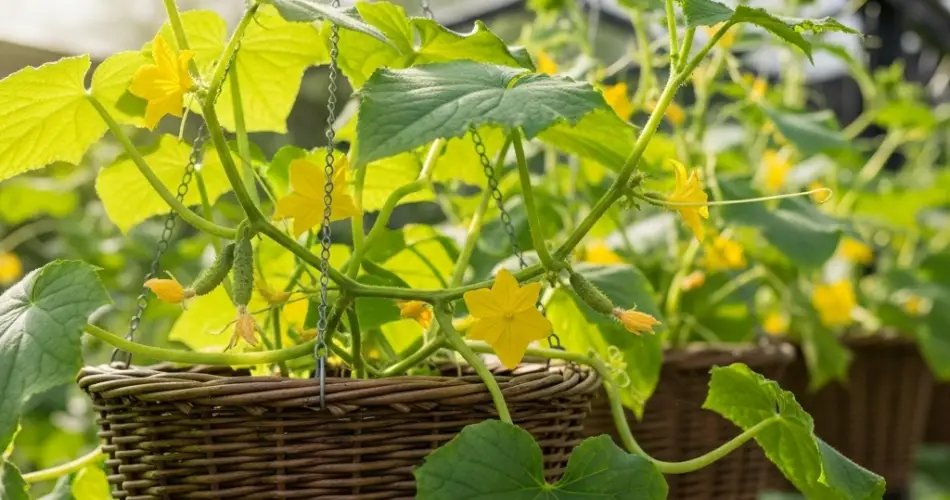
Cucumbers are a favorite among home gardeners because they are refreshing, versatile, and relatively easy to grow. While traditionally cultivated in garden beds, they can also thrive in baskets and containers, making them perfect for balconies, patios, or small urban spaces. However, cucumbers are natural climbers. Without proper support, their vines can sprawl, become tangled, and take up more space than you might have. That is why choosing the right support system is crucial for successful basket-grown cucumbers.
By training cucumber vines vertically, you not only save space but also encourage healthier plants and larger harvests. Let’s explore why support systems are important and the best options you can use when growing cucumbers in baskets.
Why Cucumbers Need Support
Basket-grown cucumbers face unique challenges due to limited root space and the natural tendency of the vines to spread. Providing strong and suitable support has several benefits:
-
Space Efficiency: Vertical systems make the most of small spaces by guiding vines upward instead of outward.
-
Better Air Circulation: Lifting vines off the soil reduces humidity around the plant, lowering the risk of fungal diseases like powdery mildew.
-
Healthier Fruits: Cucumbers that hang freely develop evenly and are less likely to rot or become misshapen.
-
Ease of Harvesting: Supported plants make it simpler to see, reach, and pick mature cucumbers.
-
Aesthetic Appeal: Trellised cucumber plants add green beauty and structure to balcony gardens.
For small-space gardeners, a support system is more than just a convenience—it is essential for success.
Top Support Options for Basket-Grown Cucumbers
1. Trellises
A trellis is one of the most effective systems for supporting cucumbers. In a basket, you can insert a compact, lightweight trellis directly into the container or place the basket near a wall-mounted trellis.
-
Wooden or Metal Trellises: Durable and sturdy for larger varieties.
-
Fan-Shaped Trellises: Perfect for balconies, as they guide vines upward in a neat spread.
-
DIY Trellises: Bamboo sticks tied with twine offer a simple, budget-friendly option.
2. Stakes
Stakes are best for smaller cucumber varieties and limited spaces. Insert one or two tall stakes into the basket, and secure the vines with soft ties or garden clips as they grow.
-
Advantages: Easy to set up and inexpensive.
-
Limitations: Provides less climbing area compared to trellises, so better suited to dwarf or compact cucumber types.
3. Hanging Supports
Hanging baskets allow cucumber vines to trail downwards. Adding extra support helps prevent tangling and breakage.
-
Hanging Nets: Secure lightweight mesh below or around the basket so cucumbers dangle safely.
-
Macramé Plant Hangers: A decorative option that also helps stabilize the basket and provide some support.
This system is particularly effective for compact or pickling cucumbers that produce smaller fruits.
4. A-Frame Supports
An A-frame design provides sturdy vertical and horizontal support. Place the basket beneath or between two angled frames made of bamboo, wood, or metal. Vines naturally climb up the sides, keeping fruits off the ground.
-
Ideal for: Gardeners who want to maximize vertical space without attaching structures to walls.
-
Bonus: The shaded area beneath the frame can be used for growing herbs or leafy greens.
5. Netting or String Systems
Lightweight netting or strings stretched vertically give cucumber vines plenty of space to climb. Simply attach one end of the string to the basket and the other to a railing, hook, or overhead beam.
-
Benefits: Affordable, flexible, and space-saving.
-
Considerations: Works best for smaller cucumber varieties and requires regular training of vines.
Tips for Training Cucumbers on Supports
No matter which system you choose, guiding the vines early is key. Cucumbers climb naturally with tendrils, but a little assistance ensures they attach securely. Here are some tips:
-
Start training vines when they are young and flexible.
-
Use soft ties or strips of cloth to secure vines without damaging stems.
-
Check weekly to guide stray vines back onto the support.
-
Prune excess side shoots to reduce overcrowding and direct energy toward fruit production.
With consistent guidance, your cucumber plant will quickly adapt to its vertical structure.
Best Basket Choices for Supported Cucumbers
The basket itself must complement the support system. Choose woven or sturdy containers with:
-
Depth of at least 12–14 inches for strong root development.
-
Good drainage to prevent waterlogging.
-
Reinforced edges if attaching trellises or stakes directly into the basket.
Lining the basket with coco coir or burlap helps retain soil while maintaining airflow.
Common Problems and How to Avoid Them
Even with support systems, cucumbers may face some challenges in baskets:
-
Toppling Baskets: Heavy supports can cause baskets to tip. Use weighted bases or secure baskets against balcony railings.
-
Overcrowding: Plant only one cucumber per basket to prevent root competition.
-
Drying Out: Containers dry faster than ground soil, so water consistently and mulch to maintain moisture.
Addressing these issues ensures a strong and steady harvest.
Final Thoughts
Growing cucumbers in baskets is a rewarding way to make the most of limited space. However, because cucumbers are natural climbers, they require thoughtful support systems to thrive. From trellises and stakes to netting and A-frames, there are many creative solutions to suit different balcony or patio setups.
By providing reliable structures, you’ll not only keep your plants healthier but also enjoy straighter, cleaner, and more abundant cucumbers. With the right care and support, basket-grown cucumbers can transform a small urban corner into a productive, green oasis.


