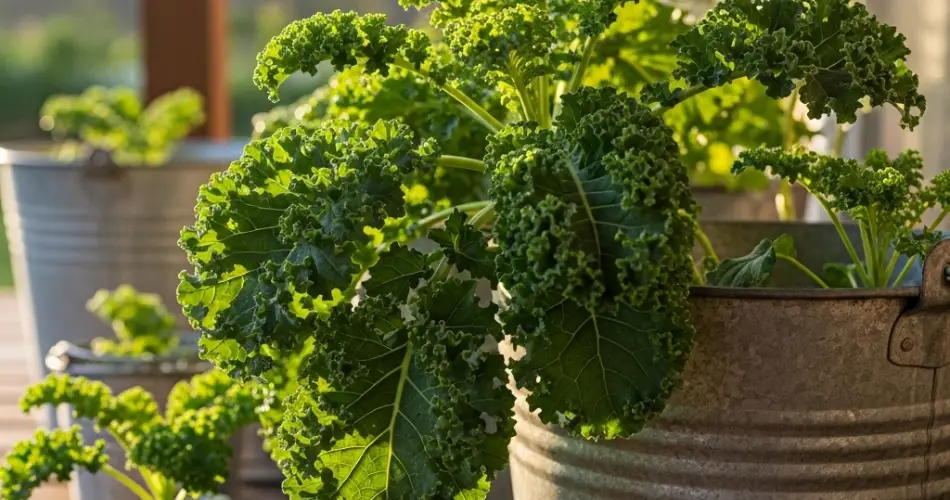
Kale is a nutrient-dense leafy green, celebrated for its vitamins, minerals, and antioxidants. Growing kale at home provides a steady supply of fresh, flavorful greens, perfect for salads, smoothies, and cooking. For gardeners with limited outdoor space, such as those with balconies or patios, bucket gardening offers a practical and rewarding solution. With the right care, bucket-grown kale can thrive, delivering continuous harvests throughout the growing season.
Why Choose Buckets for Kale?
Container gardening offers several benefits when growing kale:
-
Space efficiency – Buckets allow kale to grow in small areas, including balconies, patios, or compact outdoor spaces.
-
Soil control – Containers enable gardeners to use nutrient-rich, well-draining soil tailored for leafy greens.
-
Mobility – Buckets can be moved to follow sunlight patterns or protect plants from extreme weather.
-
Pest management – Growing kale in containers makes it easier to monitor and control common pests such as aphids, caterpillars, and slugs.
By choosing buckets, even urban gardeners can enjoy productive and healthy kale plants.
Step 1: Selecting the Right Bucket
The success of container-grown kale starts with the right bucket:
-
Size – Use a bucket that holds at least 5 gallons (19 liters) of soil. Kale has moderately deep roots, so larger containers promote healthy growth and higher yields.
-
Drainage – Ensure the bucket has multiple holes at the bottom to prevent water accumulation and root rot.
-
Material – Plastic, clay, or metal buckets are suitable, as long as they are sturdy and able to retain soil and moisture.
Proper container selection helps establish a strong root system and supports vigorous plants.
Step 2: Preparing the Soil
Kale thrives in fertile, well-draining soil:
-
Soil mix – Combine garden soil, compost, and perlite or coarse sand in equal parts. This mixture balances moisture retention with proper drainage.
-
Soil pH – Kale prefers slightly acidic to neutral soil, around 6.0–7.0 pH.
-
Fertilization – Add a slow-release, balanced fertilizer before planting to support leafy growth and maintain nutrient levels.
Well-prepared soil provides a solid foundation for healthy, productive kale plants.
Step 3: Planting Kale
Kale can be grown from seeds or seedlings:
-
Seeds – Sow seeds about 1/4–1/2 inch deep directly in the container. Keep soil consistently moist until seedlings emerge, usually within 7–14 days.
-
Seedlings – Transplant 3–4 week-old seedlings into the bucket, spacing them 8–12 inches apart to allow for mature leaf growth.
-
Succession planting – Sow new seeds every 3–4 weeks to maintain a continuous supply of fresh leaves throughout the season.
Proper planting and spacing prevent overcrowding and improve airflow, reducing the risk of disease.
Step 4: Watering
Consistent moisture is critical for healthy kale:
-
Initial watering – Water thoroughly after planting to settle the soil around roots.
-
Ongoing watering – Keep soil evenly moist, checking daily in hot or dry weather. Avoid waterlogging, which can lead to root rot.
-
Watering technique – Water at the base of the plant to keep leaves dry and minimize fungal issues.
Balanced watering encourages tender, flavorful leaves and promotes continuous growth.
Step 5: Sunlight and Placement
Kale thrives in moderate sunlight and cooler temperatures:
-
Light requirements – Place buckets where plants receive 4–6 hours of sunlight daily. In hot climates, partial shade prevents leaves from becoming tough or bitter.
-
Temperature – Kale grows best between 55–75°F (13–24°C). Cooler temperatures improve leaf quality and reduce premature flowering.
Proper sunlight exposure and temperature control enhance flavor and overall plant health.
Step 6: Fertilization and Maintenance
Ongoing care ensures a healthy, productive crop:
-
Feeding – Apply a balanced liquid fertilizer every 2–3 weeks to maintain leaf growth and nutritional quality.
-
Mulching – Use organic mulch to conserve soil moisture and regulate temperature.
-
Pest monitoring – Inspect leaves regularly for aphids, cabbage worms, or slugs. Promptly remove pests to protect the crop.
Regular maintenance supports vigorous plants and multiple harvests.
Step 7: Harvesting Kale
Correct harvesting encourages continued leaf production:
-
Cut-and-come-again method – Trim outer leaves as needed, leaving inner growth intact for ongoing production.
-
Timing – Harvest young, tender leaves for the best flavor and nutrient content.
-
Frequency – Regular harvesting stimulates new growth and delays flowering, which can reduce leaf quality.
With consistent harvesting, bucket-grown kale can provide fresh, nutritious greens for weeks.
Final Thoughts
Bucket gardening is a practical, efficient, and rewarding method for growing kale on balconies or small outdoor spaces. By selecting the right container, preparing nutrient-rich soil, providing consistent water, ensuring adequate sunlight, and practicing proper care, gardeners can enjoy a steady supply of fresh, healthy kale.
Even in limited spaces, bucket-grown kale allows gardeners to cultivate nutrient-rich greens year-round, making homegrown kale an easy and accessible addition to a healthy diet.


