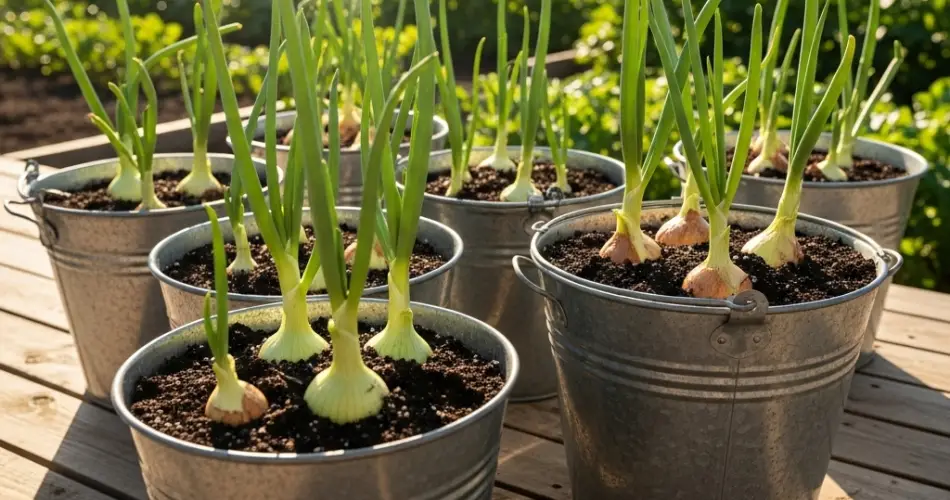
Growing onions at home is a simple and rewarding way to add fresh, flavorful vegetables to your meals. For urban gardeners or anyone with limited outdoor space, balcony gardening provides an excellent opportunity to cultivate onions in containers. Using buckets for onion growing not only makes the process manageable but also allows you to control soil quality, sunlight, and watering, ensuring healthy plants and a bountiful harvest. This guide explains how to successfully grow onions in buckets on your balcony.
Why Choose Buckets for Onion Gardening
Buckets are ideal containers for growing onions because they are inexpensive, portable, and provide sufficient depth for root development. They also allow for proper drainage, which is essential for onions, as waterlogged soil can cause rot and hinder bulb formation. Bucket gardening enables you to move your onions to optimize sunlight exposure, protect them from harsh weather, and maximize your limited space.
Selecting Onion Varieties
Onions come in several varieties, broadly categorized as short-day, intermediate-day, and long-day onions. Short-day onions are ideal for southern regions and indoor container gardening, as they require less sunlight to form bulbs. Varieties such as “Yellow Granex,” “White Sweet Spanish,” or “Red Creole” are well-suited for balcony growing. For containers, choose compact or intermediate varieties, which produce full bulbs without taking up too much space.
Choosing and Preparing Buckets
Select buckets that are at least 10–12 inches deep to provide adequate room for onion roots to develop. Wide buckets are preferable if you plan to grow multiple onions in one container. Drill several drainage holes at the bottom to prevent waterlogging. To improve drainage, you can add a thin layer of gravel or small stones before adding soil. Clean buckets thoroughly to remove any residues from previous use.
Soil Preparation
Onions thrive in loose, nutrient-rich, well-draining soil. Use a high-quality potting mix enriched with compost or well-rotted organic matter. A mixture of three parts potting soil to one part compost ensures the soil retains moisture while providing essential nutrients. Adding a small amount of sand or perlite improves drainage and prevents the soil from becoming compacted. Avoid heavy garden soil, which can restrict root growth in containers.
Planting Onions
Onions can be grown from seeds, sets, or transplants. Sets—small, immature onion bulbs—are the easiest and quickest method for container gardening. Plant sets pointed side up about 1 inch deep, spacing them 2–3 inches apart for optimal growth. If using seeds, start them indoors and transplant seedlings once they are 4–6 inches tall, maintaining adequate spacing. Water gently after planting to settle the soil around the bulbs.
Sunlight Requirements
Onions require full sun for best growth, ideally six to eight hours per day. Place your buckets on a sunny balcony or terrace to ensure the plants receive sufficient light. In very hot climates, providing partial afternoon shade can help prevent leaf scorching and maintain plant health. Proper sunlight encourages strong stems and promotes healthy bulb formation.
Watering and Maintenance
Consistent moisture is essential for container-grown onions. Water the plants whenever the top inch of soil feels dry, ensuring the soil remains evenly moist but not waterlogged. Mulching the surface with straw or shredded leaves helps retain moisture, suppress weeds, and regulate soil temperature. Regularly remove any yellowing or damaged leaves to keep the plants healthy and reduce the risk of disease.
Fertilization
Onions benefit from regular feeding, especially in containers where nutrients can be depleted quickly. Use a balanced, water-soluble fertilizer or organic compost tea every two to three weeks. Fertilizing supports strong leaf growth and encourages well-formed bulbs. Avoid over-fertilizing with high nitrogen fertilizers late in the season, as this can produce excessive leaf growth at the expense of bulb development.
Harvesting Onions
Onions are usually ready to harvest when the leaves begin to yellow and fall over. Carefully lift the bulbs from the soil and allow them to cure in a dry, ventilated area for several weeks. Proper curing improves flavor and extends storage life. For continuous harvest, consider planting in succession every few weeks to maintain a steady supply of fresh onions.
Advantages of Bucket Onion Gardening
Growing onions in buckets provides several benefits for balcony gardeners. Containers make it easy to control soil, water, and sunlight, reduce pest and disease exposure, and maximize limited space. Bucket gardening also makes harvesting more convenient, allowing you to enjoy fresh, homegrown onions right from your balcony.
Conclusion
Balcony-friendly onion bucket gardening is an efficient and rewarding way to grow fresh, flavorful onions in limited space. By selecting the right varieties, using nutrient-rich soil, providing sufficient sunlight, and maintaining consistent care, you can achieve a healthy and productive harvest. With proper planning and attention, container-grown onions offer urban gardeners the satisfaction of homegrown produce without the need for a traditional garden plot.


