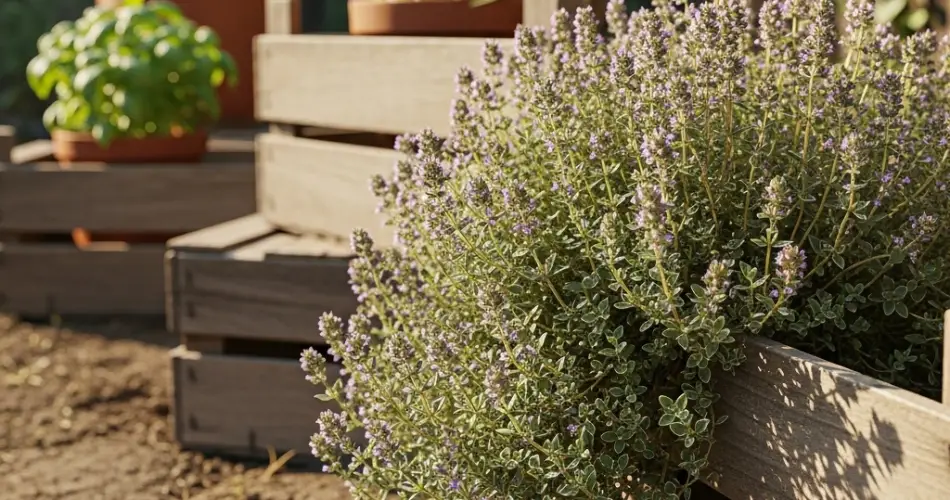
Thyme is a hardy, fragrant herb that has been cherished for centuries in kitchens and gardens around the world. Known for its earthy, slightly minty flavor, thyme is a staple in Mediterranean dishes, soups, stews, roasted meats, and vegetables. Beyond its culinary appeal, thyme is valued for its medicinal qualities and its ability to attract pollinators like bees.
If you’re looking for a practical yet charming way to grow thyme at home, DIY crate boxes offer an excellent solution. Not only do they save space, but they also add rustic beauty to your backyard or patio. With minimal effort, you can create a thriving thyme garden in crates that will provide fresh herbs throughout the year.
Why Grow Thyme in Crate Boxes?
Thyme is naturally hardy and thrives in well-drained soil, which makes wooden crates a perfect planting choice. Crates allow excess water to drain easily, preventing the roots from becoming waterlogged. They also make it easy to control soil conditions and move the plants to sunnier spots when needed.
Additionally, crate boxes provide a decorative, eco-friendly alternative to traditional pots. Repurposed wooden crates—such as wine or fruit boxes—can be turned into attractive herb planters with little cost or effort. For small gardens or limited backyard spaces, they allow you to grow fresh herbs without requiring a dedicated garden bed.
Materials You’ll Need
Before starting your thyme crate garden, gather these simple supplies:
-
A sturdy wooden crate (wine boxes, fruit crates, or repurposed wooden containers)
-
Landscape fabric, burlap, or thick cloth for lining
-
A lightweight potting mix
-
Sand or perlite to improve drainage
-
Thyme seedlings or cuttings
-
A trowel, scissors, and a watering can
Optional: Natural wood sealant for protecting the crate exterior from weather exposure.
Preparing the Crate
-
Choose the right crate – Pick a wooden crate that is deep enough to hold soil, about 8–10 inches. Ensure it’s sturdy enough to support the weight of soil and plants.
-
Line the interior – Use landscape fabric, burlap, or another breathable material to line the inside of the crate. This prevents soil from spilling out while allowing water to drain.
-
Add drainage holes if needed – If the bottom of the crate is solid wood, drill several holes to ensure excess water escapes.
-
Optional sealing – To extend the life of your crate, coat the outside with a natural wood sealant. Avoid sealing the inside, as chemicals may leach into the soil.
Soil Mix for Thyme
Thyme thrives in light, sandy soil with excellent drainage. A simple soil mix for your crate should include:
-
50% potting soil for structure
-
30% sand or perlite for drainage
-
20% compost for nutrients
Thyme prefers soil that is not overly rich. In fact, too much fertilizer or compost can reduce its flavor intensity. Keeping the soil slightly lean ensures strong aroma and taste.
Planting Thyme
Thyme can be grown from seed, but starting with seedlings or cuttings is faster and more reliable. Plant one to two thyme seedlings in each crate, spacing them about 8–10 inches apart. As thyme spreads, it will fill the crate with lush, aromatic greenery.
Place your crate in a sunny location where the plants will receive at least 6–8 hours of direct sunlight daily. Thyme loves warmth and light, so a south-facing patio or sunny backyard spot is ideal.
Caring for Thyme in Crates
Thyme is a low-maintenance herb, making it perfect for crate gardening. With just a few simple practices, you can keep your thyme healthy and productive:
-
Watering: Thyme does not like soggy soil. Water sparingly, allowing the top inch of soil to dry out before watering again. Overwatering can lead to root rot.
-
Pruning: Regular trimming keeps the plant bushy and encourages fresh growth. Snip stems frequently to harvest leaves while shaping the plant.
-
Fertilizing: Thyme does not need heavy feeding. A small dose of compost or diluted organic fertilizer once in spring is enough to support growth.
-
Sunlight: Make sure the crate is always positioned in full sun for best flavor and strong growth.
Harvesting and Storing Thyme
Harvest thyme once the plants are well established, usually after reaching 6–8 inches tall. The best time to harvest is in the morning after the dew has dried but before the sun is too strong, as the essential oils are at their peak.
To harvest, use scissors or pinch off stems, cutting no more than one-third of the plant at a time. Fresh thyme can be used immediately in cooking, or it can be dried for later use. To dry thyme, hang small bundles upside down in a cool, dark, and airy place. Once dried, crumble the leaves and store them in airtight jars.
Benefits of Growing Thyme in Crates
-
Adds beauty and rustic charm to your outdoor space
-
Provides fresh herbs just steps away from your kitchen
-
Easy to manage and maintain in limited spaces
-
Encourages pollinators like bees when flowering
-
Produces a hardy perennial herb that thrives year after year
Conclusion
Growing thyme in DIY crate boxes is an excellent way to bring both beauty and flavor into your backyard. With minimal materials and simple care, you can enjoy this versatile herb throughout the year. Whether you’re seasoning roasted vegetables, enhancing soups, or drying herbs for winter, fresh thyme from your crate garden will always elevate your cooking.
By combining practicality with charm, crate gardening makes it easy to enjoy the rewards of fresh herbs even in small spaces. Start with thyme, and you’ll soon find that your backyard crate garden becomes a thriving centerpiece for both flavor and style.


