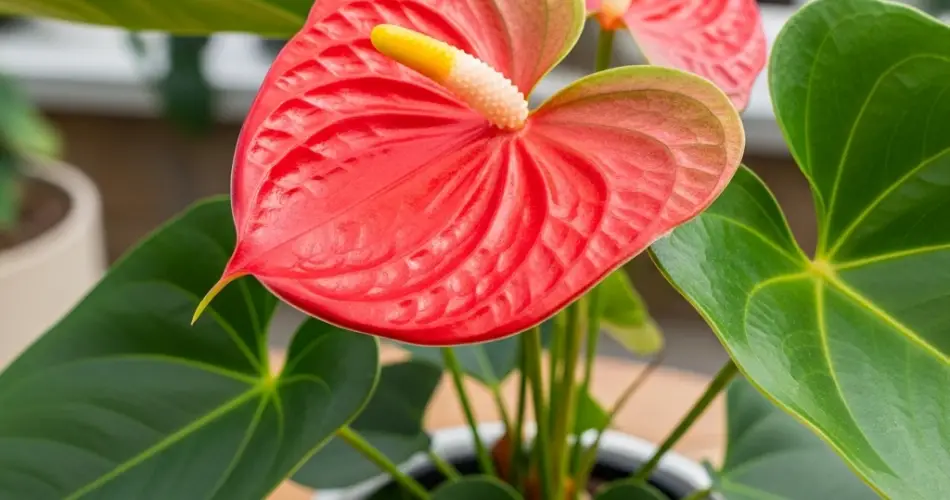
Anthuriums are striking tropical plants known for their glossy heart-shaped leaves and vibrant, long-lasting blooms. These blooms, often mistaken for flowers, are actually colorful spathes surrounding a central spadix. With proper care, anthuriums can thrive indoors year-round, offering lush foliage and bold color that brightens any space.
Whether you’re a seasoned plant lover or just starting your indoor garden, understanding the specific needs of anthuriums is key to maintaining their health and beauty. Here’s a complete guide to help your anthurium develop shiny leaves and bloom brilliantly.
1. Light Requirements
Anthuriums prefer bright, indirect light. Too much direct sunlight can scorch their leaves, while too little light may lead to slow growth and fewer blooms.
-
Best placement: Near a window with filtered sunlight or in a well-lit room. East- or north-facing windows are ideal.
-
Avoid dark corners or harsh afternoon sun.
-
If natural light is limited, use artificial grow lights to supplement brightness.
Proper lighting helps encourage vibrant spathes and healthy green leaves.
2. Ideal Temperature and Humidity
As tropical plants, anthuriums thrive in warm, humid environments. They prefer temperatures between 65°F and 80°F (18°C to 27°C) and dislike sudden temperature changes or cold drafts.
-
Avoid placing them near air conditioners, heaters, or open windows in cold weather.
-
Maintain humidity above 50% if possible. Use a humidity tray, group plants together, or run a humidifier to boost indoor moisture levels.
-
Regular misting can also help, but avoid soaking the leaves to prevent disease.
3. Watering Tips
Proper watering is crucial for anthuriums. They like moisture, but overwatering can lead to root rot, while underwatering can cause dry, wilted leaves.
-
Water when the top 1–2 inches of soil feel dry.
-
Use room temperature, non-chlorinated water if possible.
-
Ensure the pot has drainage holes and never let the plant sit in standing water.
-
In winter, reduce watering as growth slows.
A well-hydrated anthurium has firm leaves and more frequent blooms.
4. Choosing the Right Soil
Anthuriums require light, well-draining soil that retains some moisture but doesn’t stay soggy.
A good potting mix includes:
-
Peat moss or coco coir (for moisture retention)
-
Perlite or orchid bark (for drainage and aeration)
-
Optional: a bit of charcoal or sphagnum moss to support root health
You can also use a pre-mixed orchid or aroid potting blend for convenience.
5. Fertilizing for Growth and Blooms
To encourage lush leaves and bright blooms, feed your anthurium regularly during the growing season (spring to early autumn).
-
Use a balanced, water-soluble fertilizer (such as 20-20-20) diluted to half strength.
-
Fertilize every 4 to 6 weeks during active growth.
-
Avoid over-fertilizing, which can burn roots or cause salt buildup.
In winter, stop or reduce fertilizing as the plant enters dormancy.
6. Encouraging More Blooms
To keep your anthurium blooming:
-
Ensure it receives enough indirect light daily.
-
Keep temperatures consistent and avoid stress from drafts or sudden changes.
-
Maintain high humidity.
-
Trim off faded blooms to redirect energy to new growth.
With proper care, anthuriums can bloom multiple times a year, with each bloom lasting several weeks.
7. Pruning and Cleaning
Regular maintenance helps your anthurium stay healthy and attractive.
-
Remove dead or yellowing leaves with clean scissors to prevent disease.
-
Wipe leaves gently with a damp cloth to remove dust and restore their natural gloss.
-
If your plant becomes leggy, prune to shape and promote compact growth.
Cleaning also helps the plant breathe and improves light absorption.
8. Repotting When Needed
Anthuriums don’t like being rootbound. If your plant’s roots are circling the pot or growing out of drainage holes, it’s time to repot — typically every 2 to 3 years.
Steps:
-
Choose a pot 1–2 inches larger in diameter.
-
Use fresh, well-draining potting mix.
-
Gently loosen the roots and place the plant at the same depth as before.
-
Water lightly and return to its normal light location.
9. Common Issues and Fixes
-
Yellow Leaves: Often due to overwatering or poor drainage.
-
Brown Leaf Tips: Usually from low humidity or salt buildup.
-
Lack of Blooms: Insufficient light or lack of nutrients.
-
Wilting Leaves: Check watering habits and root health.
Addressing these problems quickly helps prevent long-term damage.
Final Thoughts
Anthuriums are not only beautiful, but also surprisingly easy to care for when you understand their preferences. By providing bright indirect light, consistent watering, humidity, and occasional feeding, you’ll enjoy lush, shiny leaves and bold, long-lasting blooms.
With a little attention and the right conditions, your anthurium will thrive and bring vibrant tropical charm into your indoor garden all year long.


