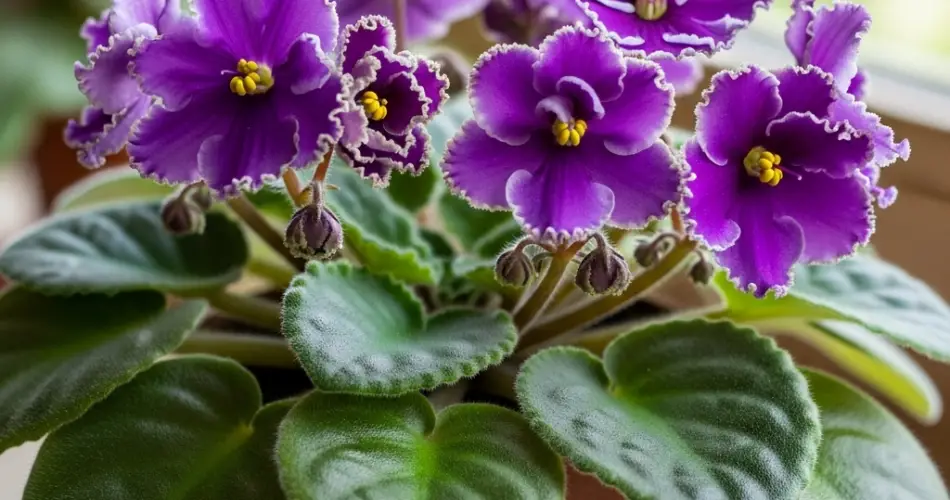
African violets (Saintpaulia spp.) are treasured indoor plants, prized for their soft, velvety leaves and vibrant, long-lasting flowers. Compact and elegant, they thrive in small spaces, making them ideal for windowsills, desks, and shelves. Although they are relatively low-maintenance, ensuring the health of African violets requires attention to three key factors: light, soil, and watering. Proper care in these areas promotes lush foliage, continuous flowering, and a strong, resilient plant.
Understanding African Violet Light Requirements
Light is a crucial factor for African violet health and flowering. These plants are native to tropical regions with dappled sunlight, so they thrive in bright, indirect light. Direct sunlight can scorch the delicate leaves, causing brown patches and leaf damage, while insufficient light slows growth and reduces flower production. A north- or east-facing window is often ideal, providing sufficient light without the intensity of afternoon sun.
For indoor environments with limited natural light, fluorescent or LED grow lights can be used. Position the lights approximately 12–15 inches above the plant and provide 12–14 hours of light daily to mimic the natural daylight cycle. Adequate light encourages vibrant leaf coloration, healthy stems, and continuous blooms.
Choosing the Right Soil
African violets are sensitive to soil conditions. They require well-draining, airy soil that retains some moisture but does not stay waterlogged. Heavy garden soil or dense potting mixes can suffocate the roots, leading to root rot and poor growth.
The ideal soil mix typically combines:
-
High-quality potting soil
-
Perlite or pumice for aeration
-
Peat moss to retain moderate moisture
This combination allows water to reach the roots evenly while promoting proper drainage. Using a slightly acidic soil pH of around 6.0 to 6.5 also supports nutrient absorption, contributing to healthy foliage and abundant flowers.
Proper Watering Techniques
Watering is one of the most critical aspects of African violet care. These plants are particularly sensitive to both overwatering and underwatering, each of which can cause visible stress. Overwatering can result in yellowing leaves, soft roots, and crown rot, while underwatering leads to drooping leaves, browning edges, and stunted flower growth.
Tips for Effective Watering:
-
Check Soil Moisture: Before watering, insert a finger about an inch into the soil. Water only if the soil feels dry at this depth.
-
Bottom Watering: Fill a saucer beneath the pot and allow the plant to absorb water from below. This prevents leaf spotting and minimizes the risk of crown rot.
-
Top Watering with Care: If watering from above, pour slowly and directly into the soil, avoiding the foliage.
-
Use Room-Temperature Water: Cold or hot water can shock the roots, so always use water at ambient temperature.
During the growing season, water approximately once a week, adjusting frequency based on soil dryness, indoor temperature, and humidity. In cooler months, reduce watering slightly, ensuring the soil dries slightly between sessions.
Additional Care Considerations
-
Humidity: African violets prefer moderate humidity. Dry indoor air can lead to brown leaf tips and reduced flowering. Use a humidity tray or group plants together to increase local moisture levels.
-
Fertilization: During active growth and flowering, apply a balanced, diluted fertilizer every 2–4 weeks to support leaf and flower development.
-
Pruning: Remove dead or damaged leaves and spent flowers to redirect energy into healthy growth and new blooms.
-
Pot Selection: Use small, shallow pots with drainage holes. This encourages root growth and prevents water from pooling at the base.
Monitoring Plant Health
African violets provide clear visual cues when adjustments are needed. Drooping or curling leaves, brown tips, or reduced flowering indicate that watering, soil, or light conditions may need attention. Soft, glossy leaves and vibrant blooms signify proper care and a balanced environment.
Benefits of Proper Care
By focusing on light, soil, and watering essentials, gardeners can maintain African violets that are healthy, attractive, and productive. Adequate light promotes strong foliage and continuous blooms, well-draining soil ensures proper hydration, and careful watering prevents common problems like crown rot or leaf damage. These practices create an ideal indoor environment for African violets, allowing them to flourish and provide long-lasting beauty.
Proper care of African violets not only enhances their visual appeal but also encourages resilience against pests, diseases, and environmental stress. With attention to these key factors, your African violets can thrive indoors, rewarding you with lush leaves and vibrant, continuous flowers throughout the year.


