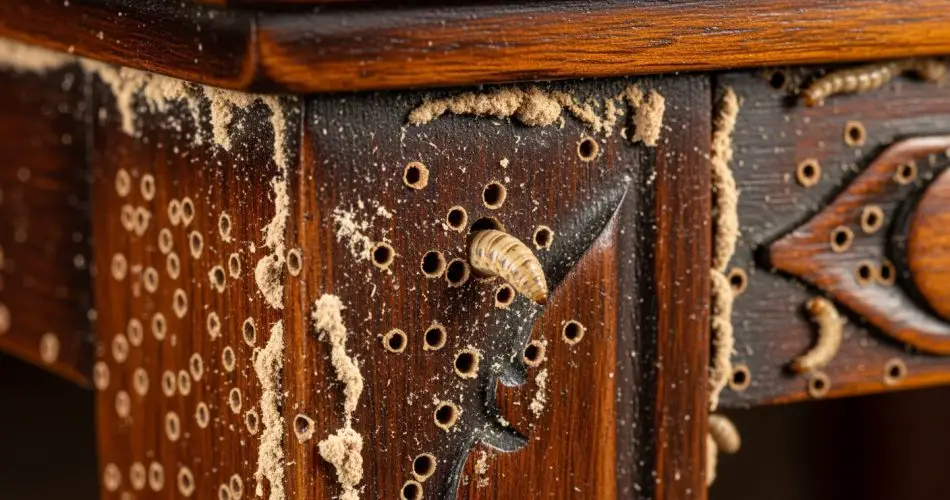

Finding woodworms in your wooden furniture can be alarming — these tiny insects can cause significant damage if not treated promptly. Known as xylophagous insects, woodworms feed on wood, creating small holes and tunnels that weaken furniture and wooden structures over time. Fortunately, there are several natural, safe, and effective remedies you can use to eliminate woodworms and protect your wooden pieces for years to come. Let’s explore the best ways to do it!
Understanding Woodworms and Their Damage
Woodworms are the larvae of beetles that lay eggs in cracks, joints, and small openings in wood. Once the eggs hatch, the larvae start feeding on the wood fibers, leaving behind a trail of powdery dust and visible holes on the surface. Over time, this activity can severely damage furniture, doors, beams, and other wooden items.
If you notice tiny round holes or wood dust around your furniture, it’s likely that woodworms have made themselves at home. The key to controlling them is quick and thorough action using natural repellents that are safe for both you and your furniture.
1. Bay Leaves and Cinnamon
Bay leaves and cinnamon are not only popular in the kitchen but also serve as powerful natural insect repellents. Their strong, pleasant aromas are disliked by many pests, including woodworms.
You’ll need:
-
Dried bay leaves
-
Ground cinnamon or cinnamon sticks
-
Small cotton or muslin bags
How to use:
Fill the cotton bags with a mix of bay leaves and cinnamon, then place them inside drawers, cabinets, and any wooden furniture that may be infested. The smell will repel the insects and prevent new infestations. For added protection, you can refresh the bags every few weeks.
This remedy is particularly useful for antique furniture, as it avoids the use of harsh chemicals that could damage delicate finishes.
2. Lemon and White Vinegar
Lemon juice and white vinegar are household staples that double as effective woodworm repellents. Their acidity disinfects surfaces while their strong scent drives away insects.
You’ll need:
-
1 cup of white vinegar
-
½ cup of freshly squeezed lemon juice
-
1 liter of water
-
A soft sponge or cloth
How to use:
Mix all the ingredients in a bowl. Dip the sponge in the solution and gently wipe it over the infested wood, focusing on areas with visible holes. Let it sit for a few minutes before wiping with a clean, dry cloth. The combined action of vinegar and lemon works both as a disinfectant and as a deterrent to keep woodworms from returning.
For severe infestations, repeat this treatment once a week until the problem disappears.
3. Lavender
Lavender is widely known for its relaxing scent, but it’s also one of the most effective natural repellents against wood-boring insects. Woodworms, like moths, cannot stand its fragrance.
You’ll need:
-
Fresh or dried lavender flowers
-
Small cotton bags
-
OR 10 drops of lavender essential oil
-
1 glass of water
-
Spray bottle
How to use:
You can place lavender flowers inside small bags and store them inside wooden furniture. Alternatively, mix lavender essential oil with water and pour it into a spray bottle. Mist the mixture directly onto the furniture, focusing on the areas most affected by the woodworms.
Not only will this method help repel the insects, but it will also leave your home smelling wonderfully fresh.
4. Citrus Peels
Citrus fruits such as oranges and lemons are natural deterrents for many types of insects, including woodworms. Their fresh, zesty scent is unpleasant to pests but pleasant for humans.
You’ll need:
-
Dried orange or lemon peels
-
Cotton bags
How to use:
Let the peels dry naturally under the sun until they harden. Once dried, cut them into small pieces and place them in cotton bags. Close the bags with a ribbon and distribute them inside the affected furniture. The smell of citrus will naturally drive the woodworms away.
This remedy also helps keep your wooden cabinets and drawers smelling clean and fresh.
5. Garlic
Garlic is another powerful natural insecticide that can help eliminate woodworms quickly. Its strong, pungent odor acts as a deterrent while its natural compounds help kill the larvae hiding inside the wood.
You’ll need:
-
Fresh garlic cloves
-
Cotton bags or a small bowl
How to use:
Peel a few cloves and rub them directly on the wood near the holes. You can also place a few unpeeled cloves in small cotton bags and put them inside the drawers or cabinets. Replace the cloves every few days for continued effectiveness.
This remedy is simple, affordable, and especially useful for furniture with visible signs of infestation.
6. Denatured Alcohol
If natural aromatic remedies don’t completely solve the problem, denatured alcohol (ethyl alcohol) can be an effective last resort. It penetrates deep into the wood and kills larvae and eggs hidden inside.
You’ll need:
-
Denatured alcohol
-
Cotton balls
-
A small plastic syringe
How to use:
Soak some cotton balls in alcohol and gently rub them over the infested area. Then, fill a syringe with alcohol and inject it directly into the holes. This allows the alcohol to reach the larvae and eggs deep within the wood, killing them completely.
Important note: If your furniture is painted or varnished, be careful not to rub alcohol on the exterior surfaces, as it can discolor or damage the finish. Use it only inside the holes or on unvarnished areas.
Final Tips to Prevent Woodworm Infestations
-
Keep humidity under control: Woodworms thrive in damp environments. Use dehumidifiers and ensure proper ventilation in rooms with wooden furniture.
-
Regularly inspect furniture: Check for new holes or fine wood dust that could indicate recent activity.
-
Polish and treat wood periodically: Using natural oils or waxes will protect the surface and make it harder for insects to lay eggs.
By combining these natural remedies with regular care and maintenance, you can protect your furniture from woodworm damage and keep it looking beautiful for many years. Simple, eco-friendly, and effective — these treatments will help you eliminate woodworms safely without resorting to harsh chemicals.