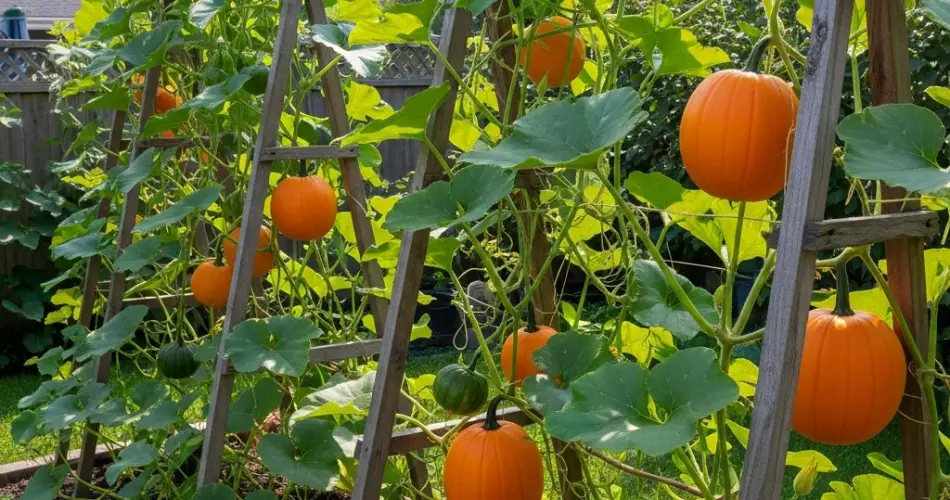
Pumpkins are often thought of as sprawling crops that require large garden spaces, with vines trailing across the ground and fruits resting on the soil. However, with the right support, pumpkins can be grown vertically on wooden trellises, transforming them into space-efficient plants that fit beautifully in backyards, raised beds, and even urban gardens. Using trellises not only saves ground space but also keeps the vines organized, the fruits cleaner, and the overall garden more attractive.
Why Grow Pumpkins on Trellises?
Traditionally, pumpkins spread widely across the soil, sometimes covering several meters. While this growth habit is natural, it poses challenges for gardeners with limited space. Growing pumpkins on wooden trellises offers several advantages:
-
Space-saving – Vertical growth makes pumpkins suitable for smaller gardens or even balcony setups with large containers.
-
Healthier plants – Lifting vines off the soil reduces exposure to pests, slugs, and fungal diseases.
-
Cleaner fruits – Pumpkins suspended on trellises develop evenly without contact with damp ground, avoiding rot and blemishes.
-
Better air circulation – Elevating vines enhances airflow, minimizing mildew problems common in humid environments.
-
Visual appeal – A trellised pumpkin vine adds a striking, rustic feature to the garden, with green vines and orange fruits creating a living display.
Choosing the Right Wooden Trellis
Since pumpkin vines can grow long and produce heavy fruit, the trellis must be strong enough to handle the weight. Here are some options:
-
A-frame trellis: Two wooden panels leaning together form a sturdy “A” shape. This design is excellent for distributing weight and is easy to construct.
-
Vertical panel trellis: A tall wooden frame with lattice or slats allows vines to climb directly upward. Best for smaller pumpkin varieties.
-
Arched trellis: Creates a tunnel-like feature where vines climb over and pumpkins hang down. This design doubles as a garden focal point.
-
Flat wall-mounted trellis: Ideal for balconies or small backyards where space is restricted, allowing pumpkins to grow upward along walls.
No matter the design, hardwood or pressure-treated lumber is recommended, as it resists weather damage and remains sturdy throughout the growing season.
Best Pumpkin Varieties for Trellises
Not all pumpkins are suitable for vertical gardening. Smaller or mid-sized varieties perform better on trellises than large carving pumpkins. Some excellent options include:
-
Jack Be Little – Miniature pumpkins, perfect for decorative use and lightweight enough for trellises.
-
Sugar Pie – Small, sweet pumpkins ideal for cooking and baking.
-
Baby Boo – White mini pumpkins that add visual variety.
-
Kabocha or small winter squash – Compact, flavorful fruits with moderate weight.
Choosing manageable varieties ensures the trellis can handle the load without risk of collapse.
Supporting the Fruits
As pumpkins grow heavier, their weight can strain the vines, even with trellis support. Gardeners can prevent damage by using fruit slings. These are made from old fabric, mesh bags, or nylon stockings and tied to the trellis to cradle each pumpkin. The sling distributes weight evenly and prevents the fruit from pulling vines down or snapping stems.
How to Train Pumpkins on Wooden Trellises
-
Start early – Place the trellis in position before planting seeds or transplanting seedlings to avoid disturbing roots later.
-
Guide young vines – As vines grow, gently weave them into the trellis or tie them loosely with soft twine.
-
Prune strategically – Limit the number of developing pumpkins per vine to reduce stress and encourage stronger fruit growth.
-
Check slings and ties – Adjust supports as the fruits enlarge, ensuring vines are not constricted.
-
Monitor growth – Regularly train new growth upward to keep vines on track and prevent tangling.
Additional Care for Trellised Pumpkins
While wooden trellises provide excellent structural support, good cultural practices ensure success:
-
Soil: Pumpkins need rich, well-drained soil with plenty of organic matter.
-
Watering: Deep, consistent watering is essential, especially during fruit development.
-
Fertilizing: Balanced feeding supports strong vines, while phosphorus and potassium encourage fruiting.
-
Mulching at the base: Helps retain soil moisture and suppress weeds.
Even though the vines grow vertically, the root system still requires ample space and nutrition to sustain fruit production.
Benefits Beyond the Harvest
Trellised pumpkins not only produce healthier crops but also enhance the beauty and functionality of a garden. An arching trellis laden with pumpkins creates a whimsical walkway, while a wall trellis makes efficient use of vertical surfaces. For families, it adds a playful element, letting children watch pumpkins grow as they hang from the vines.
Conclusion
Growing pumpkins on wooden trellises is a practical and visually appealing gardening method. With sturdy wooden structures, carefully chosen pumpkin varieties, and proper fruit support, even small gardens can enjoy a productive harvest. Beyond maximizing space, trellising improves air circulation, reduces disease risk, and keeps fruits clean and healthy.
For gardeners who once thought pumpkins were only for sprawling fields, wooden trellises open new possibilities. By going vertical, you can enjoy the charm of pumpkins while making the most of every square foot of your garden.


