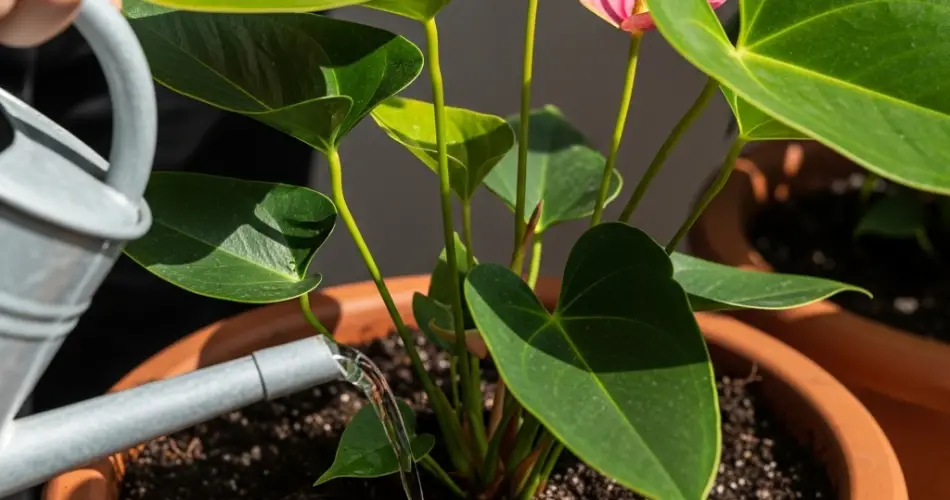
Anthuriums, also known as flamingo flowers or laceleaf, are prized for their glossy, heart-shaped leaves and long-lasting, vibrant blooms. Native to tropical rainforests, these plants thrive in humid, warm environments and require careful watering to flourish indoors. While not overly fussy, Anthuriums can be sensitive to incorrect watering—too much or too little can lead to leaf damage, root problems, and lackluster flowering.
In this guide, we’ll explore the best watering practices for Anthuriums, including how often to water, signs of over- or underwatering, how to adjust for different seasons, and how to use the right water type for optimal plant health.
Understanding the Anthurium’s Natural Preferences
In their native habitat, Anthuriums grow under the forest canopy, where they receive indirect sunlight, warmth, and consistent moisture. This gives a strong clue to their preferences in indoor environments. While they enjoy evenly moist soil, they dislike sitting in soggy conditions, which can cause root rot. Mimicking their natural habitat is key to success.
How Often to Water Anthuriums
The frequency of watering depends on a variety of factors, including indoor temperature, humidity, soil type, and pot size. A general guideline is to water once a week during the active growing season (spring through early fall) and reduce watering to every 10–14 days during cooler months.
Rather than following a strict schedule, the best method is to check the soil before each watering:
-
Insert your finger about an inch (2.5 cm) into the soil.
-
If it feels dry at that depth, it’s time to water.
-
If it still feels moist, wait another couple of days before checking again.
Using this touch test helps you adapt to changes in indoor conditions and avoids unnecessary watering.
Signs of Overwatering and Underwatering
Both overwatering and underwatering can negatively affect Anthuriums, but they show different symptoms:
Overwatering symptoms:
-
Yellowing lower leaves
-
Wilting despite wet soil
-
A musty smell from the pot
-
Mushy roots or crown rot
Underwatering symptoms:
-
Drooping leaves
-
Dry, crispy edges
-
Dull, lifeless foliage
-
Slowed growth or no flowering
Catching these signs early can help you correct the watering routine before any lasting damage occurs.
Proper Watering Technique
To water an Anthurium correctly, follow this method:
-
Use room-temperature water. Cold water can shock the roots, while warm water encourages nutrient uptake.
-
Water deeply. Pour water until it begins to drain from the bottom of the pot.
-
Let excess drain. Never let the pot sit in standing water. Empty any saucers or cache pots.
-
Avoid waterlogging. Ensure the pot has good drainage holes and is filled with a well-draining soil mix.
This technique ensures even moisture distribution and prevents root suffocation.
Water Quality Matters
Anthuriums are sensitive to salts, chlorine, and fluoride found in many municipal water sources. These additives can build up in the soil over time and may cause leaf tip burn or yellowing.
To avoid water-related chemical stress:
-
Use filtered water, rainwater, or distilled water when possible.
-
Allow tap water to sit out overnight before use to let chlorine evaporate.
-
Periodically flush the soil with clean water to wash out any accumulated salts.
Better water quality often results in healthier foliage and more frequent blooms.
Seasonal Adjustments
In spring and summer, when the plant is actively growing, increase watering frequency slightly. Monitor the plant’s needs more closely, especially if indoor temperatures are high or humidity is low due to air conditioning.
In fall and winter, when growth slows, reduce watering accordingly. Cooler indoor air and lower light levels mean the soil retains moisture longer, increasing the risk of overwatering if not adjusted.
Always let the top layer of soil dry out before watering again, regardless of the season.
Humidity and Misting
While Anthuriums love humidity, this doesn’t mean the soil should stay overly wet. Aim for an indoor humidity level of around 60–70%, especially during dry seasons or in heated homes. You can improve humidity with:
-
A pebble tray filled with water
-
A room humidifier
-
Grouping plants together
-
Occasional misting (just don’t overdo it to avoid fungal issues)
Maintaining proper humidity can reduce watering stress and keep leaves glossy and vibrant.
Choosing the Right Pot and Soil
Anthuriums thrive in loose, chunky potting mixes that allow air to reach the roots. A mix of orchid bark, perlite, and peat moss or coconut coir works well. Avoid heavy, moisture-retentive soils that stay soggy for too long.
Use a container with good drainage holes, and repot every 1–2 years to refresh the soil and check for root health.
Final Tips
Watering Anthuriums is all about consistency and attentiveness. Rather than watering on a strict schedule, listen to your plant’s cues and adjust based on environmental conditions. With the right technique and a bit of observation, your Anthurium will reward you with striking foliage and blooms that brighten any room.


