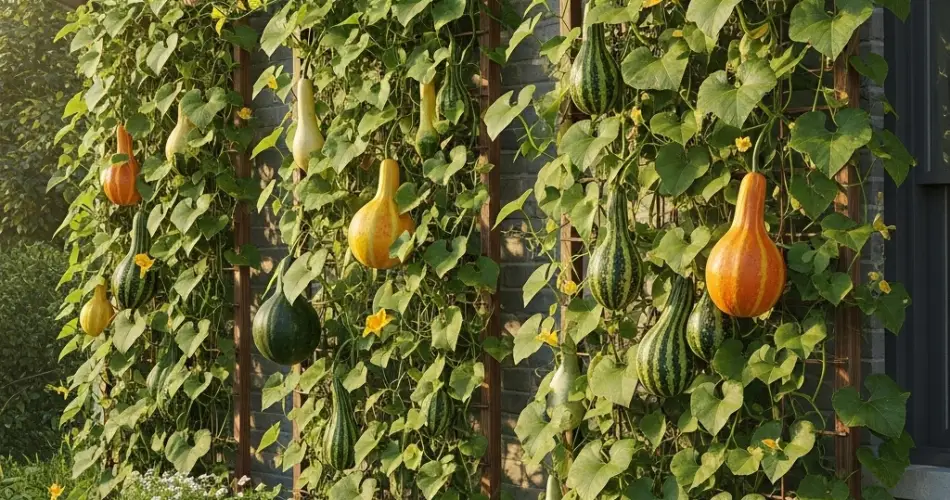
Gourds are a versatile and decorative addition to any garden, appreciated for their unique shapes, vibrant colors, and utility in crafts and seasonal décor. However, traditional gourd cultivation often requires significant ground space, which can be a challenge for gardeners with small yards, balconies, or patios. Wall-mounted trellises provide an effective solution, allowing gourds to grow vertically while saving space, improving plant health, and producing cleaner, more attractive fruits.
Why Use Wall-Mounted Trellises for Gourds?
Gourd vines are naturally sprawling and can easily tangle when allowed to grow along the ground. Without support, fruits may rest on soil, increasing the risk of rot, pest damage, and disease. Wall-mounted trellises elevate vines and fruits, keeping them off the ground and improving air circulation. This vertical growth enhances sunlight exposure for leaves, promotes stronger stems, and reduces the likelihood of fungal infections. For small-space gardeners, vertical trellises turn walls, fences, or balcony panels into productive garden areas, making it possible to cultivate gourds even in limited spaces.
Choosing the Right Wall-Mounted Trellis
Selecting a suitable wall-mounted trellis is key to successful gourd gardening. Trellises can be constructed from wood, metal, or durable plastic, depending on aesthetic preference and strength requirements. Lattice panels, wire grids, or custom-built vertical structures work well for supporting climbing gourds. The trellis should be tall enough—generally 6–8 feet—to accommodate mature vines and wide enough to support multiple plants without overcrowding. Ensure that the trellis is securely attached to the wall or fence to handle the weight of mature vines and heavy fruits. Properly anchored trellises maintain plant stability and prevent tipping.
Preparing Gourds for Vertical Growth
Before training gourds on a wall-mounted trellis, prepare both the plants and the soil. Gourds thrive in well-draining, nutrient-rich soil amended with compost or organic fertilizer. Choose a sunny location that receives at least 6–8 hours of sunlight daily. Space seedlings according to variety recommendations to allow airflow, prevent overcrowding, and reduce disease risk. Early installation of the trellis encourages young vines to climb naturally, promoting vertical growth and organized development from the start. Mulching around the base of plants helps retain moisture, suppress weeds, and maintain a consistent soil temperature.
Training Gourds on Wall-Mounted Trellises
Training gourd vines involves gently guiding the main stems toward the trellis and loosely securing them with soft garden ties, twine, or cloth strips. Avoid tying too tightly, as this can damage stems and restrict growth. Encourage lateral shoots to climb or rest against the trellis to maximize coverage and vertical space. For heavier fruits, use slings or soft netting to cradle individual gourds, preventing vines from sagging or breaking under the weight. Regular monitoring ensures the vines grow in an organized manner while receiving adequate sunlight and airflow.
Pruning and Maintenance
Pruning is important to maintain healthy, productive gourd plants on vertical trellises. Remove yellowing, damaged, or overcrowded leaves to improve light penetration and airflow. Pinch back excessive lateral shoots to direct the plant’s energy toward fruit development. Inspect vines regularly for pests, including squash bugs, aphids, and spider mites, and control infestations with organic solutions like neem oil or insecticidal soap. Routine maintenance supports stronger vines, healthier foliage, and cleaner, higher-quality fruits.
Watering and Fertilizing
Gourds on wall-mounted trellises require consistent moisture for optimal growth. Vertical setups can dry out faster than in-ground beds, so check soil regularly and water deeply when the top inch feels dry. Mulching helps retain moisture and reduce temperature fluctuations around the roots. Fertilize every few weeks with a balanced liquid fertilizer to encourage vigorous growth, strong stems, and abundant fruit production. Proper watering and feeding are crucial to support vertical growth and maintain healthy plants capable of producing heavy fruits.
Harvesting Gourds from Wall-Mounted Trellises
Gourds grown on vertical trellises are easier to harvest because fruits are elevated, clearly visible, and clean. Harvest gourds when the skin is firm, fully colored, and stems begin to dry. Use a sharp knife or garden shears to cut fruits carefully, avoiding damage to the vine or surrounding fruits. Proper harvesting ensures gourds remain intact for decorative or craft purposes while allowing the plant to continue producing additional fruits.
Final Tips for Small-Space Gourd Gardens
Wall-mounted trellises are an ideal solution for small-space gourd gardening, providing vertical support, maximizing space, and improving plant health. By choosing a sturdy trellis, training vines early, maintaining consistent care, and supporting heavy fruits, gardeners can enjoy abundant, healthy, and visually appealing gourds. Vertical growth reduces disease risk, simplifies maintenance, and allows limited outdoor areas to become productive and attractive garden spaces. With proper attention, small-space gourds grown on wall-mounted trellises will thrive, producing vibrant, decorative fruits throughout the growing season.


