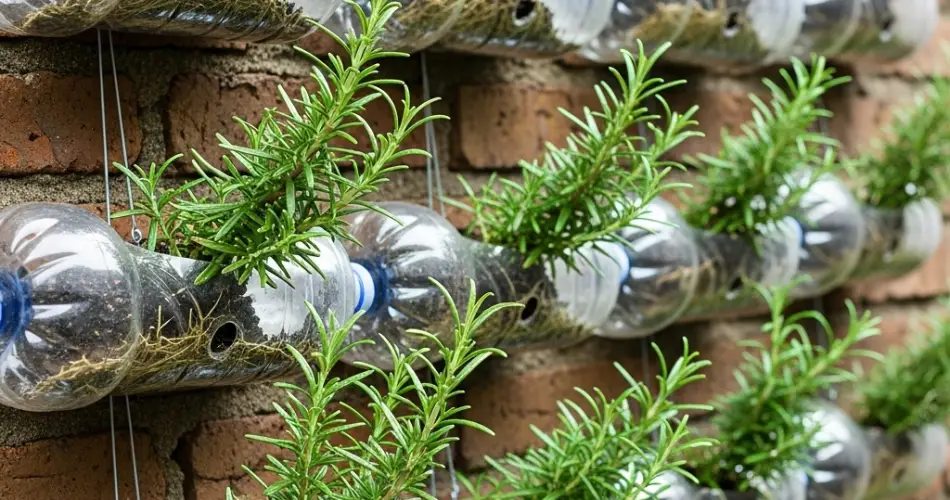
Rosemary is a fragrant and versatile herb, renowned for its aromatic leaves and culinary uses. Its hardy nature makes it ideal for small-space gardening, especially when combined with innovative techniques like vertical planting. Using old plastic bottles, you can build a wall-mounted rosemary garden that not only saves space but also adds a striking green feature to your indoor or outdoor areas. This guide provides step-by-step instructions on creating a thriving rosemary wall garden, from selecting bottles to maintaining healthy plants.
Choosing the Right Bottles
Plastic bottles are an excellent choice for vertical gardening because they are lightweight, durable, and easy to modify. For rosemary, bottles of at least 1.5 liters are recommended to provide sufficient root space. Wash the bottles thoroughly to remove labels and residues. Cut the bottles horizontally to create open-top planters, and consider adding small holes in the sides or bottom to improve drainage. Using bottles of uniform size will give your wall garden a neat, organized appearance, though creatively mixing bottle sizes can create visual interest.
Selecting and Preparing the Wall
The wall you choose will have a significant impact on the success of your rosemary garden. Rosemary thrives in full sun, so pick a location that receives at least four to six hours of sunlight daily. Outdoor walls are ideal, but indoor walls near south-facing windows also work well. Ensure the supporting structure—whether it’s a wooden frame, wire mesh, or hanging grid—is strong enough to hold multiple filled bottles. Position the bottles with their openings facing upward to facilitate planting, watering, and harvesting.
Soil and Planting
Rosemary prefers well-draining soil, so a light potting mix combined with sand or perlite is ideal. Fill each bottle with soil, leaving about two centimeters of space at the top. If starting from seeds, sprinkle them lightly on the surface and cover with a thin layer of soil. For seedlings or transplants, gently loosen the roots and place the plant into the bottle, filling in around the roots with soil and pressing lightly to stabilize. Proper planting ensures that rosemary establishes quickly and grows healthily, even in the confined space of a bottle.
Watering and Care
Rosemary is drought-tolerant and prefers moderate watering. Water each plant thoroughly, then allow the soil to dry slightly before the next watering session. Overwatering can cause root rot, particularly in bottles with limited drainage. Adding a layer of gravel or small stones at the bottom of each bottle improves drainage and promotes healthy root development. For indoor walls or shaded areas, occasional misting and indirect sunlight help maintain plant health.
Fertilizing and Encouraging Growth
Rosemary does not require heavy fertilization. A light application of balanced liquid fertilizer every four to six weeks is sufficient to encourage strong, aromatic growth. Regular pruning of the top stems encourages bushier growth and prevents the plants from becoming leggy. Frequent trimming not only maintains the plant’s shape but also provides fresh leaves for cooking.
Pest and Disease Management
Rosemary is generally resistant to pests, but occasional aphids or spider mites may appear. A gentle spray of water or a light application of organic insecticidal soap is usually effective in controlling infestations. Ensure proper spacing between bottles to maintain good airflow, reducing the risk of fungal problems. Healthy, well-maintained plants are less prone to pest and disease issues, making vertical bottle gardening a low-maintenance solution.
Harvesting Rosemary
Rosemary can be harvested once the plants reach a height of 15 centimeters or more. Use scissors to snip the top few centimeters of each stem, avoiding removal of more than one-third of the plant at a time. Fresh rosemary enhances a variety of dishes, including roasted meats, vegetables, soups, and sauces. Leaves can also be dried or frozen for long-term storage. Regular harvesting encourages new growth, ensuring that your vertical rosemary garden remains productive year-round.
Decorative and Functional Benefits
A wall-mounted rosemary garden provides both practical and aesthetic advantages. The lush, green foliage softens walls, adds texture, and brings a natural element to indoor or outdoor spaces. Repurposing old plastic bottles is an eco-friendly practice that reduces waste while creating a functional herb-growing system. Having fresh rosemary at arm’s reach elevates culinary creations and adds a pleasant aroma to your surroundings.
Expanding Your Vertical Herb Garden
Once your rosemary garden is thriving, you can incorporate other Mediterranean herbs like thyme, oregano, basil, or sage. These herbs thrive in similar conditions and can create a diverse, aromatic vertical garden. Mixing herbs not only adds color and texture but also provides a continuous supply of fresh herbs for cooking. Vertical gardening allows you to maximize space efficiency, making it perfect for small apartments, balconies, or patios.
Creating a wall-mounted rosemary garden using old bottles is a sustainable, space-saving, and rewarding gardening project. With proper sunlight, soil, and care, your rosemary will flourish, providing fresh leaves for cooking while transforming any wall into a lush, aromatic green space. This DIY method combines functionality, beauty, and eco-consciousness, making it ideal for small-space gardeners and urban herb enthusiasts.


