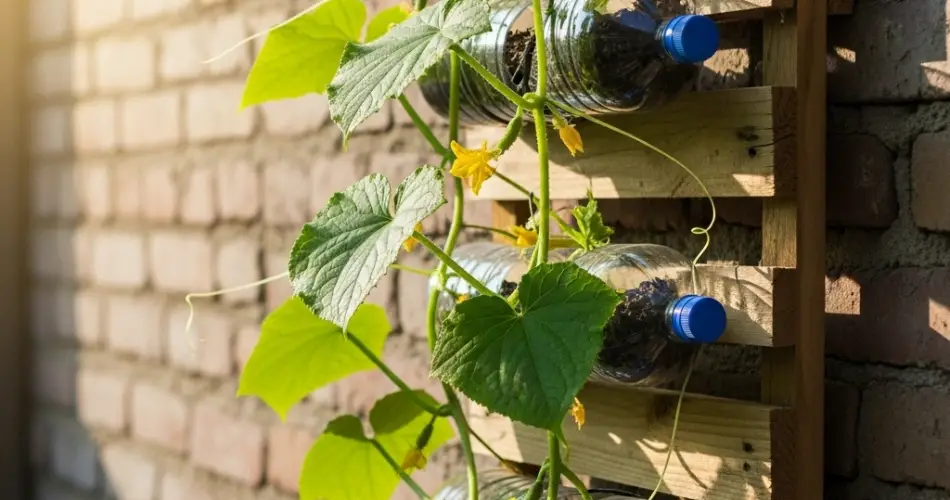
Cucumbers are a refreshing and versatile vegetable, perfect for salads, pickles, and fresh snacks. While they’re often grown sprawling across garden beds, you can also cultivate them vertically using an inventive, space-saving method: plastic bottle planters. This approach allows you to create a living wall of cucumber vines, ideal for balconies, patios, or any small outdoor space. With the right setup, your cucumbers can thrive in minimal soil, receive plenty of sunlight, and stay off the ground for cleaner, healthier harvests.
Why Grow Cucumbers Vertically?
Growing cucumbers vertically not only saves space but also improves plant health. When the vines grow upward, the fruits are less likely to rot from soil contact, and air circulation around the leaves is improved, helping prevent common fungal diseases. Vertical growing also makes harvesting easier—you can clearly see the fruits, and they develop more evenly without getting misshapen from lying on uneven ground.
For urban gardeners or those with limited yard space, a bottle planter wall is a low-cost and sustainable alternative to traditional beds. By using recycled materials, you reduce waste while creating a functional and attractive garden feature.
Choosing and Preparing Your Bottles
For this project, large plastic bottles, such as 2-liter soda bottles, work best. Wash them thoroughly and remove any labels. Using a sharp blade or scissors, cut a rectangular opening along the side of each bottle. This will serve as the planting pocket. Poke a few drainage holes at the bottom to prevent waterlogging.
You can keep the caps on to hold soil in place, but drill a small hole in each cap to allow excess water to drip out if needed. Alternatively, you can remove the caps entirely if you’re stacking bottles vertically and want to create a trickle watering system.
Building the Wall Structure
You can attach the bottles to a wooden frame, metal mesh, or directly onto a sturdy wall or fence. Secure each bottle horizontally, with the cut opening facing upward, using strong wire, cable ties, or screws. Leave enough space between bottles to give the cucumber vines room to grow.
If you want a more portable version, create a freestanding frame from wood or PVC pipes, then fasten the bottles in a staggered pattern for an attractive, tiered effect.
Choosing Cucumber Varieties
Compact or bush cucumber varieties are ideal for vertical bottle gardens, as they produce shorter vines and smaller fruits. However, if you have space for a trellis above your bottle wall, you can also grow vining varieties and train them upward. Some great choices include:
-
Bush Champion – Compact and highly productive
-
Spacemaster – Perfect for small spaces
-
Patio Snacker – Early-maturing and flavorful
-
Miniature White – Unique appearance and mild taste
Planting Your Cucumbers
Fill each bottle with a light, well-draining potting mix enriched with compost. Avoid heavy garden soil, which can compact in the bottle and hinder root growth. Plant cucumber seeds about 2 cm deep, two seeds per bottle. Once they germinate and reach a few inches in height, thin to one strong seedling per bottle.
If you prefer faster results, transplant healthy seedlings started indoors directly into the bottles.
Supporting the Vines
As the cucumber vines grow, guide them toward your chosen support—this could be strings, mesh, or a trellis attached above the bottle wall. Secure the stems gently with soft ties or garden clips to prevent breakage. Vertical training will ensure the fruits hang freely, making them easier to spot and harvest.
Watering and Feeding
Bottles dry out more quickly than traditional garden beds, so check moisture levels regularly. Water deeply until excess drips from the drainage holes. In hot weather, you may need to water daily.
Feed your plants with a diluted liquid fertilizer every two weeks once they begin to flower. A balanced or slightly higher potassium formula will encourage abundant fruiting.
Pest and Disease Management
Vertical growing naturally reduces some pest problems, but you should still watch for cucumber beetles, aphids, and spider mites. Inspect plants regularly and remove any affected leaves. Using a neem oil spray or insecticidal soap can help control infestations.
For fungal issues like powdery mildew, ensure your plants have good airflow and avoid wetting the leaves when watering.
Harvesting Your Cucumbers
Depending on the variety, cucumbers are ready to harvest 50–70 days after planting. Pick them when they’re firm, smooth, and have reached the ideal size for their type. Regular harvesting encourages the plant to produce more fruits.
Final Thoughts
Bottle wall planters transform empty vertical spaces into lush, productive gardens, and cucumbers are an excellent crop for this method. They grow quickly, look beautiful climbing up their supports, and reward you with crisp, homegrown produce. With just a little care and attention, you can enjoy fresh cucumbers all season long—even without a traditional garden bed.


