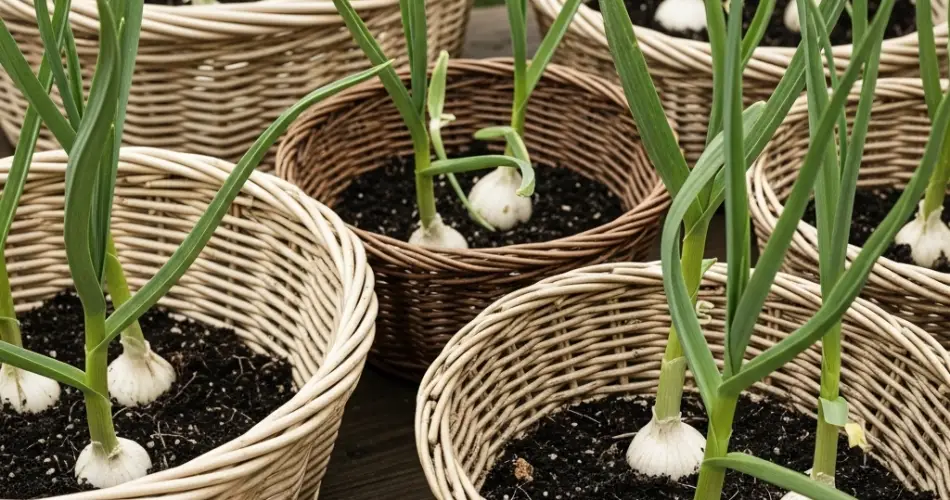
Garlic is a staple ingredient in kitchens worldwide, valued not only for its pungent flavor but also for its health benefits. Known to boost immunity, support heart health, and add depth to countless dishes, garlic is a must-have in any household. The good news is you don’t need a large plot of land to grow your own. With the right approach, garlic can thrive in container baskets, making it an excellent crop for urban gardeners. Whether you live in an apartment, have a balcony, or a small patio, container basket farming provides an easy and practical way to enjoy homegrown garlic.
Why Choose Baskets for Garlic Growing?
Growing garlic in baskets offers several advantages for city dwellers. Baskets are portable, lightweight, and fit easily into small spaces. They also provide excellent drainage, which is essential since garlic dislikes waterlogged soil. The porous structure of woven baskets allows air circulation, reducing the risk of fungal infections.
In addition, baskets are aesthetically pleasing. A row of rustic baskets filled with sprouting garlic adds charm to balconies or patios, turning food production into a decorative feature. This combination of practicality and beauty makes baskets a smart choice for urban farming.
Preparing the Basket
To grow garlic successfully, choose a basket that is at least 10–12 inches deep and wide. Garlic develops best when roots have room to spread, and the bulbs need enough space underground to form properly.
Because baskets are porous, they should be lined before adding soil. Coconut coir, burlap, or a biodegradable liner will hold soil in place while still allowing for drainage. Some gardeners prefer a plastic liner with holes at the bottom to prevent soil loss while ensuring excess water can escape.
Fill the basket with a well-draining potting mix enriched with organic compost. Garlic thrives in loose, fertile soil with a pH between 6.0 and 7.0. Avoid heavy or compacted soils, as these can stunt bulb development.
Selecting and Planting Garlic
Not all garlic is the same. There are two main types:
-
Softneck garlic – Common in supermarkets, it stores well and grows in a wide range of climates.
-
Hardneck garlic – Produces fewer but larger cloves and has a stronger flavor. It is also more cold-tolerant.
Choose high-quality seed garlic rather than supermarket bulbs, which may be treated with chemicals to prevent sprouting. Separate the bulb into individual cloves, keeping the papery skin intact.
Plant each clove 4–6 inches apart, with the pointed end facing upward and the flat root end downward. Push cloves 2 inches deep into the soil. In a medium-sized basket, you can usually plant 4–6 cloves comfortably.
Care and Maintenance
Garlic is a low-maintenance crop, but it does require consistent attention to thrive in baskets.
-
Watering: Keep the soil evenly moist but not soggy. Because baskets dry out faster than ground soil, check regularly, especially during hot or windy weather.
-
Feeding: Fertilize with a nitrogen-rich liquid feed every 3–4 weeks during the growing season to encourage healthy leaf growth. Later in the season, reduce nitrogen and switch to a balanced fertilizer to support bulb formation.
-
Sunlight: Place the baskets where they receive at least 6 hours of direct sunlight daily. Garlic needs plenty of light to form large bulbs.
Harvesting Garlic
Garlic is typically ready to harvest about 8–9 months after planting. You’ll know it’s time when the leaves begin to yellow and fall over. Stop watering at this stage to allow the bulbs to mature and dry out slightly in the soil.
To harvest, gently loosen the soil and pull up the entire plant. Shake off excess soil and let the bulbs cure in a dry, shaded, and well-ventilated area for 2–3 weeks. Once cured, the skins will be papery, and the garlic will be ready for storage.
Properly stored garlic can last for several months, providing you with a long-lasting supply of fresh, homegrown cloves.
Pest and Disease Management
Basket-grown garlic is less vulnerable to pests than ground-grown crops, but you should still watch out for common issues. Onion maggots, thrips, and fungal diseases can sometimes appear. To reduce risks:
-
Rotate crops each season to prevent disease buildup.
-
Avoid overwatering to prevent fungal problems.
-
Remove and destroy any affected plants promptly.
Because baskets can be moved, they are easier to manage in terms of sunlight, airflow, and protection from heavy rain, further reducing pest and disease risks.
The Benefits of Basket-Grown Garlic
Urban garlic farming in baskets is practical, space-saving, and rewarding. It allows city dwellers to enjoy the satisfaction of producing their own food while also enhancing small spaces with greenery. Garlic grown this way is fresher, more flavorful, and chemical-free compared to most store-bought options.
With just a few baskets and some patience, you can harvest your own bulbs, store them for months, and even set aside cloves for replanting next season.
Conclusion
Growing garlic in container baskets brings the joy of farming into the heart of the city. It requires minimal space, moderate care, and rewards you with a rich, flavorful harvest. By choosing the right basket, preparing fertile soil, and tending to the crop consistently, you can turn even the smallest urban space into a garlic-growing haven.
Urban garlic farming proves that with creativity, fresh, nutritious food can be grown anywhere—balconies, rooftops, patios, or windowsills. A simple woven basket filled with garlic is more than just a garden container—it’s a source of health, flavor, and self-sufficiency right at your doorstep.


