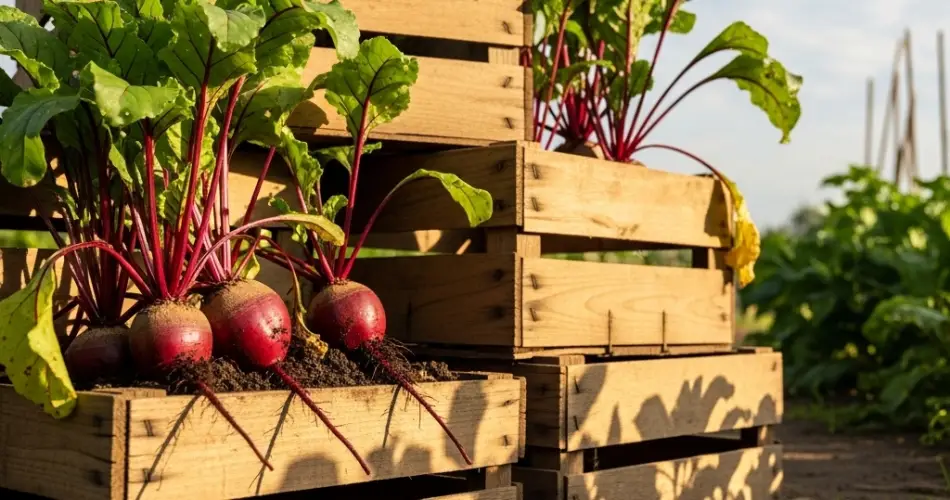
If you think growing root vegetables like beets requires a spacious backyard or a farm plot, think again. With just a few wooden crates, you can start cultivating fresh, vibrant beets right on your balcony, patio, or rooftop. Beets are hardy, compact, and nutrient-rich—making them perfect for urban gardening.
Using crates to grow beets not only saves space but also gives you better control over soil conditions, drainage, and pest management. Here’s how to successfully grow your own beets using the crate method.
Why Grow Beets in Crates?
Beets are one of the easiest root crops to grow in containers. They adapt well to shallow yet wide planting spaces, and crates provide excellent drainage and aeration—two things beets absolutely love.
Benefits of crate-grown beets:
-
Ideal for balconies or patios
-
Crates are portable and breathable
-
Better pest and soil control
-
Visually organized and tidy growing setup
-
Great for both root and leafy beet harvests
Crates can be made of recycled wood or purchased second-hand, making this an economical and eco-friendly growing method.
Choosing the Right Crate
To grow healthy beets, the crate should be at least 20–25 cm deep. This depth allows enough room for beetroot development while also giving space for their leafy tops to flourish.
Tips for choosing or prepping a crate:
-
Choose untreated wooden crates (chemical-treated ones may leach into the soil)
-
Reinforce the bottom if needed to support the weight of moist soil
-
Line the inside with landscape fabric, old burlap, or breathable cloth to prevent soil loss while still allowing drainage
Drill a few small holes if needed to enhance drainage, especially if the crate’s bottom is fully sealed.
Soil and Fertility
Beets grow best in loose, fertile, and slightly acidic to neutral soil (pH 6.0–7.0). They don’t tolerate compacted or rocky soil, as this impedes root development.
Ideal soil mix:
-
2 parts high-quality potting mix
-
1 part compost or aged manure
-
A handful of sand or perlite for better drainage
-
Optional: bone meal for root development
Avoid over-fertilizing with nitrogen-heavy amendments—this promotes leaf growth at the expense of root size. Aim for a balanced fertilizer or one slightly higher in phosphorus and potassium.
Sowing Beet Seeds
Beet seeds are actually seed clusters, meaning each “seed” can produce multiple seedlings. Direct sowing into crates is the easiest method.
Planting steps:
-
Moisten the soil before planting.
-
Make shallow rows about 1.5 cm deep and space seeds 2–3 cm apart.
-
Cover lightly with soil and press gently.
-
Water carefully to avoid displacing the seeds.
In warm climates, sow beets in the cooler months. In temperate areas, plant from early spring through early autumn. Successive sowings every 2–3 weeks will provide a continuous harvest.
Thinning and Spacing
Once the seedlings are about 5 cm tall, thin them out so the remaining plants are spaced 8–10 cm apart. This gives each beet enough space to form properly.
Don’t waste the thinnings—they’re edible and delicious in salads or stir-fries.
Watering and Light
Beets need consistent moisture, especially during root development. Uneven watering can cause cracked or woody roots.
-
Water when the top inch of soil feels dry
-
Don’t allow the soil to become soggy
-
Mulch with dried leaves or straw to retain moisture
Beets require at least 4–6 hours of sunlight daily. Full sun encourages better root growth, but in hot climates, light afternoon shade can prevent leaf scorch.
Pest and Disease Management
Container-grown beets are less prone to soil-borne diseases, but watch for:
-
Leaf miners – remove affected leaves immediately
-
Aphids – spray with a gentle soap solution or neem oil
-
Fungal issues – ensure good air circulation and don’t overwater
Crop rotation within your crates (planting leafy greens or herbs next season) helps minimize soil fatigue.
Harvesting Your Beets
Beets are ready to harvest in 45–70 days, depending on the variety. For tender roots, harvest when they’re 5–7 cm in diameter. You can also harvest leaves at any point for cooking or salads.
To harvest, gently loosen the soil and pull the beets by their tops. Avoid damaging nearby roots if you’re harvesting selectively.
Crate Beet Gardening Tips
-
Pre-soak seeds overnight to speed up germination.
-
Keep a consistent planting schedule for ongoing yields.
-
Use crates with wheels or place them on rolling platforms for easier movement.
-
Add a thin layer of fresh compost between plantings to maintain fertility.
Final Thoughts
Beets don’t need much space, and the crate method proves it. With some light, water, and patience, your small urban space can produce a steady supply of this colorful and nutritious root vegetable. Whether you’re growing them for the roots, the leaves, or both, beets are a satisfying addition to any container garden. All it takes is a humble crate, good soil, and a little attention to reap your own beet harvest in the heart of the city.


