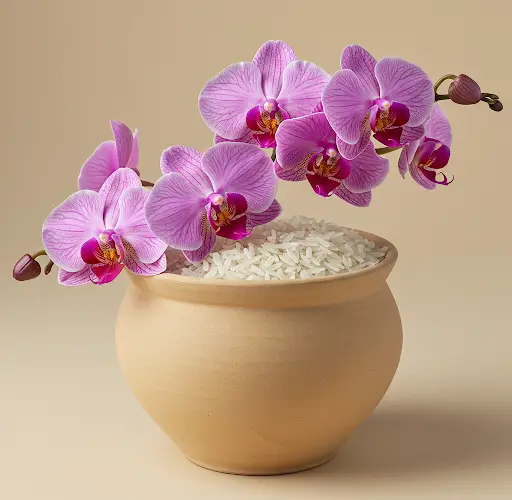
During the winter months, it is essential to take special care of orchids to ensure they bud and bloom abundantly when spring arrives. Orchids that receive proper nutrients in autumn and winter will develop healthy flower branches, resulting in lush blooms. Today, I will share some crucial tips and a liquid plant nutrient recipe to help your orchids thrive during the colder months.
As you can see, my orchids are currently blooming profusely. These are the same orchids that started growing flower branches in the autumn after receiving liquid plant nutrients regularly. Now, their buds have fully developed, and they are preparing to bloom beautifully. To achieve similar results, you should continue to provide liquid plant nutrients during winter, ensuring that your orchids receive the necessary vitamins and minerals.
One of the key ingredients I use for this process is rice. Rice contains essential vitamins that help revitalize orchid leaves and roots, promoting healthy growth. To prepare this nutrient solution, I take one tablespoon of rice and soak it in water. You can also use the water from rinsing rice, as long as it is unsalted. After mixing the rice with water, I let it sit for about 30 minutes.
For the second method, I use aloe vera gel. Aloe vera is a highly beneficial plant widely used in orchid care. It provides additional nutrients that help orchids grow strong and healthy. Aloe vera juice can be used not just for orchids but also for other houseplants. To extract the aloe vera juice, I first remove the yellow sap inside the leaf, as this substance is not beneficial for plants. Then, I cut the aloe vera into small slices.
Next, I place the aloe vera slices into a food processor with about 200 ml of water. After blending, I ensure that the mixture is properly strained because the aloe vera leaves should not stick to the orchid roots. The filtered aloe vera juice is what we will use for the nutrient solution.
Once the rice water has been soaked for 30 minutes, I strain it into a glass jug. I measure out approximately 500 ml of rice water. Then, I add 300 ml of the freshly prepared aloe vera juice to the rice water, creating a powerful liquid plant nutrient mix.
Before applying this mixture to the orchids, it is crucial to check their root color. If the roots appear white or gray, it means the plant needs watering. However, if the roots are green, they do not need additional water at that moment. Overwatering orchids when their roots are already green can lead to root rot, yellowing leaves, and wilting flowers.
When the orchids are ready for watering, I add six tablespoons of the nutrient mixture to each pot. It is important to avoid overfeeding the plants with this mixture—six tablespoons per pot is the ideal amount. Additionally, this treatment should only be done once a month. The vitamins and nutrients provided during this time will significantly contribute to the growth of flower branches in the spring. This liquid nutrient mix can be given to both flowering and non-flowering orchids.
Even orchids that are currently in bloom require essential vitamins to maintain their health and continue producing flowers. As you can see, after soaking in the nutrient solution for some time, the gray orchid roots gradually turn green, indicating that their water needs are being met. Always check the root color before watering to ensure you are providing the right amount of hydration.
I will continue to document the progress of my orchids as they respond to the liquid plant nutrients. This treatment encourages the growth of new, healthy roots and stimulates the development of flower branches. Over time, you will notice visible improvements in your orchids, including the emergence of new flower buds.
Here is one more important tip: If you have enjoyed this guide so far, please consider showing your support by liking this post. If you are not yet subscribed to my content, you can do so to receive more helpful orchid care tips. Feel free to leave comments and ask any questions, and I will do my best to provide answers.
I want to share an example of an orchid that was nearly dead. This particular plant had lost many of its leaves and was struggling to survive. However, after receiving proper care, including liquid plant nutrients and adequate light, the orchid has grown a new flower branch. It has also developed a brighter, healthier leaf. The presence of vibrant, healthy leaves is a strong indicator of an orchid’s well-being.
One essential factor in orchid health is light exposure. Orchids rely on light to develop properly, but they do not need to receive light through their roots. Instead, orchids absorb light through their leaves. Ensuring that your orchids receive adequate light, especially during winter, will significantly impact their growth and blooming potential.
For example, after shedding its flowers, one of my orchids immediately began growing new flower branches, thanks to the combination of liquid plant nutrients and sufficient light exposure. This is a clear sign that the orchid is in excellent health. In addition to new flower branches, I have also observed active aerial roots, which further confirm that my orchid is thriving.
To maximize your orchids’ growth potential, I recommend placing them in an area that receives ample light during the winter months. Proper light exposure, combined with the nutrient mixture I have shared today, will help your orchids flourish. As spring approaches, you will notice that your orchids will grow new leaves, develop stronger roots, and produce an abundance of flower branches.
I hope this guide has been helpful in your orchid care journey. By following these steps, you can ensure that your orchids remain healthy and bloom beautifully. Thank you for reading, and I wish you success in growing your orchids. Goodbye, and stay healthy!


