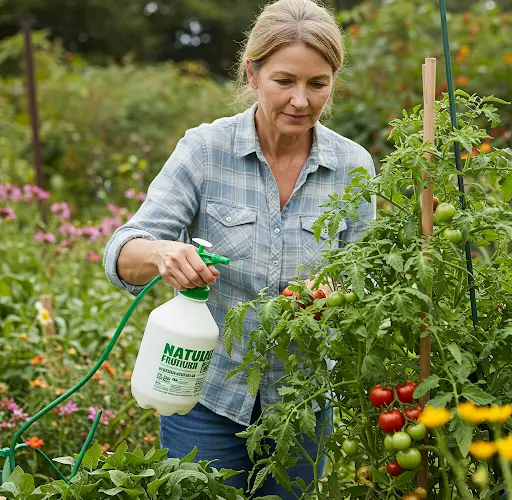
Tomato plants flourish in favorable conditions, developing fruits rapidly when provided with proper care. However, even with all the right measures in place to keep the plants healthy, certain diseases can easily take hold and devastate entire plantations. One of the most common yet dangerous tomato diseases is tomato downy mildew, also known as late blight.
This disease primarily affects seedlings, making early protection crucial. It is caused by the fungus-like pathogen Phytophthora infestans and requires consistent monitoring of crops to detect symptoms in their initial stages. Preventative care is the best way to minimize the risk of infestation. Tomato downy mildew specifically targets the green parts of the plant and is one of the most frequently encountered diseases by tomato growers.
Preventing the onset and spread of the disease involves a combination of proactive measures and, in some cases, intervention when symptoms are detected. Phytophthora infestans can cause damage to all parts of the plant, with extremely humid conditions and slightly cooler temperatures providing the ideal environment for its development and rapid spread.
The first symptoms of the disease appear when plants are exposed to temperatures between 18-21 degrees Celsius with a high relative humidity of 60-90%. Initially, the disease presents as light green or whitish spots on the leaves, particularly at the tips. If left untreated and combined with unfavorable weather conditions, these spots spread across the leaf mass, eventually causing the leaves to dry out and die.
On the stems, the disease manifests as elliptical spots that transition from a light color to darker shades over time. These spots often develop in rings, restricting the flow of nutrients within the plant and leading to its eventual withering. The fruits are not spared either—dark spots appear on them, causing rot and leading to the complete decay of both the fruit and the plant.
Tomato downy mildew is a threat throughout all stages of plant growth. Preventive measures must be implemented, especially before and after prolonged rainy periods. High soil moisture levels significantly contribute to the development of this disease. Fortunately, in our case, only a mild form of the disease appeared on a single tomato plant, located in the greenhouse near the entrance.
The remaining plants are currently unaffected and in good health. However, certain tomato varieties, particularly bushy ones with dense foliage, are at a higher risk. This is because moisture tends to accumulate within the bush, creating favorable conditions for disease development. This is why taller tomato varieties should be properly maintained—regularly pruned and thinned out to enhance airflow and reduce moisture retention.
For more detailed guidance, you can find a special video on this topic on our channel. Since tomato downy mildew thrives under prolonged unfavorable climatic conditions, numerous preventive steps must be taken to reduce the chances of infection and its subsequent spread.
One of the most important steps is to start with strong, healthy seedlings. Ensuring that the production site is located on well-drained terrain and avoiding water-saturated soil can also significantly reduce disease risks. Following proper crop rotation practices further helps limit the likelihood of an outbreak. Additionally, maintaining the correct spacing between plants is crucial, as adequate airflow prevents excess moisture buildup.
For greenhouse-grown tomatoes, proper ventilation is key. Open all available vents during ventilation periods to facilitate faster air exchange and maintain optimal humidity levels. Regularly pinching and pruning plants, as well as removing shaded or overcrowded plant parts, are essential practices in controlling disease spread.
We have extensively discussed the benefits of correct pruning techniques, as well as the proper method to execute them. Furthermore, any removed plant material should be taken out of the greenhouse and ideally burned to prevent contamination. Keeping the space between plant rows clean and well-aerated is another crucial step in disease prevention.
For those looking to learn more about all stages of tomato cultivation, you can find comprehensive videos on our channel covering the significance of each step in the growing process. It is also important to maintain proper hygiene when handling plants. Using gloves and disinfected tools can help prevent the spread of pathogens.
Water quality plays a significant role in disease prevention. Ensure that irrigation water is clean and safe. Watering should be done early in the morning to allow the plants to dry out during the day. Drip irrigation systems are highly recommended to minimize contact with the leaves and stems, reducing the risk of disease development.
Since tomato downy mildew is caused by a fungal-like organism, fungicides are commonly used to combat its spread. Various fungicidal treatments containing different active substances are available on the market. However, it is essential to verify whether these substances are approved for use in your country.
When applying chemical treatments, always wear protective equipment to safeguard yourself from potential health risks. Follow the recommended dosages and observe the prescribed withdrawal periods before consuming treated produce. It is also crucial to apply treatments under suitable weather conditions—avoid spraying during the hottest part of the day or when humidity levels are excessively high.
Ultimately, all aspects of tomato cultivation influence the likelihood of disease occurrence. A well-nourished, properly maintained plant is naturally more resistant to infections. By taking timely and appropriate actions, we create an environment where plants can thrive while minimizing the risk of disease.
In addition to chemical treatments, natural remedies can also help prevent fungal diseases. Several homemade solutions can be effective against tomato downy mildew, including blue stone, milk-based preparations, baking soda mixtures, and red onion solutions. Detailed videos on how to prepare and use these treatments are available on our channel.
One of the best natural preventive treatments is milk. A simple preparation involves diluting 1 liter of milk with 10 liters of water. This mixture must be used immediately after preparation. If using fresh milk, the water ratio can be reduced to 5 liters. Alternatively, yogurt or kefir can be used instead of milk, following the same dilution ratio.
Whey is another effective natural treatment. Blue stone, a copper-based compound, is widely used for fungal disease prevention, and we have an in-depth video on its preparation and application. Additionally, onion-based solutions can be made by soaking 500g of onion in 10 liters of water and letting it ferment for about 10 days. The fermentation process duration depends on temperature, and once the foam disappears, the solution should be filtered and diluted with water in a 1:10 ratio.
Other natural treatments include cinnamon-infused water and companion planting with disease-resistant neighbors such as basil, horseradish, and marigolds. Baking soda is another effective remedy, known for its antifungal properties. To prepare a baking soda spray, mix two teaspoons of baking soda with a few drops of vegetable oil and ecological detergent in a two-liter sprayer. This combination helps the solution adhere to the plant’s surface, creating an alkaline environment that inhibits fungal growth.
If signs of downy mildew appear, spray affected plants thoroughly with this solution and repeat the process every seven days. Ideally, this treatment should be used preventively to maintain plant health and minimize disease risks.


