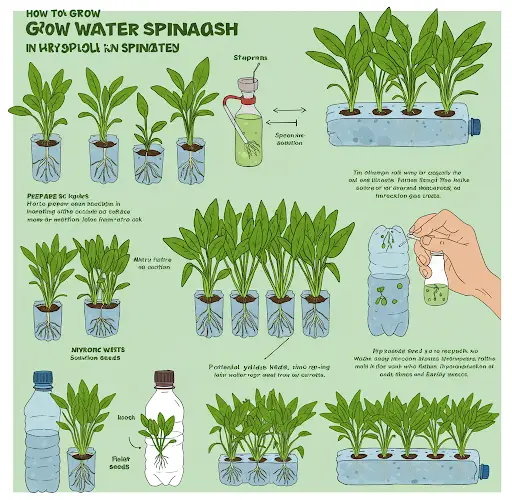
Water spinach, also known as kangkong or morning glory, is one of the easiest and fastest-growing leafy vegetables. It’s a staple in many Asian kitchens and can be cultivated right at home—even without soil. Hydroponic methods using recycled plastic bottles allow anyone to grow fresh water spinach in limited spaces, like balconies, kitchens, or window sills.
In just 10 days, you can enjoy crisp, clean, and nutritious greens harvested straight from your hydroponic garden. This method is not only simple but also incredibly affordable, making it perfect for beginners or those looking for sustainable gardening solutions.
Why Grow Hydroponic Water Spinach?
Hydroponic gardening uses water instead of soil, delivering nutrients directly to the plant roots. It’s ideal for people with limited outdoor space or those who want to avoid the mess and maintenance of soil-based gardening.
Water spinach is a great candidate for hydroponics due to its:
-
Fast growth rate – can be harvested in as little as 7–10 days
-
High water tolerance – thrives in moist or aquatic conditions
-
Nutritional value – rich in fiber, iron, vitamins A and C
-
Low maintenance – doesn’t require constant attention
Materials Needed
To set up a simple hydroponic system for water spinach at home, you will need:
-
Empty plastic bottles (1.5–2 liters)
-
A sharp knife or scissors
-
Water spinach seeds or cuttings
-
Hydroponic nutrient solution (or homemade organic alternative)
-
Cotton or sponge (optional for supporting seeds)
-
Clean water (preferably filtered or rainwater)
-
A tray or stand for bottle placement
-
Access to natural light (or grow lights if indoors)
Step-by-Step Guide
1. Prepare the Bottles
-
Take clean plastic bottles and cut them in half horizontally.
-
Invert the top half (mouth facing down) and place it into the bottom half.
-
This creates a simple wick system, where the top part holds the plant and the bottom stores the water and nutrients.
To keep the setup sustainable, reuse bottles that would otherwise be discarded.
2. Create the Growing Medium
You can use cotton pads, coco coir, sponges, or even paper towels as the medium to support the seeds. Moisten the medium and place it inside the bottle neck.
Sprinkle 10–15 seeds on top of the moist medium. Gently press them in place so they don’t fall out or get washed away.
Cover the bottle tops with breathable fabric or paper for the first couple of days to maintain humidity and encourage germination.
3. Add Nutrient Solution
Fill the bottom half of the bottle with a diluted hydroponic nutrient solution. The recommended dilution ratio is usually indicated on the packaging. If using a homemade option, you can mix compost tea or fermented banana peel water as a natural alternative.
Make sure the water level touches the tip of the inverted bottle neck to allow the cotton or sponge to wick moisture upward.
4. Provide Light and Warmth
Place the setup in a location that gets at least 4–6 hours of sunlight daily. A windowsill, balcony, or shaded terrace works well. If you’re growing indoors, use LED grow lights to supplement natural light.
Water spinach prefers warm temperatures between 20–30°C (68–86°F), which supports faster germination and growth.
5. Daily Care
-
Check water levels daily and top up as needed.
-
If using cotton or sponge, make sure it stays moist.
-
After 2–3 days, seeds will begin to sprout. Remove the covering to allow light exposure.
-
Replace nutrient solution every 3–4 days to prevent stagnation and provide fresh nutrients.
6. Harvesting After 10 Days
By day 7–10, the water spinach should be tall and vibrant, around 6–8 inches high. The stems will be tender, and the leaves lush and green.
To harvest:
-
Use clean scissors to snip the stems about 1–2 inches above the base.
-
Avoid cutting too low so the plants can regrow for another cycle (optional).
-
Rinse thoroughly before using in stir-fries, soups, or salads.
Tips for Success
-
Avoid overcrowding: Too many seeds in one bottle will stunt growth.
-
Rotate for sunlight: If one side grows faster, rotate the bottles for even exposure.
-
Prevent algae: Cover the bottle’s base with dark fabric or paper to block sunlight.
-
Reuse bottles: After harvest, rinse and refill for a new growing cycle.
Final Thoughts
Growing water spinach hydroponically in plastic bottles is one of the simplest ways to enjoy fresh, nutritious greens at home. In just 10 days, you can turn common kitchen waste—like used bottles—into a productive mini-garden.
Whether you live in a high-rise apartment, have no garden space, or just want a fun way to grow your own food, this method is affordable, easy, and eco-friendly. With a few bottles and basic care, you’ll have a steady supply of fresh vegetables all year round.


