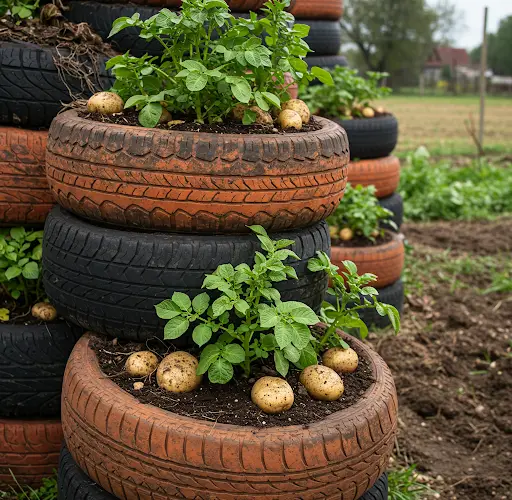
Potatoes are one of the easiest and most rewarding crops to grow at home. While many gardeners are familiar with growing them in garden beds or containers, an incredibly efficient and space-saving method is to grow potatoes in recycled tires. This method not only promotes sustainability by reusing old materials but also helps produce large, healthy tubers with minimal space and effort.
Let’s explore how to grow potatoes using tires and why this method is favored by many home gardeners seeking high yields from small spaces.
Why Use Tires to Grow Potatoes?
Recycled tires offer several unique benefits for potato cultivation:
-
Vertical Space Usage: Stacking tires allows you to grow upward rather than outward, which is ideal for small yards, balconies, or urban gardens.
-
Soil Control: Tires enable better control over soil quality and drainage.
-
Warmth: Black rubber retains heat, which promotes faster and stronger potato growth.
-
Ease of Harvest: Simply unstacking the tires makes harvesting effortless and mess-free.
-
Low Cost: Old tires are often free or very cheap and help reduce environmental waste.
Materials Needed
To get started with this method, gather the following items:
-
3 to 4 used tires (free of chemicals or sharp debris)
-
Seed potatoes (disease-free)
-
Rich potting mix or compost
-
A sunny outdoor location
-
Water source
Optionally, prepare straw or mulch to help with moisture retention and protect growing tubers from sun exposure.
Step-by-Step Guide
1. Choose the Right Potatoes
Select certified seed potatoes from a garden center or nursery. These are specifically bred for growing and free of diseases that can affect yield.
Cut large seed potatoes into chunks, each with at least one or two “eyes” (sprouts). Let them sit out for a day or two to allow the cut surfaces to dry and form a callus. This prevents rotting when planted.
2. Prepare the First Tire
Place the first tire on the ground in a location that receives full sun (at least 6–8 hours daily). Fill the inside with about 6–8 inches of rich, well-draining potting soil or compost.
Plant 3–4 seed potato pieces evenly spaced apart, cut side down, with the eyes facing up. Cover lightly with another 2–3 inches of soil.
Water thoroughly until the soil is evenly moist but not soggy.
3. Add Tires as the Plants Grow
As the potato shoots grow 6–8 inches tall, place another tire on top of the first and add more soil to bury the stems, leaving just a few inches of the plant above the surface.
This encourages the plant to produce more tubers along the buried stem.
Repeat this process until you’ve stacked 3 or 4 tires. Always water after adding each new layer to maintain consistent moisture.
4. Maintain and Monitor
Continue watering regularly, keeping the soil moist but never waterlogged. Mulching with straw on top can help retain moisture and regulate temperature.
Fertilize every two to three weeks using compost tea, diluted fish emulsion, or an organic vegetable fertilizer to promote strong root development.
Watch for pests such as aphids, beetles, or fungal infections. Use natural methods like neem oil spray or manual removal to control infestations.
5. Harvesting the Potatoes
After 10–12 weeks (or once the plant tops begin to yellow and die back), your potatoes are ready to harvest.
The best part of growing in tires? There’s no digging. Simply remove each tire layer carefully, and collect the tubers nestled in the soil.
Brush off excess dirt and let the potatoes air dry in a shaded area for a few hours. Store in a cool, dark, and dry location for long-term use.
Benefits and Final Thoughts
Growing potatoes in tires is a surprisingly simple and efficient method for anyone, whether you have a garden or just a small outdoor corner. The heat-retaining rubber, combined with the vertical stacking approach, allows for a larger harvest in a compact space.
Not only is it a productive way to grow your own food, but it’s also an eco-friendly project that gives new life to discarded materials.
Whether you’re a beginner gardener or looking to try something new, this tire-growing technique is worth a try. You’ll be rewarded with delicious, homegrown potatoes and the satisfaction of creating a productive garden space where none seemed possible before.


