If you’re planning to start planting flowers or vegetables, here’s a tip: soak the seeds in vinegar before putting them in the ground. It might sound unusual if you’ve never tried it, but this small step can significantly aid the germination process.
Why Soak Seeds in Vinegar?
Despite being buried underground, seeds develop and take root thanks to oxygen. Water, humus, external temperature—all play a significant role in their growth, but they need a bit of assistance.
A helpful step is soaking them in water and vinegar.
How it Works:
The metabolism of a seed is fast. Once it takes root, the development happens rapidly, and we can witness new seedlings sprouting in a short time. However, this process can be disrupted if germs and bacteria attack them, and we know this possibility is never entirely ruled out in the soil. If they face any aggression, the growth process doesn’t initiate, and the seedling dies.
White wine vinegar, with its antibacterial properties, shields the seeds from potential attacks by harmful microorganisms. The acetic acid it contains purifies the seeds, helping them germinate even faster by allowing better absorption of nutrients from the soil.
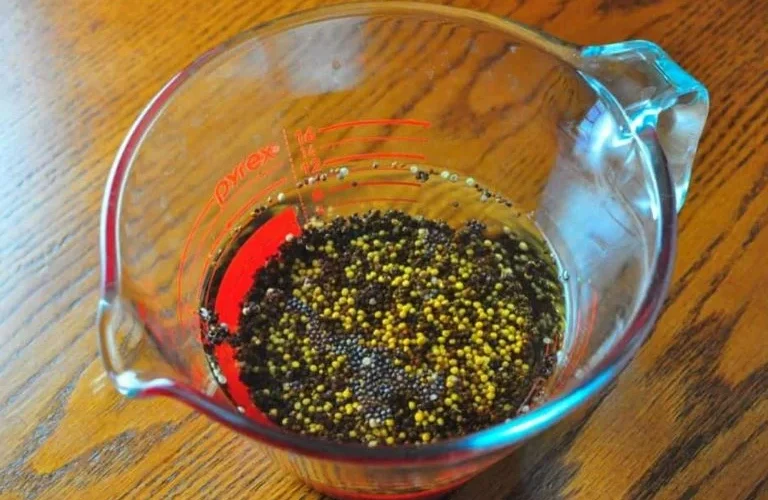
To promote rapid and lush growth of your seedlings, take a cup of water, pour it into a bowl, then add a tablespoon of vinegar. Soak the seeds in this mixture for a maximum of 12 hours. Drain them and plant them as usual.
This solution proves effective, especially for “difficult” plants like beans, melons, and eggplants. Melons and eggplants, in particular, germinate much faster and ensure a bountiful harvest. In the Philippines, a study even validated this hypothesis. A concentration of acetic acid at 0.001% (equivalent to 1 teaspoon of vinegar dissolved in 1 cup of water) was found to promote rapid growth. Give it a try and see the difference in your gardening endeavors!