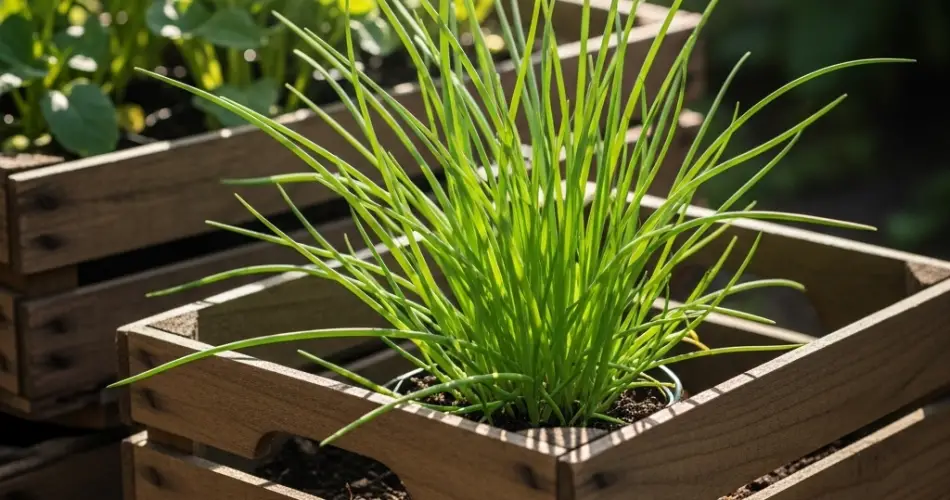
Chives are an easy-to-grow, fast-producing herb known for their delicate onion-like flavor and vibrant green, tubular leaves. Perfect for garnishing salads, soups, omelets, dips, and a variety of dishes, chives are a versatile addition to any kitchen garden. For gardeners with limited outdoor space, crate gardening offers a simple and efficient way to grow chives quickly and maintain a continuous harvest. By using wooden or plastic crates, you can create a compact, productive herb garden on balconies, terraces, patios, or even window ledges. This guide provides practical tips for setting up, growing, and harvesting chives for fast results.
Choosing the Right Crates
Wooden crates are ideal for container gardening because they are sturdy, lightweight, and widely available as repurposed or upcycled materials. Make sure the crates are clean, structurally sound, and free of chemical treatments. Plastic crates can also be used if they allow for proper drainage. If crates lack drainage holes, drill small openings at the bottom to prevent waterlogging and root rot. Uniform crate sizes provide a neat and organized appearance, while mixing sizes or stacking crates can create visual interest and make efficient use of vertical space.
Selecting the Best Location
Chives thrive in full to partial sunlight, needing at least four to six hours of light per day. Place your crates in a location that receives morning sun and some afternoon shade in hotter climates to prevent stress and encourage rapid growth. Proper sunlight promotes strong, healthy foliage and enhances the flavor of the leaves. Choose a spot that is easily accessible for watering, pruning, and harvesting while providing some protection from strong winds and extreme weather conditions.
Preparing Crates for Planting
Well-draining soil is essential for chives to grow quickly and remain healthy. Begin by adding a thin layer of gravel, small stones, or broken terracotta at the bottom of each crate to improve drainage. Fill the crate with a light, well-draining potting mix enriched with organic matter. Chives grow best in moderately fertile soil, so incorporating compost or well-rotted manure supports rapid growth and strong root development. Leave about two centimeters of space at the top of the crate to allow for watering and to prevent soil spillage.
Planting Chives
Chives can be grown from seeds, nursery plants, or divisions of established plants. For seeds, sprinkle them evenly across the soil surface and lightly cover them with a thin layer of soil. Keep the soil consistently moist until germination, which usually occurs within 7–14 days. For nursery plants or divisions, gently separate the roots before planting and space them approximately 15 centimeters apart. Proper spacing promotes airflow, prevents overcrowding, and encourages bushy, healthy plants, which in turn enables faster leaf production.
Watering and General Care
Chives require consistent moisture to promote rapid growth but should not sit in waterlogged soil. Water thoroughly when the top layer of soil begins to dry, allowing moisture to penetrate the roots. Mulching with straw or shredded leaves helps retain moisture, regulate soil temperature, and suppress weeds, all of which support faster growth. Regular trimming and harvesting encourage bushier growth and prevent the plants from becoming too tall or spindly.
Fertilization for Quick Growth
Chives are relatively low-maintenance but respond well to occasional light fertilization. A balanced, water-soluble fertilizer applied every four to six weeks encourages strong leaf growth and boosts productivity. Avoid over-fertilization, which can stress the plants and slow down steady leaf production. Healthy, well-fed chives in properly prepared crates will grow quickly, providing a fast and reliable harvest.
Pest and Disease Management
Chives are hardy and resistant to many common pests, but occasional issues such as aphids, thrips, or fungal diseases may arise. Inspect plants regularly and treat infestations with organic insecticidal soap or gentle water sprays. Proper spacing, good airflow, and well-draining soil reduce the risk of most diseases and ensure rapid, healthy growth.
Harvesting Chives
Chives are ready for harvest once the plants reach about 15 centimeters in height. Cut outer leaves first, leaving the inner shoots intact to encourage continuous growth. Frequent harvesting not only provides a steady supply of fresh leaves but also stimulates the plants to produce more shoots, ensuring quick and repeated harvests. Chives can be used fresh, frozen, or dried, offering flexibility for cooking throughout the year.
Decorative and Practical Benefits
Crate-grown chives are both practical and visually appealing. Their vibrant green foliage adds beauty to balconies, patios, or small garden spaces while providing culinary benefits. Using repurposed crates promotes sustainability and reduces waste, making your garden eco-friendly. Chives are also attractive to pollinators when flowering, which can enhance biodiversity in your garden.
Expanding Your Crate Herb Garden
Once your chive crates are thriving, consider planting complementary herbs such as parsley, thyme, or oregano. These herbs grow under similar conditions and create a diverse, aromatic container garden. Staggering or stacking crates vertically maximizes space and produces a lush, visually appealing display.
Growing chives in crates is a simple, sustainable, and efficient way to enjoy fresh herbs quickly. With proper sunlight, soil, watering, and care, your crate chive garden will flourish, providing continuous, fast-harvest leaves and transforming limited outdoor space into a productive and beautiful herb oasis.


