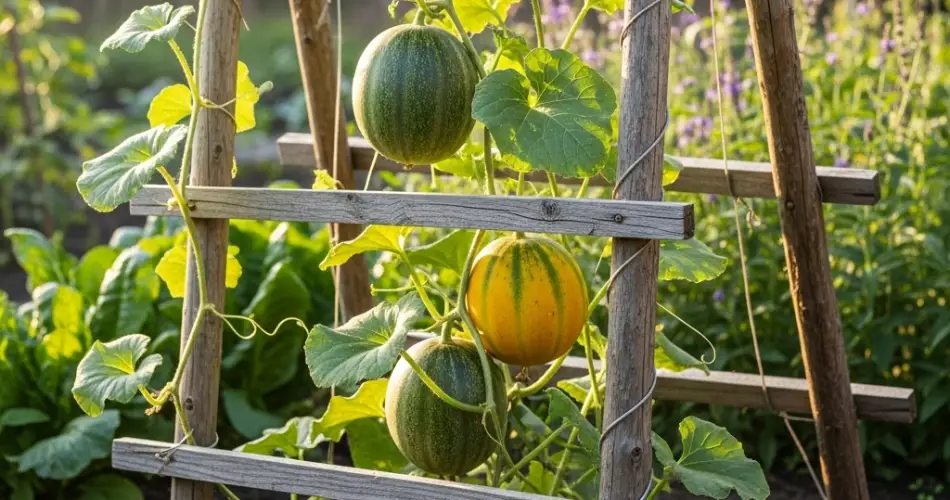
Cantaloupes and honeydews are summertime favorites, prized for their juicy sweetness and refreshing flavor. These melons thrive in warm weather and can be highly productive when grown with the right care. Traditionally, melons are left to sprawl across garden beds, but this method takes up significant space and can lead to pest and disease problems. By training melons to grow vertically on rustic wooden supports, gardeners can save space, improve fruit quality, and give their garden a timeless, natural look.
Why Melons Benefit from Vertical Growth
Growing cantaloupe and honeydew vertically offers numerous advantages:
-
Space Efficiency: Instead of spreading across the ground, vines climb upward, leaving more room for other crops.
-
Improved Air Circulation: Lifting vines off the soil reduces the chances of powdery mildew and fungal diseases.
-
Cleaner Fruits: Melons grown vertically are less likely to rot or suffer pest damage since they are kept off damp soil.
-
Easier Harvesting: Ripe melons hang at eye level, making it easier to check their progress and pick at the right time.
-
Aesthetic Value: Rustic wooden supports add charm to the garden, blending functionality with a handcrafted, natural look.
The Rustic Charm of Wooden Supports
Wood has long been a favorite material in gardens for its warmth and traditional appeal. Rustic wooden supports, made from logs, branches, or simple lumber, not only serve a practical purpose but also give gardens a cottage-like, organic atmosphere. Over time, the wood weathers naturally, enhancing the rustic aesthetic without losing strength if built properly.
Choosing the Right Wood
Since cantaloupes and honeydews can grow heavy as fruits mature, the type of wood used for supports matters. Some excellent choices include:
-
Cedar or Redwood: Naturally rot-resistant, these woods withstand outdoor conditions for years.
-
Hardwood Branches: Strong and durable, branches from hardwood trees add character while supporting heavy vines.
-
Bamboo: Lightweight yet sturdy, bamboo can be lashed together into rustic frames.
Avoid untreated softwoods like pine, which tend to rot quickly when exposed to moisture. For reclaimed wood, ensure it is free of chemical treatments that might leach into the soil.
Types of Rustic Wooden Supports
There are many creative ways to build wooden supports for melons. Some popular options include:
-
A-Frame Trellises: Two wooden panels joined at the top form a sturdy triangular frame. Melon vines climb upward, and fruits hang within the frame.
-
Arched Structures: Curved wooden supports create walkways covered in vines, with fruits dangling overhead for a dramatic display.
-
Ladders: Rustic ladders made from branches or slats provide vertical climbing paths for vines.
-
Stake-and-Crossbar Systems: Simple upright posts connected with crossbars or string provide flexible training for vines.
These structures not only support plant growth but also serve as attractive focal points in the garden.
Training Melons on Wooden Supports
Unlike beans or peas, melon vines don’t naturally cling tightly to supports. They need gentle guidance and occasional tying to ensure steady growth. Here’s how to train them:
-
Planting: Sow seeds or transplant seedlings at the base of the wooden structure, spacing plants 18–24 inches apart.
-
Guiding Vines: As vines grow, weave them through rungs or rails. Use soft garden ties, strips of fabric, or twine to secure them.
-
Supporting Fruits: As melons develop, their weight can strain vines. Create slings from cloth, netting, or mesh bags to cradle each fruit, tying the slings securely to the wooden frame.
-
Pruning: Remove excess side shoots and leaves to focus energy on fruit development and improve airflow.
Caring for Cantaloupes and Honeydews
Melons need consistent care to produce sweet, juicy fruits:
-
Watering: Keep soil evenly moist during early growth, but reduce watering as fruits mature to prevent diluted flavor.
-
Fertilizing: Provide balanced fertilizer with plenty of potassium and phosphorus to support flowering and fruiting.
-
Sunlight: Melons thrive in full sun and need at least 6–8 hours of direct light daily.
-
Pollination: Bees and other pollinators are essential for fruit set. Planting flowers nearby can encourage pollinator activity.
Seasonal Rewards
By midsummer, rustic wooden supports covered with melon vines become lush, green displays filled with golden blossoms. As the season progresses, cantaloupes and honeydews begin to swell within their fabric slings, ripening off the ground and in plain view. Harvesting becomes a rewarding experience, as ripe melons can be easily identified by their sweet aroma and readiness to detach from the vine.
Conclusion
Rustic wooden supports are both practical and beautiful solutions for growing cantaloupes and honeydews vertically. They save space, protect fruits, and bring natural charm to the garden. With sturdy wood, creative designs, and proper training techniques, these supports ensure healthy vines and abundant harvests.
By incorporating rustic wooden trellises, ladders, or arches into your melon-growing routine, you’ll enjoy not only sweeter fruits but also a more visually captivating garden. Season after season, these supports will prove their value as reliable, sustainable, and elegant additions to your gardening practice.


