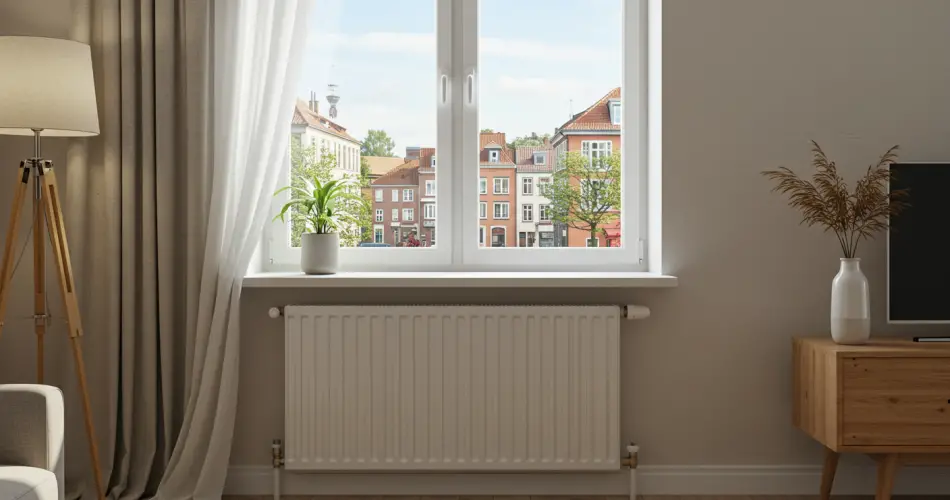
Radiators, also known as heating emitters, are devices made of materials like aluminum, cast iron, or steel through which hot water circulates to warm up indoor spaces. They are essential components in many homes, especially in countries with cold winters. But have you ever wondered why radiators are almost always installed directly under windows? At first glance, this placement might seem purely traditional or based on convenience, but there’s actually a very practical and scientific reason behind it.
The Function of Radiators
Radiators work by heating the air that passes through and around them. As the water inside the radiator warms up, it transfers this heat to the surrounding air. This heated air rises naturally, while cooler air from other parts of the room moves in to take its place, creating a continuous convection current that helps distribute warmth evenly throughout the space.
The goal when installing radiators is to ensure efficient heat distribution and maximize energy performance. Positioning plays a crucial role in how quickly and effectively a room reaches a comfortable temperature.
Why They’re Installed Under Windows
The placement of radiators under windows has everything to do with optimizing air circulation and reducing heat loss. Windows, even when well-sealed, tend to be the coldest part of a room because glass allows more heat to escape than walls. When cold air enters through small gaps or when the glass surface cools the surrounding air, this denser, colder air sinks toward the floor.
By placing the radiator directly beneath the window, it immediately warms up this incoming cold air. As the air rises, it mixes with the rest of the room’s air, creating a steady and balanced temperature. This setup forms a continuous cycle where cool air is heated and circulated again, improving overall comfort.
In fact, studies show that a radiator placed under a window can be up to 30% more efficient than one installed elsewhere in the room. The reason is simple: the upward flow of warm air from the radiator counteracts the downward flow of cold air from the window, preventing drafts and making the room feel evenly heated.
The Role of Airflow and Temperature Balance
The science behind this placement lies in natural convection. Cold air is heavier and tends to sink, while warm air is lighter and rises. When the radiator is positioned under a window, these opposing airflows meet and balance each other, preventing cold spots near the window and maintaining a stable indoor temperature.
Without a radiator in that position, the air near the window would remain much cooler, and you’d likely feel an uncomfortable temperature gradient—warm on one side of the room and chilly near the window.
Moreover, heating the air near the window helps prevent condensation and even frost buildup on the interior surface of the glass. The gentle flow of warm air keeps the glass temperature higher, avoiding moisture accumulation and maintaining better visibility.
What About Radiators on Interior Walls?
Some homeowners, for aesthetic or space-saving reasons, prefer to install radiators on interior walls instead. While this can work, it’s usually less efficient. Radiators placed on internal walls often transfer some of their heat to adjacent rooms rather than the space they’re meant to warm.
The heat emitted toward the inner side of the house is not wasted, but it can reduce the efficiency of heating the main room where comfort is most desired. However, this option can be useful in rooms with limited window space or when furniture arrangements make window placement impractical.
If you have no choice but to install your radiator on an external wall, you can still take measures to enhance efficiency. For instance, you can add insulation panels or install reflective foil between the radiator and the wall. These materials prevent heat from escaping through the wall and reflect it back into the room. Another option is to use thermal insulating paint on the wall behind the radiator, which helps retain more warmth inside.
How Window Type Affects Efficiency
Older single-pane windows are notorious for letting heat escape quickly, which is why radiator placement under them is even more important. The temperature difference between the inside and outside increases heat loss through the glass, forcing the heating system to work harder.
However, modern double-glazed or triple-glazed windows provide much better insulation. They reduce heat loss and minimize drafts, allowing radiators to operate more efficiently. In homes with such windows, you’ll still find radiators under them—not because they are essential for preventing drafts, but because this remains the most effective way to ensure even heat distribution.
Practical and Aesthetic Considerations
From a design perspective, placing radiators under windows also makes practical sense. The space beneath windows is often unusable for large furniture pieces like wardrobes, beds, or cabinets. Installing a radiator there utilizes this otherwise wasted area efficiently.
Additionally, this placement helps avoid blocking heat circulation with large furniture. Placing a radiator behind a couch, for example, can significantly reduce its effectiveness because the warm air cannot circulate freely.
Even with a desk or table in front of a radiator, as often seen in bedrooms or home offices, the setup still works well. The surface above the radiator receives plenty of natural sunlight, and the airflow remains largely unobstructed.
Energy Efficiency and Cost Savings
Radiators are typically equipped with adjustable knobs or thermostatic valves that allow you to control temperature levels in each room. To save energy and reduce costs, it’s best to heat only the spaces you use regularly.
When radiators are properly positioned—especially under windows—they distribute warmth more efficiently, meaning your heating system doesn’t need to work as hard to maintain comfort. This leads to lower energy consumption and, ultimately, lower bills.
In Conclusion
Placing radiators under windows is far from a random design choice. It’s a decision rooted in physics, comfort, and efficiency. This strategic position helps counteract cold air from windows, prevents condensation, and ensures balanced heat circulation throughout the room.
If your home has modern double-glazed windows, you’ll benefit from even greater energy savings. But regardless of window type, keeping radiators under them remains one of the smartest and most effective ways to maintain warmth during the winter months.