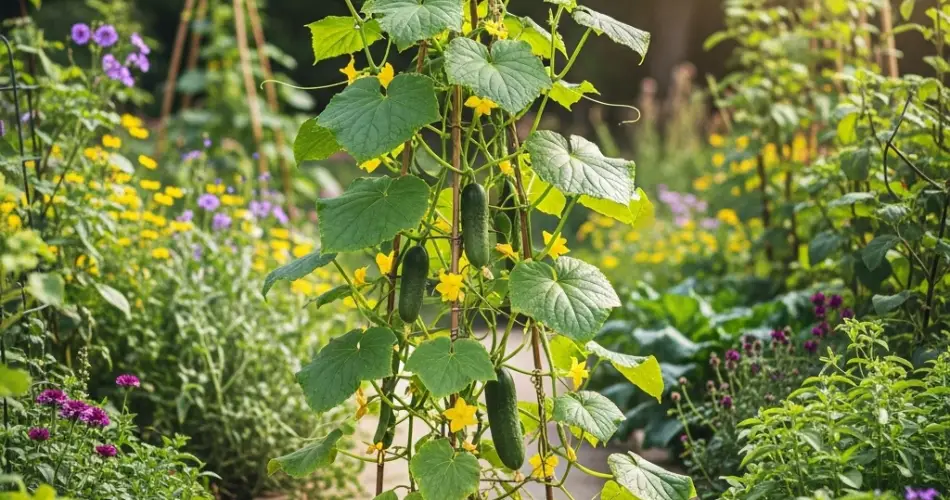
Cucumbers are fast-growing, productive plants that thrive in warm weather and sunshine. While they’re traditionally grown sprawling across garden beds, cucumbers can also flourish in containers—especially when grown vertically. Vertical gardening not only saves space but also improves airflow, reduces pests and diseases, and makes harvesting much easier. With the right setup, pot-grown cucumbers can provide a bountiful harvest even in small urban spaces.
Whether you’re working with a balcony, patio, rooftop, or compact yard, vertical container gardening is a smart and efficient way to enjoy fresh, crunchy cucumbers all season long.
Why Grow Cucumbers Vertically in Pots?
Vertical gardening with cucumbers offers multiple advantages:
-
Maximizes space: Ideal for small gardens, balconies, or patios.
-
Cleaner fruit: Keeps cucumbers off the ground, reducing rot and blemishes.
-
Improved airflow: Helps prevent fungal diseases by keeping foliage dry.
-
Easier harvesting: Vines trained vertically are easier to manage and harvest from.
-
Healthier plants: Better sun exposure and fewer pest problems.
By training vines to climb trellises or other supports, you can turn a small container into a highly productive growing space.
Best Cucumber Varieties for Containers
Some cucumber varieties are better suited to pot culture than others. Look for compact or bush types, or climbing varieties that respond well to trellising.
Ideal Container Varieties:
-
Bush Champion – Compact and productive, great for small pots.
-
Patio Snacker – Specifically bred for containers with small vines and crisp fruit.
-
Spacemaster – A dwarf variety ideal for pots with limited space.
-
Lemon Cucumber – Unique round fruits with a mild, sweet flavor; suitable for trellising.
-
Straight Eight – A classic slicer that climbs well when given support.
These types produce well in confined spaces and are perfect for vertical training.
Choosing the Right Container
Cucumber plants need ample space for their roots to thrive. Choose a container that is:
-
At least 12–16 inches (30–40 cm) deep
-
Wide enough (minimum of 12–14 inches or 30–35 cm across)
-
Equipped with good drainage holes
Plastic pots, terracotta planters, fabric grow bags, and upcycled containers like buckets all work well, as long as water can drain freely.
Soil and Preparation
Cucumbers grow best in rich, loose, and well-draining soil. A high-quality potting mix is essential for strong growth and healthy fruiting.
Recommended soil mix:
-
2 parts premium potting mix
-
1 part compost or well-rotted manure
-
Optional: A small amount of perlite or sand for drainage
Mix in a balanced slow-release fertilizer at planting time, or plan to feed with a liquid fertilizer during the growing season.
Planting Your Cucumbers
-
Timing: Plant after the last frost, when temperatures are consistently above 65°F (18°C).
-
Seed or Seedling: Sow seeds directly in the pot or transplant healthy seedlings. Plant 2–3 seeds and thin to the strongest one after germination.
-
Depth: Plant seeds about 1 inch (2.5 cm) deep and keep soil consistently moist during germination.
Once established, cucumbers grow rapidly and will benefit from steady support.
Trellising and Support
Vertical gardening requires a structure for vines to climb. Options include:
-
A-frame trellises
-
Bamboo or wooden stakes
-
Wire cages
-
Netting attached to walls or frames
Secure the support structure in the container before planting or while plants are still small to avoid damaging the roots. As the vines grow, gently guide them onto the trellis and tie loosely with garden twine if needed.
Watering and Fertilizing
Cucumbers are thirsty plants and need regular watering to prevent bitterness in the fruit.
-
Watering: Keep the soil evenly moist, especially during flowering and fruiting. Water at the base of the plant to avoid wetting the leaves.
-
Fertilizing: Feed every 2–3 weeks with a balanced liquid fertilizer or one slightly higher in potassium for fruit development. Compost tea or diluted fish emulsion also works well.
Avoid water stress and inconsistent moisture, which can cause misshapen or bitter cucumbers.
Sunlight and Temperature
Cucumbers love warmth and sun. Position your pots where they will receive:
-
6–8 hours of full sunlight daily
-
Protection from strong wind which can topple vines or dry out the soil too quickly
In cooler climates, black containers can help retain heat. In hot regions, mulch the soil surface to keep roots cool.
Common Pests and Issues
Container-grown cucumbers are less vulnerable to some pests but still watch for:
-
Aphids and whiteflies – Treat with insecticidal soap or neem oil.
-
Powdery mildew – Encourage airflow and avoid overhead watering.
-
Cucumber beetles – Use floating row covers during the seedling stage.
Prompt action and consistent care help keep plants healthy and productive.
Harvesting Cucumbers
Cucumbers grow quickly once they start fruiting. Harvest:
-
When they reach full size for the variety
-
While skin is firm and green (before they turn yellow)
-
By cutting from the vine with scissors or pruners
Frequent harvesting encourages continued production. Don’t let overripe fruit remain on the plant, as it slows growth of new cucumbers.
Final Thoughts
Growing cucumbers vertically in pots is a practical and efficient way to enjoy fresh, homegrown produce, even with limited space. With the right variety, a sturdy trellis, and consistent care, you’ll be rewarded with a steady supply of crisp, refreshing cucumbers. From snacking and salads to pickling, pot-grown cucumbers offer big yields in a small footprint—perfect for modern gardeners looking to grow up, not out.


