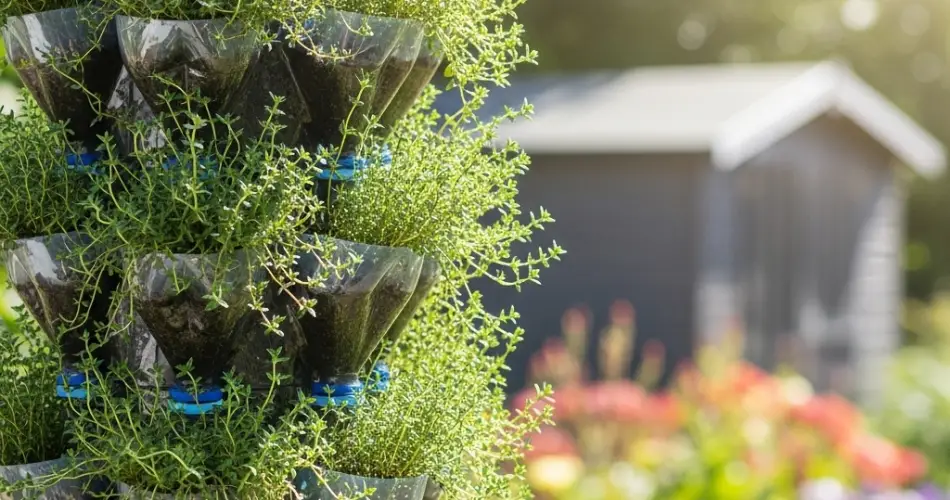
Thyme is a fragrant, low-growing herb cherished for its earthy aroma and culinary versatility. Used in everything from soups and roasts to herbal teas and infused oils, thyme is a must-have herb in every kitchen. What makes thyme even more attractive is its ability to grow well in containers—making it an excellent choice for vertical gardening.
If you’re short on space but still want to grow fresh herbs at home, creating a thyme tower from recycled plastic bottles is a smart and sustainable solution. This DIY vertical garden not only puts discarded plastic to good use, but also adds green beauty to walls, balconies, patios, or windows.
Why Choose a Plastic Bottle Thyme Tower?
Vertical gardening is the answer to limited space, and plastic bottles are ideal building blocks for such setups. Instead of throwing them away, you can reuse them as planters to grow herbs like thyme, which doesn’t need much root space and thrives in well-drained containers.
Benefits of thyme towers using plastic bottles:
-
Reduces plastic waste through repurposing
-
Conserves space by utilizing vertical surfaces
-
Keeps herbs within reach for everyday use
-
Adds a green accent to walls, fences, or balcony railings
-
Saves money on planters and garden space
With a few basic tools and a little time, you can build a vertical thyme garden that is both functional and visually appealing.
Materials You’ll Need
To create your thyme tower, gather the following:
-
3 to 6 plastic bottles (1.5 or 2-liter bottles work best)
-
A sharp utility knife or scissors
-
A drill or tool to make drainage holes
-
Sturdy string, zip ties, or wire for stacking
-
Potting mix (well-draining and light)
-
Thyme seeds or small thyme seedlings
-
Small pebbles or mesh for bottom layer (optional)
-
A hook or wall bracket (for hanging, if desired)
Step 1: Cut and Prepare the Bottles
Each bottle will serve as an individual planter in your vertical garden.
-
Wash and dry each bottle thoroughly. Remove all labels and residue.
-
Cut an opening on the side of each bottle large enough to hold soil and the thyme plant—about 3–4 inches wide and tall. This opening should face outward once the tower is hung or stacked.
-
Poke 3–4 drainage holes in the bottom of each bottle using a drill or heated nail.
-
For better drainage, place a thin layer of pebbles or mesh at the bottom inside each bottle.
Step 2: Assemble the Tower
There are two main ways to construct the thyme tower:
1. Hanging Vertical Tower (with string or wire):
-
Poke two holes near the top and bottom of each bottle, opposite the planting opening.
-
Thread string or wire through the holes of each bottle, stacking them vertically with enough space (3–5 inches) between bottles for airflow and sunlight.
-
Secure knots or zip ties to hold each bottle in place.
-
Hang the assembled tower on a balcony rail, wall bracket, or fence.
2. Wall-Mounted Tower (horizontal stacking):
-
Attach each bottle horizontally to a wooden frame or metal rack using zip ties or screws through drilled holes.
-
Arrange the bottles in rows, ensuring each has access to light and space.
Step 3: Planting Thyme
Whether you start with seeds or seedlings, thyme is relatively easy to grow.
If using seeds:
-
Fill each bottle with potting mix about three-quarters full.
-
Sprinkle 4–6 thyme seeds into each planter.
-
Cover lightly with a thin layer of soil and water gently.
-
Keep the soil consistently moist until germination (usually 10–14 days).
If using seedlings:
-
Dig a small hole in the soil and gently place the seedling inside.
-
Firm the soil around the roots and water to help the plant settle.
Step 4: Light, Water, and Maintenance
Thyme thrives in full sun, so make sure your vertical garden is placed in a spot that gets at least 6 hours of sunlight daily.
Watering tips:
-
Thyme prefers dry conditions over soggy soil.
-
Allow the top inch of soil to dry before watering again.
-
Water less frequently once plants are established.
Feeding:
-
Thyme doesn’t need heavy fertilization.
-
A diluted organic fertilizer once a month is sufficient.
Step 5: Harvesting Thyme
Once your thyme is about 4–6 inches tall, you can begin harvesting.
How to harvest:
-
Snip stems just above a leaf node to encourage new growth.
-
Harvest in the morning for the best flavor and essential oil concentration.
-
Use fresh, or dry the cuttings for long-term storage.
Regular harvesting not only gives you more usable herb but also keeps the plant bushy and compact.
Common Problems and Tips
-
Leggy growth: Caused by too little light. Move your tower to a sunnier location.
-
Overwatering: Leads to root rot. Ensure drainage holes are open and soil isn’t constantly wet.
-
Pests: Thyme is fairly pest-resistant. If needed, a light spray of soapy water can control aphids.
Conclusion
Creating a thyme tower from plastic bottles is a fun, eco-friendly way to enjoy fresh herbs while reducing waste. This vertical gardening technique not only saves space but also adds a rustic charm to your indoor or outdoor area. With proper care, your thyme tower will provide delicious leaves for cooking, tea, and aromatherapy—bringing sustainability and flavor to your everyday life.


