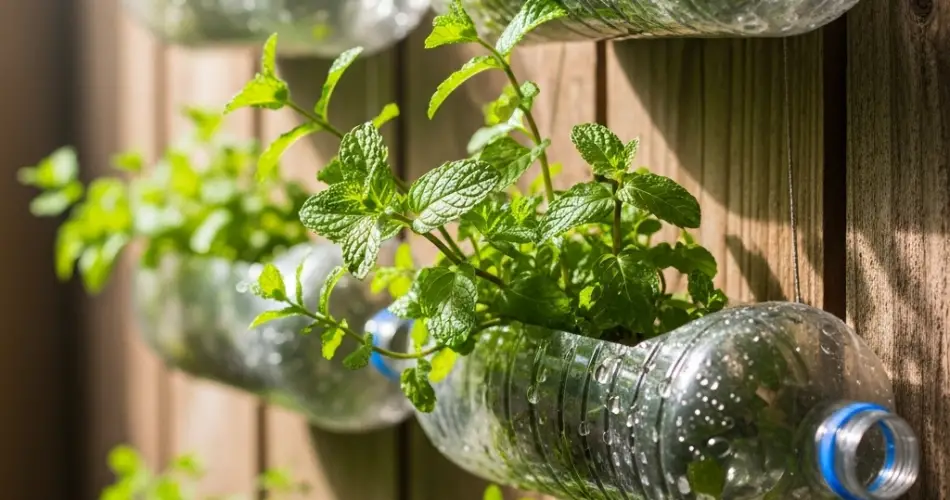
Fresh mint is a versatile herb that adds refreshing flavor and aroma to drinks, salads, desserts, and savory dishes. While mint grows easily in gardens, it can also thrive in creative, space-saving setups such as wall gardens made from repurposed plastic bottles. This sustainable gardening method gives discarded materials a new purpose, saves space, and turns a plain wall into a vibrant, fragrant feature.
Why Mint Is Ideal for Wall Gardens
Mint is a hardy plant that adapts well to container growing. In open soil, it spreads rapidly, sometimes becoming invasive, but in a confined container like a bottle, it stays under control. Mint’s resilience and quick growth make it a perfect choice for vertical wall gardens, especially for beginners who want low-maintenance greenery.
Another benefit is its ability to stay productive for long periods. With regular harvesting, mint produces fresh shoots for months, and in mild climates, it can grow year-round.
Choosing and Preparing Your Bottles
To create mint planters, you’ll need sturdy plastic bottles, ideally 1.5-liter or 2-liter sizes. Clear bottles let you monitor soil moisture, while colored ones can protect roots from excess sunlight.
Steps to prepare the bottles:
-
Clean Thoroughly – Wash with warm soapy water to remove any residue.
-
Cut an Opening – Lay the bottle on its side and cut a rectangular opening on one side large enough for planting.
-
Add Drainage Holes – Puncture small holes in the bottom to prevent water buildup.
-
Optional Decoration – Paint the outside, wrap with burlap, or decorate for a more attractive display.
Setting Up the Wall Garden
There are several ways to mount your bottles:
-
Horizontal Hanging – Thread wire or strong cord through holes at each end and suspend from hooks.
-
Vertical Hanging – Use bottles neck-down, with the top cut open for planting, stacking several along a rope or wire.
-
Wall-Mounted – Secure bottles directly to a wall, fence, or wooden panel using screws or brackets.
Make sure each bottle is stable, well-spaced, and positioned where it will get enough light.
Soil and Planting Tips
Mint prefers rich, well-draining soil that stays slightly moist. A good mix is garden soil combined with compost and a little perlite or coarse sand to improve drainage.
You can start your mint in bottles in three ways:
-
From Seeds – Sow seeds about 0.5 cm deep and keep the soil moist until germination.
-
From Cuttings – Place a fresh mint cutting in water until roots appear, then plant in soil.
-
From Seedlings – Purchase young mint plants and transplant them directly into bottles.
When planting, leave a small space between the soil surface and the top of the bottle to make watering easier.
Light and Watering Needs
Mint thrives in partial to full sunlight. In very hot climates, some afternoon shade prevents the leaves from scorching. For indoor wall gardens, place the bottles near a bright window or supplement with grow lights.
Water regularly to keep the soil moist but not soggy. Because bottles can dry out faster than traditional pots, check daily during warm weather. Consistent moisture keeps the leaves tender and flavorful.
Feeding and Maintenance
Feed mint every 3–4 weeks with a diluted liquid fertilizer or compost tea. Avoid high-nitrogen feeds in excess, as they can produce too much leaf growth with reduced flavor intensity.
Trim regularly to prevent flowering, as this can make the leaves taste bitter. Pinching off flower buds also encourages the plant to keep producing fresh foliage.
Harvesting for Best Results
Start harvesting when your mint plant reaches 15–20 cm in height. Snip stems just above a leaf node to promote bushier growth. Avoid taking more than one-third of the plant at a time to keep it healthy and productive.
For the best flavor, harvest in the morning after dew has dried but before the heat of the day. Fresh mint can be used immediately or dried for later use.
Seasonal Care and Longevity
Mint is a perennial in many regions, meaning it can grow back each year. In colder climates, it may die back in winter but return in spring. If you want year-round mint, move your bottle garden indoors during the cold season or grow new plants from cuttings before frost.
Refresh the soil every year to replenish nutrients and keep your plants healthy.
Advantages of Plastic Bottle Mint Wall Gardens
-
Eco-Friendly – Gives new life to discarded bottles.
-
Space-Saving – Perfect for balconies, patios, and small yards.
-
Easy Access – Fresh mint is always within reach.
-
Attractive – Adds greenery and fragrance to walls and fences.
Final Thoughts
Turning plastic bottles into mint planters for a wall garden is a practical, creative, and environmentally friendly way to grow fresh herbs. It’s perfect for small spaces and offers an easy way to enjoy mint year-round. With minimal tools, a few bottles, and some basic care, you can transform a bare wall into a living, aromatic feature that provides both beauty and flavor.


