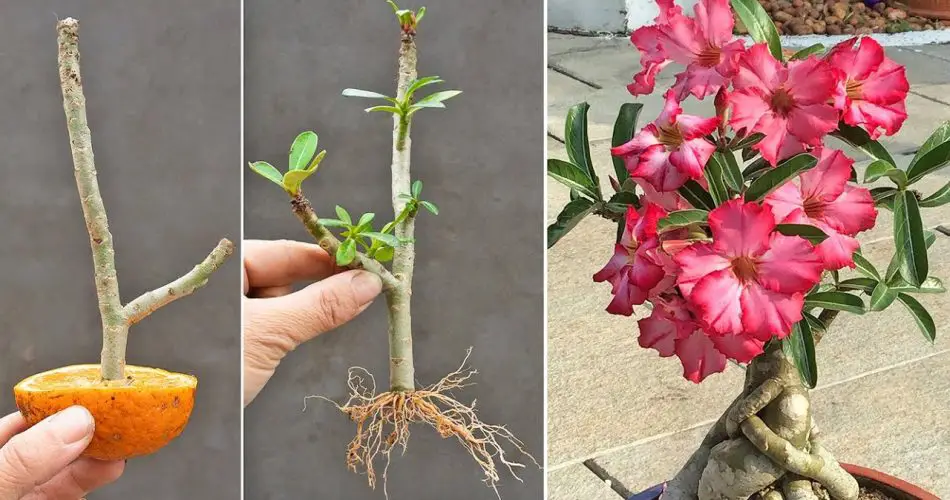
Frangipani, also known as Plumeria, is a beautiful tropical plant known for its fragrant and colorful flowers. While many gardeners use commercial rooting hormones for propagating plants, some also explore natural alternatives. Oranges contain natural auxins, which are plant hormones that promote root growth. Here’s a method to propagate frangipani using hormones from oranges:
Materials needed:
- Healthy frangipani cuttings
- Fresh oranges
- Knife
- Rooting medium (such as a well-draining soil mix or perlite)
- Small containers or pots
- Plastic bags or plastic wrap
- Rubber bands or twine
Procedure:
- Select Healthy Cuttings: Choose healthy frangipani cuttings that are about 12 to 18 inches long. Select cuttings with no signs of disease or damage.
- Prepare Cuttings: Use a clean, sharp knife to cut the selected frangipani branches into sections, ensuring each section has at least two nodes (where leaves are attached). Remove any leaves from the lower part of the cutting.
- Extract Orange Juice: Squeeze fresh oranges to obtain the juice. This juice contains natural auxins that can help stimulate root growth.
- Soak Cuttings: Dip the cut end of each frangipani cutting into the freshly squeezed orange juice, ensuring it gets well-coated.
- Prepare Rooting Medium: Fill small containers or pots with a well-draining rooting medium. This can be a mix of perlite, sand, or a commercial potting mix designed for rooting.
- Plant Cuttings: Insert the treated end of each cutting into the rooting medium, burying at least one node below the surface.
- Cover and Enclose: Cover the containers with plastic bags or plastic wrap to create a humid environment. Secure the covering with rubber bands or twine.
- Place in Indirect Light: Put the containers in a location with bright, indirect light. Avoid exposing them to direct sunlight, as this may cause excessive drying.
- Maintain Humidity: Ensure that the humidity is maintained within the enclosed environment. Mist the cuttings if needed.
- Monitor and Wait: Check the cuttings regularly for signs of root development. This process may take several weeks to a few months.
- Transplanting: Once the cuttings have developed a good root system, transplant them into individual pots with well-draining soil.
- Care for Newly Rooted Plants: Gradually acclimate the new plants to normal environmental conditions. Provide them with proper sunlight, water, and nutrients.
Remember that not all cuttings may successfully root, and patience is key during the propagation process. Using orange juice as a natural rooting hormone is an experimental method, so results may vary. If you prefer a more reliable and controlled approach, you can also use commercially available rooting hormones designed for plant propagation.