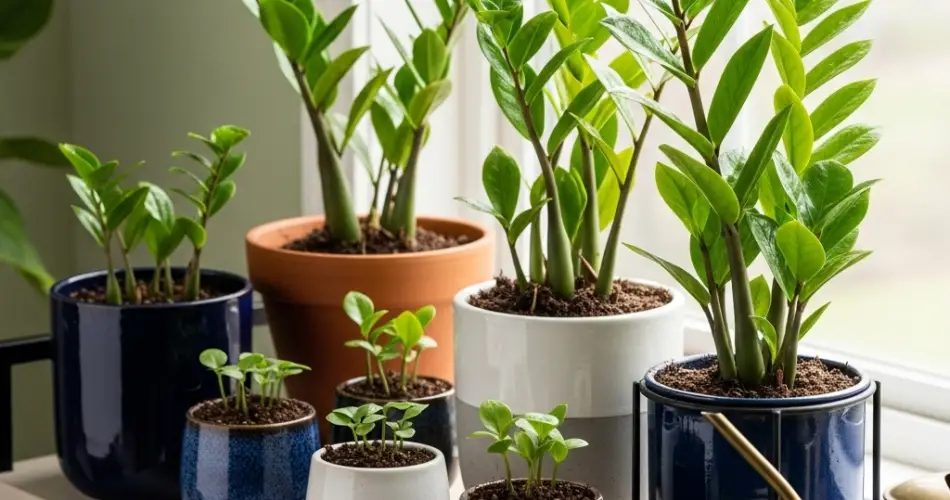
The ZZ plant (Zamioculcas zamiifolia) is a favorite among houseplant lovers for its glossy, deep green leaves and remarkable tolerance for neglect. Native to eastern Africa, it thrives in various indoor environments and is well-suited for busy households or offices. While this plant is famously low-maintenance, container choice and setup play a big role in keeping it healthy and beautiful.
By choosing the right pot, soil, and placement, you can help your ZZ plant live for years while maintaining vibrant foliage and steady growth.
1. Choose the Right Pot Size
Selecting the correct pot size is the first step to keeping your ZZ plant healthy. A container that’s too small can cause the roots to become cramped, slowing growth and leading to stress. On the other hand, a pot that’s too large holds excess moisture, which can cause root rot.
-
Best practice: Choose a pot that is 1–2 inches wider in diameter than the plant’s root ball.
-
Growth habit: ZZ plants have thick, tuberous rhizomes that store water. Giving them just enough room encourages healthy root development without creating soggy soil conditions.
2. Prioritize Drainage
Proper drainage is essential for ZZ plants, as they are highly sensitive to overwatering. No matter how beautiful a decorative pot looks, it must have drainage holes at the bottom to allow excess water to escape.
If you want to use a decorative pot without holes, place the plant in a smaller plastic nursery pot inside it. This way, you can easily remove the plant for watering and let excess water drain before placing it back.
3. Pick the Right Material
The pot material can influence how quickly soil dries out:
-
Terracotta: Absorbs excess moisture and promotes air circulation in the soil—ideal for beginners prone to overwatering.
-
Ceramic (glazed): Holds moisture for longer, making it suitable for drier indoor environments.
-
Plastic: Lightweight, affordable, and moisture-retentive, but be extra cautious about watering.
Your choice should match both your plant care style and your indoor climate.
4. Use a Well-Draining Soil Mix
ZZ plants dislike waterlogged roots, so a light, airy, and well-draining soil mix is crucial. A high-quality potting mix for succulents or cacti works well. You can also create your own by combining:
-
2 parts regular potting soil
-
1 part perlite
-
1 part coarse sand or orchid bark
This combination ensures enough aeration while retaining the right amount of moisture for the plant’s rhizomes.
5. Position for Optimal Light
While ZZ plants can survive in low-light conditions, they grow best with bright, indirect light. Placing the pot near a north- or east-facing window ensures steady growth without the risk of leaf scorch.
If your plant is in a dim corner, consider rotating it occasionally or supplementing with a grow light. Just avoid direct midday sunlight, which can cause leaves to yellow or develop dry patches.
6. Maintain a Steady Watering Routine
The ZZ plant’s drought-tolerant nature comes from its water-storing rhizomes. This means it prefers to dry out completely between waterings.
-
Check the soil: Stick your finger 2–3 inches into the soil—if it feels dry, it’s time to water.
-
Water thoroughly, allowing moisture to flow out of the drainage holes, and empty any saucer beneath the pot.
-
During winter, water even less frequently as growth slows.
7. Repot Only When Necessary
ZZ plants grow slowly, so they don’t need frequent repotting. Every 2–3 years is enough, unless you notice:
-
Roots circling the pot’s edge
-
Bulging pot sides from rhizome growth
-
Slowed growth despite healthy conditions
When repotting, move up only one pot size and refresh the soil for optimal nutrient availability.
8. Keep Leaves Clean and Dust-Free
Dust buildup can reduce a ZZ plant’s ability to absorb light, slowing its growth. Wipe the leaves gently with a soft, damp cloth every few weeks to restore their natural shine and keep them looking fresh.
Avoid commercial leaf shine sprays, which can clog leaf pores and interfere with natural respiration.
9. Monitor for Pests and Diseases
While ZZ plants are generally resistant to pests, they can occasionally attract mealybugs, spider mites, or scale insects. Inspect the undersides of leaves regularly. If pests appear, isolate the plant and treat with insecticidal soap or neem oil.
Yellowing leaves or mushy stems are usually signs of overwatering, so adjust your watering habits and check for root health.
Final Thoughts
A ZZ plant’s ability to thrive with minimal care makes it one of the best beginner-friendly houseplants. However, a healthy, long-lived plant still needs the right container, well-draining soil, proper watering, and thoughtful placement. By selecting a pot that meets its drainage needs, maintaining a careful watering schedule, and giving it steady light, you’ll ensure that your ZZ plant stays lush, green, and thriving for years.
With the right container tips and basic care, your ZZ plant will be a low-maintenance beauty that adds a touch of nature and elegance to your indoor space.


