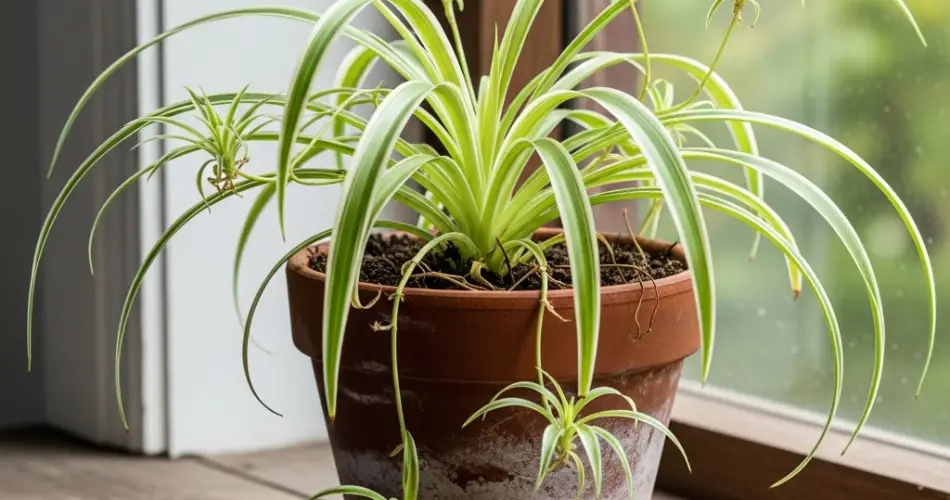
The spider plant (Chlorophytum comosum) is one of the most adaptable and forgiving houseplants, making it a favorite for both beginners and experienced plant lovers. Known for its arching green-and-white striped leaves and the charming spiderettes (baby plants) that dangle from long stems, the spider plant brings life and freshness to any indoor space.
Although spider plants are relatively low-maintenance, giving them the right care ensures they stay healthy, vibrant, and productive. This guide covers all the essential techniques for growing spider plants indoors, from lighting and watering to pruning and propagation.
Light Requirements
Spider plants thrive in bright, indirect light. They can adapt to lower light conditions, but their growth may slow and leaf colors may fade. Direct sunlight can scorch their leaves, causing brown patches and dryness.
Best practice: Place your spider plant near an east- or north-facing window. If only south- or west-facing windows are available, diffuse the sunlight with sheer curtains to protect the leaves.
Watering Techniques
Watering is often the trickiest part of spider plant care, as they prefer evenly moist soil without becoming waterlogged.
-
How often to water: Allow the top inch of soil to dry out before watering again. In warmer months, this may mean watering once a week. In winter, reduce the frequency since the plant enters a slower growth phase.
-
Water quality: Spider plants are sensitive to chemicals such as fluoride and chlorine found in tap water. These can cause brown tips on the leaves. Using filtered, distilled, or rainwater can help maintain healthy foliage.
Always ensure the pot has drainage holes to prevent root rot.
Soil and Potting
Spider plants prefer well-draining soil with a balance of moisture retention and aeration. A standard houseplant potting mix works well, especially when combined with perlite or sand for extra drainage.
Choose a pot that is only slightly larger than the root ball. Spider plants like to be somewhat root-bound, and this condition often encourages them to produce more spiderettes. Repot only when roots begin to overflow from the drainage holes.
Fertilizing
During the active growing season (spring and summer), feed your spider plant with a balanced liquid fertilizer every two to four weeks. Always dilute the fertilizer to half strength to prevent salt buildup, which can damage roots and burn leaf tips. In fall and winter, reduce or stop fertilizing, as the plant’s growth naturally slows down.
Humidity and Temperature
Spider plants thrive in moderate indoor humidity but will also adapt to drier air. However, low humidity can sometimes contribute to browning leaf tips. Increasing humidity with a pebble tray, humidifier, or grouping plants together can help.
In terms of temperature, spider plants prefer a range of 60°F to 75°F (15°C–24°C). They can tolerate cooler temperatures but should not be exposed to drafts or cold below 50°F (10°C).
Pruning and Maintenance
Regular pruning keeps your spider plant tidy and encourages fresh growth. Trim away brown or yellow leaves with clean scissors, cutting as close to the base as possible. If tips alone are brown, you can snip them off carefully without removing the whole leaf.
When spiderettes appear, you can leave them attached for a fuller look, or remove and propagate them to grow new plants.
Propagation Techniques
Spider plants are easy to propagate through their baby plantlets:
-
Select a healthy spiderette with small roots already forming.
-
Detach it from the mother plant and place it in a glass of water or directly into moist soil.
-
If rooting in water, transfer to soil once roots are about two inches long.
This simple method makes spider plants an excellent choice for sharing with friends or multiplying your own collection.
Common Problems and Solutions
-
Brown leaf tips: Often caused by fluoride in tap water, low humidity, or over-fertilization. Use filtered water, trim tips, and reduce feeding frequency.
-
Yellowing leaves: Usually a sign of overwatering or poor drainage. Check soil moisture and adjust your watering schedule.
-
Limp leaves: May indicate underwatering, low light, or root crowding. Improve watering habits or consider repotting.
Final Thoughts
Spider plants are resilient and versatile, making them one of the easiest houseplants to care for. By providing the right light, water, and occasional feeding, you’ll enjoy lush green foliage and an abundance of baby spiderettes. Whether you want a plant that cascades gracefully from a hanging basket or one that fills out a tabletop pot, spider plants reward even minimal care with lasting beauty and charm.


