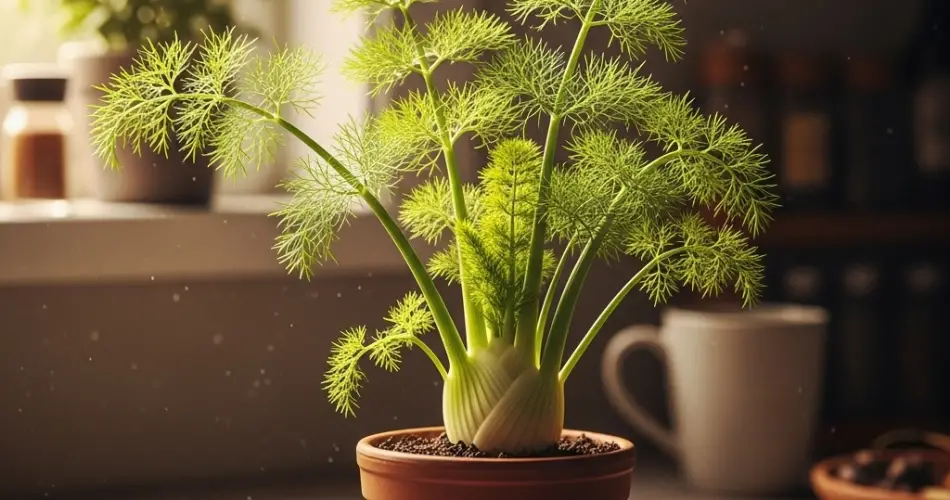
Fennel (Foeniculum vulgare), also known as Florence fennel or finocchio, is a versatile herb prized for its crunchy bulbs, feathery fronds, and aromatic seeds. Its mild, slightly sweet flavor complements salads, soups, roasted dishes, and herbal teas. Growing fennel in containers indoors allows gardeners to enjoy fresh, flavorful herbs year-round, even in small apartments or kitchens without garden space.
Indoor container cultivation offers control over soil, water, and sunlight, resulting in healthier, more productive plants. With proper care, container-grown fennel produces crisp bulbs and aromatic fronds that enhance both culinary dishes and home décor.
Choosing the Right Container
Fennel develops a deep taproot, so selecting a container that accommodates its root system is essential. A pot or planter at least 25–30 cm (10–12 inches) deep and 30 cm (12 inches) in diameter provides ample room for bulb development.
Drainage is crucial to prevent waterlogged soil, which can lead to root rot. Ensure the container has several holes at the bottom. Clay, ceramic, or plastic pots are all suitable: clay allows air circulation to the roots, while plastic containers are lighter and easy to move to capture optimal sunlight.
Selecting and Preparing Soil
Fennel prefers fertile, well-draining soil. A high-quality potting mix enriched with organic compost provides essential nutrients and supports strong growth. Avoid heavy or compacted garden soil, which can restrict root expansion and reduce bulb quality.
The soil should be slightly acidic to neutral, with a pH of 6.0–7.0. Incorporating perlite or sand improves drainage, preventing water accumulation that could harm the roots. Well-prepared soil encourages crisp bulbs and healthy, flavorful fronds.
Planting Indoor Fennel
Fennel can be grown from seeds or transplants.
-
From seeds: Sow seeds 0.5–1 cm deep in the container and lightly cover them with soil. Keep the soil consistently moist until germination, which typically takes 7–14 days.
-
From transplants: Place young plants in the container, spacing them 20–25 cm apart to allow sufficient room for bulb expansion. Firm the soil around the roots and water thoroughly.
Thinning seedlings ensures that each plant has enough space for strong, healthy growth. Crowded plants may produce smaller bulbs and less flavorful foliage.
Watering and Humidity
Fennel prefers evenly moist soil, but overwatering can lead to root rot. Water when the top 2–3 cm of soil feels dry, ensuring thorough but not excessive moisture. In warmer indoor environments, the plant may require more frequent watering.
Good drainage is key. Avoid wetting the foliage excessively, as this can encourage fungal growth. Mist the leaves occasionally in dry indoor conditions to maintain humidity and promote healthy fronds.
Light Requirements
Fennel thrives with ample sunlight. Position your pot near a south-facing window that receives 6–8 hours of light daily. If natural light is limited, supplement with a grow light to ensure strong growth and prevent leggy stems.
Adequate sunlight encourages firm bulbs, bright green fronds, and intense flavor. Insufficient light can result in slow growth, pale leaves, and weak bulbs.
Fertilizing Indoor Fennel
Container-grown fennel benefits from regular feeding because nutrients in pots deplete quickly. Apply a balanced liquid fertilizer every 3–4 weeks or incorporate a slow-release organic fertilizer at planting.
Organic options such as compost or seaweed extract support strong growth and enhance flavor. Avoid over-fertilizing, which can encourage excessive leafy growth at the expense of bulb development.
Harvesting Fennel
Fennel bulbs are ready for harvest when they reach 7–10 cm in diameter and feel firm. Cut the bulb at soil level, leaving the roots intact for possible regrowth. The feathery fronds can be harvested continuously, providing fresh leaves for salads, garnishes, and flavoring dishes.
Regular harvesting encourages new growth and prevents the plant from bolting, which can make bulbs tough and less flavorful.
Tips for Healthy Indoor Fennel
-
Rotate containers to ensure even light exposure.
-
Remove yellow or damaged leaves to encourage fresh growth.
-
Maintain indoor temperatures between 18–24°C for optimal development.
-
Watch for pests such as aphids or caterpillars and treat promptly using natural methods.
Final Thoughts
Growing fennel in indoor containers provides a convenient and rewarding way to enjoy fresh, aromatic herbs year-round. With proper soil, consistent watering, sufficient sunlight, and regular harvesting, potted fennel produces crisp bulbs and flavorful fronds that enhance both your cooking and your home.
Indoor fennel pots combine practicality and beauty, allowing gardeners to cultivate a healthy, productive herb garden within any small space.