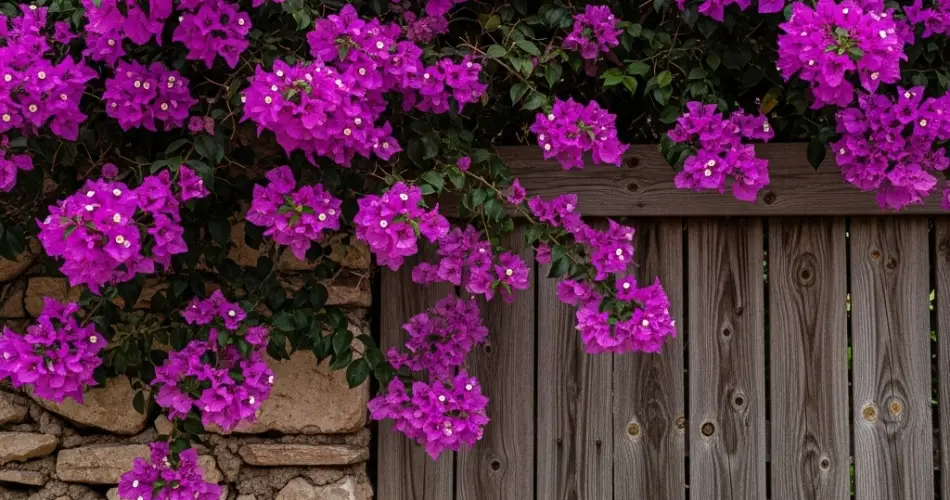
Bougainvillea is a stunning, tropical vine known for its vibrant bracts that bloom in shades of pink, purple, orange, red, and white. This sun-loving plant is perfect for adding a splash of color to walls, fences, and trellises. While bougainvillea can be grown as a bush or even in containers, its true beauty is often showcased when it’s trained to climb vertical surfaces. With a little guidance and care, you can transform a blank wall or fence into a colorful, flowering display.
Here’s a comprehensive guide to training bougainvillea to climb and flourish on walls and fences.
1. Choose the Right Location
Before training your bougainvillea, it’s crucial to select the best spot. These plants thrive in full sun and need at least 6 hours of direct sunlight daily to bloom profusely. A south-facing wall or a sun-drenched fence makes an ideal location.
Also, ensure the area has well-draining soil. Bougainvilleas dislike soggy roots, which can lead to rot. If your soil tends to retain water, consider amending it with sand or planting on a slight slope.
2. Select a Suitable Variety
Bougainvillea comes in various growth habits, from compact shrub-like types to vigorous climbers. For vertical training, opt for vining or sprawling varieties such as:
-
Bougainvillea glabra – known for its rapid climbing and purple bracts
-
Bougainvillea spectabilis – robust and colorful, with a strong climbing habit
-
Hybrid varieties labeled as vines or climbers
These types are better suited for climbing structures and produce longer canes that are easier to guide along surfaces.
3. Install a Support Structure
While bougainvillea is considered a climber, it doesn’t naturally cling or wrap around supports like ivy. It needs help to attach and stay in place. To train it effectively:
-
Install trellises, wires, or a lattice on your wall or fence before planting.
-
Use galvanized wire stretched horizontally across the surface, spacing the wires about 12–18 inches apart vertically.
-
For fences, you can attach trellis panels or run strong garden twine along the slats for additional support.
These supports allow you to tie and secure the stems as the plant grows.
4. Plant Correctly
Dig a hole twice as wide as the root ball and slightly deeper. Gently remove the bougainvillea from its container, taking care not to disturb the roots too much, as they’re sensitive.
Place the plant near the base of your wall or fence, allowing about 6–12 inches of space between the root zone and the structure to ensure air circulation. Backfill with soil and water deeply after planting.
5. Start Training Early
When the plant begins to grow, it will produce long, arching canes. Begin training these young shoots right away:
-
Gently tie stems to your support using soft plant ties, garden twine, or strips of fabric.
-
Avoid tying too tightly; allow space for stem growth.
-
Position the canes diagonally or horizontally to promote branching and a fuller look.
Continue to secure new growth as the plant matures, directing it to cover more of the wall or fence over time.
6. Encourage Full Coverage
To create a lush, dense display, guide the bougainvillea to grow outward as well as upward. Spread the stems in different directions to fill gaps, and occasionally pinch back the tips to encourage side shoots. This promotes more flowering points and gives a bushier appearance.
Additionally, removing any weak or nonproductive shoots allows the plant to focus energy on more vigorous, flowering stems.
7. Water and Feed Properly
Bougainvilleas bloom best when slightly stressed, so avoid overwatering. Once established, water deeply but infrequently—allow the soil to dry out between waterings.
Use a low-nitrogen, high-phosphorus fertilizer every 4–6 weeks during the growing season to boost flowering. Too much nitrogen will encourage leafy growth at the expense of blooms.
8. Prune to Shape and Maintain
Regular pruning is essential for controlling size, shaping the plant, and encouraging more blooms. After each flowering cycle, trim back spent blooms and prune overly long or unruly branches.
A harder pruning can be done in late winter or early spring to reshape the plant and stimulate fresh growth.
9. Watch for Pests and Problems
Bougainvillea is generally low-maintenance but can sometimes be affected by pests like aphids, caterpillars, or spider mites. Regularly inspect the foliage and treat infestations with insecticidal soap or neem oil if needed.
Avoid high humidity and overly wet soil, which can promote fungal problems.
Final Thoughts
Training bougainvillea to climb walls and fences is a rewarding process that turns ordinary spaces into vibrant, living art. With proper support, sunlight, and care, your bougainvillea will flourish and provide brilliant color for months. Start with the right variety, guide its growth thoughtfully, and maintain it with regular pruning and feeding. In time, you’ll enjoy a stunning vertical garden that brightens your space with every new bloom.


