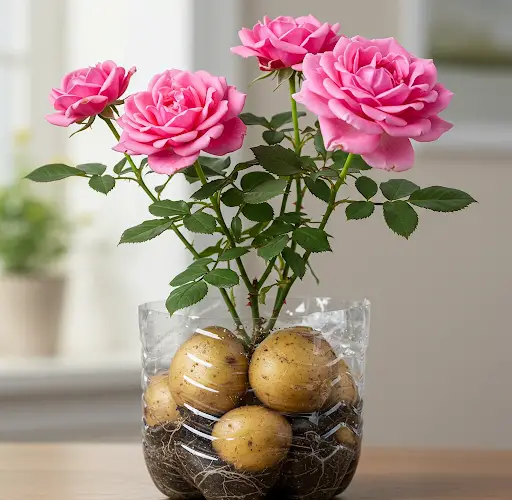
Rose propagation can often seem like a slow and tedious process, with gardeners waiting weeks or even months for their cuttings to root and sprout. But what if there were a simple, natural method that could speed up the process, making it possible for rose cuttings to root and sprout overnight? Believe it or not, the solution may be sitting right in your kitchen: a potato.
Using a potato as a rooting medium for rose cuttings is an incredibly effective, inexpensive, and easy method to achieve fast and healthy root development. Potatoes are packed with moisture, carbohydrates, and nutrients that support the early growth stages of a plant. This method has been gaining popularity among home gardeners for its simplicity and impressive results, often resulting in visible growth within 24 hours.
In this guide, we will show you how to use just one cup of potato to propagate roses quickly and efficiently.
Why Potatoes Are Ideal for Rooting Roses
Potatoes are naturally full of moisture, starches, and nutrients, making them an excellent medium for rooting cuttings. Here’s why they work so well for rose propagation:
-
Moisture retention: Potatoes naturally hold water, providing hydration to the cutting without the risk of it becoming waterlogged.
-
Carbohydrates and nutrients: Potatoes are rich in starches, vitamins, and minerals, which support the rose cutting as it forms roots and starts to grow.
-
Stability: The potato holds the cutting firmly in place, reducing the risk of movement, which could hinder the rooting process.
-
Protection from disease: Potatoes have natural antibacterial properties that help protect the cutting from infections and fungi.
These benefits create an optimal environment for rose cuttings to establish roots quickly and sprout with little effort on the gardener’s part.
What You’ll Need
To propagate roses using this method, you will need the following:
-
A healthy rose cutting (6–8 inches long)
-
A medium-sized potato (preferably firm and free of blemishes)
-
A clean knife or pruning shears
-
A clean screwdriver, pencil, or similar tool to create a hole in the potato
-
A small pot or container with well-draining soil
-
A plastic bag or humidity dome (optional)
Step-by-Step Guide to Rooting Roses with a Potato
Step 1: Prepare the Rose Cutting
Start by selecting a healthy rose stem for cutting. Use sharp, sterilized pruning shears to cut a 6–8 inch section from a healthy rose plant. Make the cut just below a leaf node, as this is where roots are most likely to form.
-
Remove all flowers and leaves from the lower half of the cutting, leaving just a few leaves at the top.
-
To encourage faster root formation, scrape a small portion of the bark off the bottom of the cutting.
Step 2: Prepare the Potato
-
Choose a firm, fresh potato that is free of soft spots or blemishes.
-
Using a clean screwdriver, pencil, or similar tool, make a hole in the center of the potato. The hole should be deep enough to hold the base of the rose cutting securely, about 2–3 inches.
-
Insert the base of the rose cutting into the hole in the potato. The potato should support the cutting and keep it upright.
Step 3: Plant the Potato and Cutting
-
Fill a small pot with well-draining soil. If you’re planting outdoors, choose a sunny spot with loose, well-draining soil.
-
Place the potato (with the cutting inserted) directly into the soil, ensuring that the potato is completely buried with just the cutting exposed above the soil.
-
Gently press the soil around the potato to keep it in place.
Step 4: Maintain Humidity and Temperature
-
Lightly water the soil to ensure it’s moist, but not soggy.
-
To create a warm, humid environment, cover the cutting with a plastic bag or humidity dome. This will help retain moisture and speed up the rooting process.
-
Place the pot in a warm spot with bright, indirect sunlight. Avoid placing it in direct sunlight, as it could dry out the cutting too quickly.
What to Expect
After using the potato method, you may begin to see results within just 24 to 48 hours. The rose cutting should start showing signs of rooting and sprouting, with the cutting’s buds swelling and new growth appearing. Potatoes work quickly, and many gardeners report seeing progress much faster than with traditional methods.
Within one to two weeks, you can gently tug on the cutting to check for resistance, which is a sign that roots are forming. As the cutting continues to grow, new leaves and shoots may start to develop.
Aftercare for Your Rooted Rose Cutting
Once the cutting has rooted and begun to sprout, it’s important to continue caring for it properly:
-
Gradually remove the plastic cover to acclimate the rose cutting to regular humidity levels.
-
Water the soil regularly to keep it slightly moist but not overly wet.
-
When the cutting has developed a strong root system and is producing new growth, you can transplant it to a larger pot or directly into your garden.
Additional Tips for Success
-
Use fresh, healthy potatoes: Avoid using potatoes that have started to sprout or rot, as they may not provide the best conditions for rooting.
-
Ensure proper drainage: Make sure the soil where you plant the potato allows for good drainage, as this will help prevent rot.
-
Try additional rooting boosters: If desired, you can enhance the rooting process by using natural rooting agents like aloe vera gel or cinnamon on the cutting before inserting it into the potato.
Final Thoughts
Using potatoes to propagate roses is a simple, affordable, and highly effective method that can help you achieve quick results. By harnessing the natural properties of the potato, you create the perfect environment for rose cuttings to root and sprout faster than with traditional techniques. This method offers an accessible way for gardeners of all levels to successfully propagate roses with minimal effort.
If you’ve been looking for a fast and easy way to grow roses from cuttings, give the potato method a try. With just one cup of potato and a little patience, you’ll be amazed at how quickly your roses begin to root and grow.


